
Out Of Stock


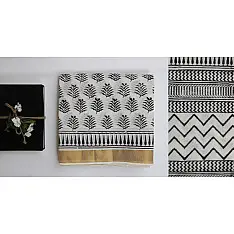
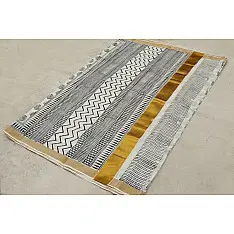
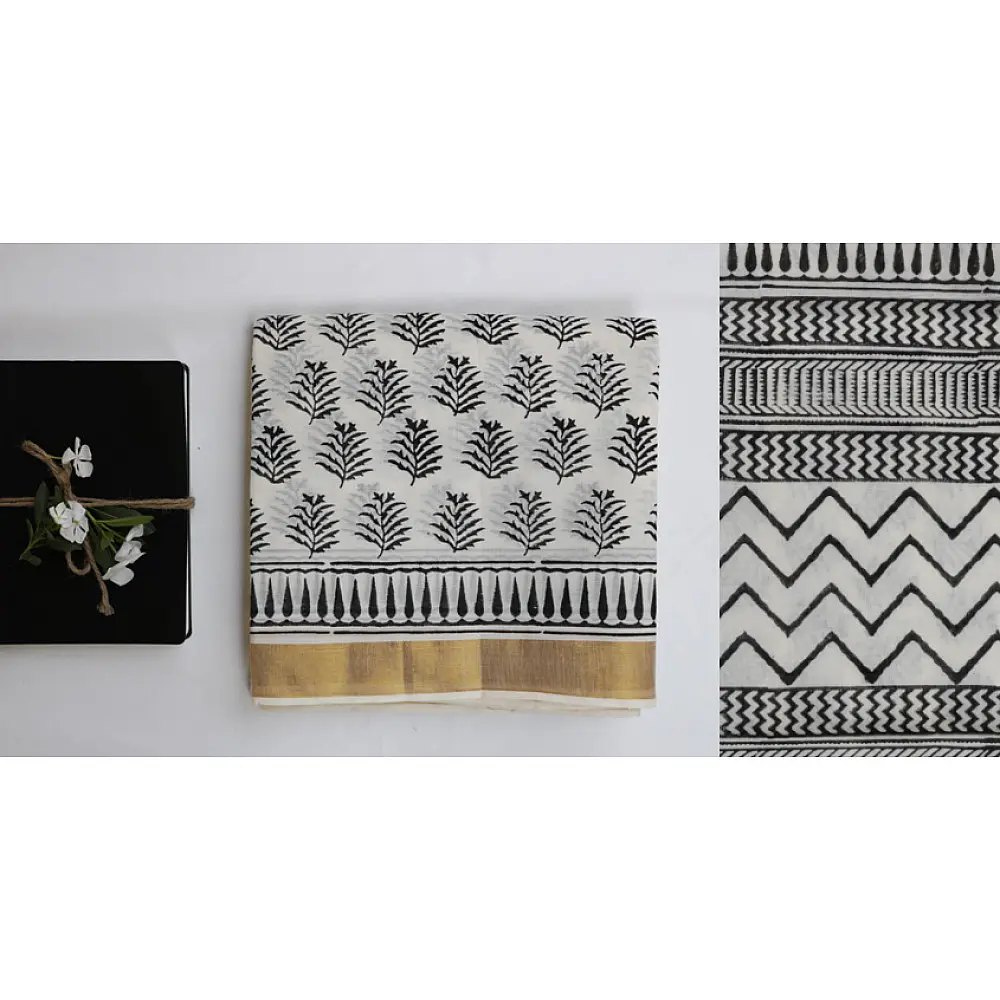
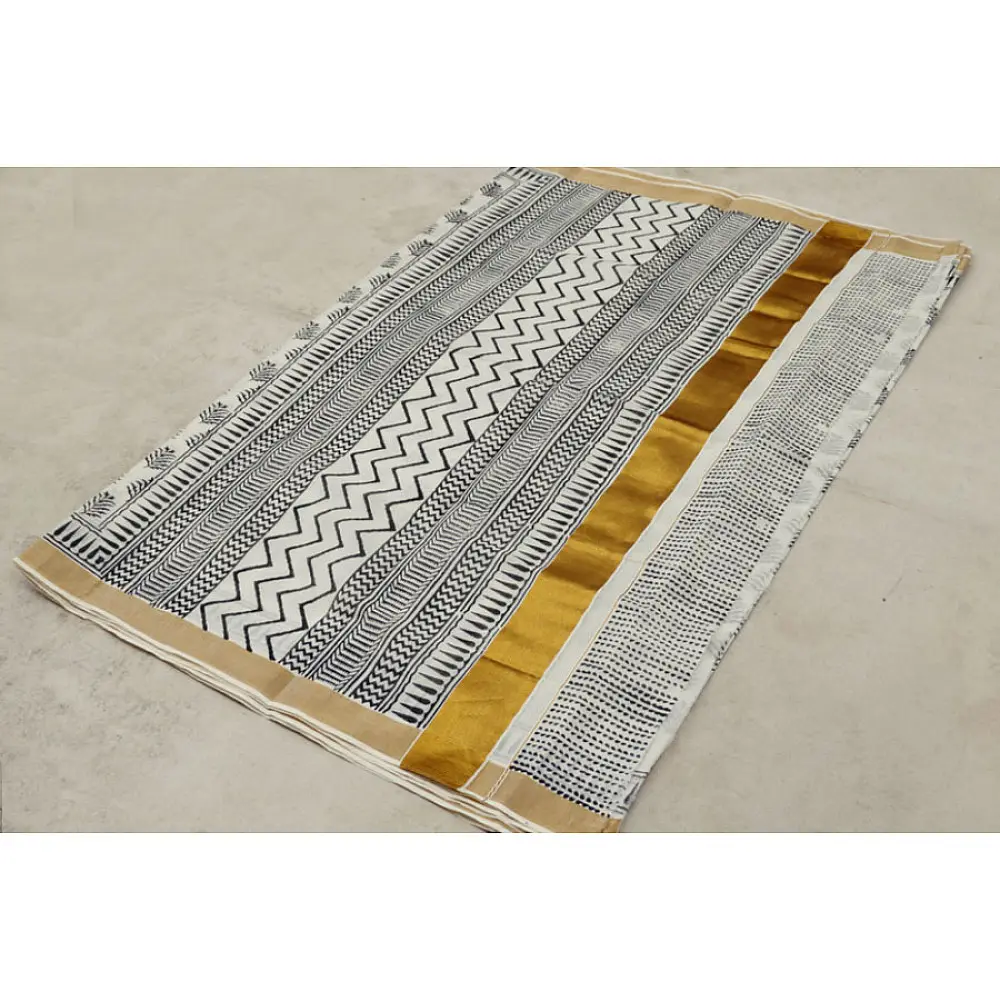
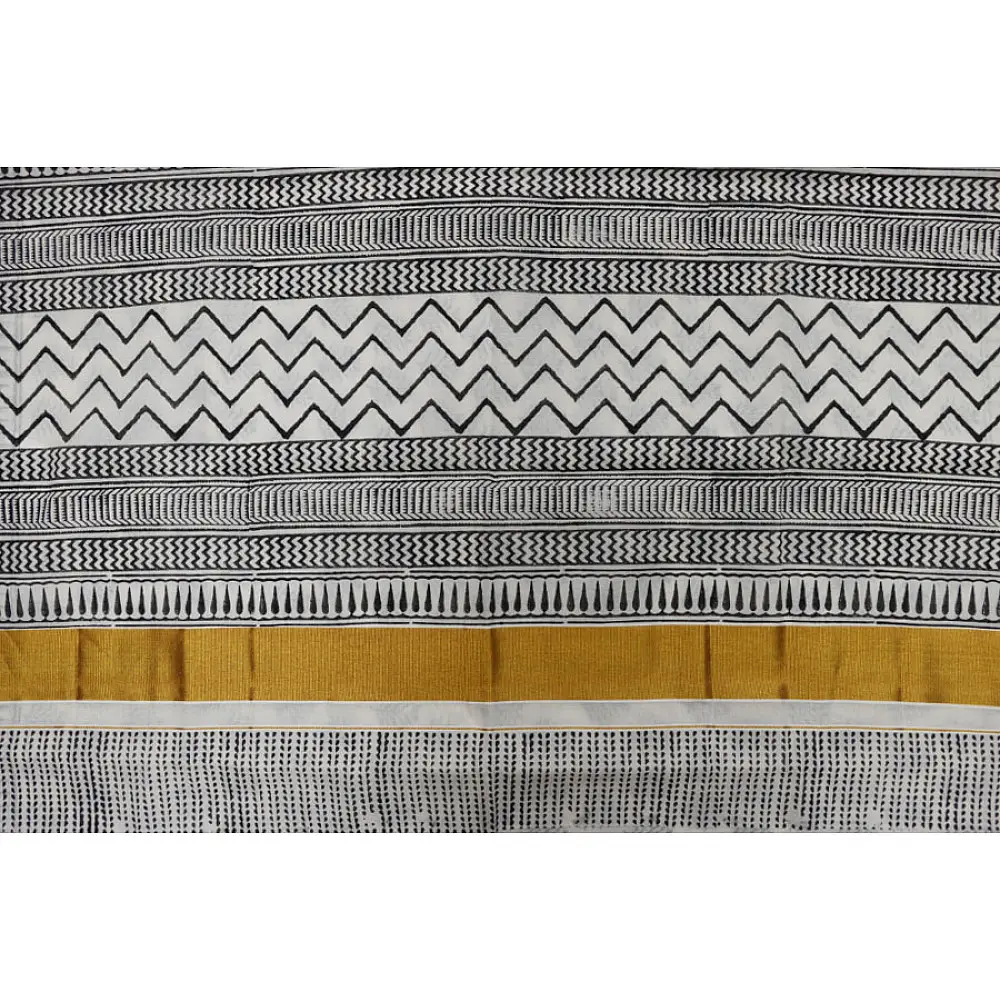
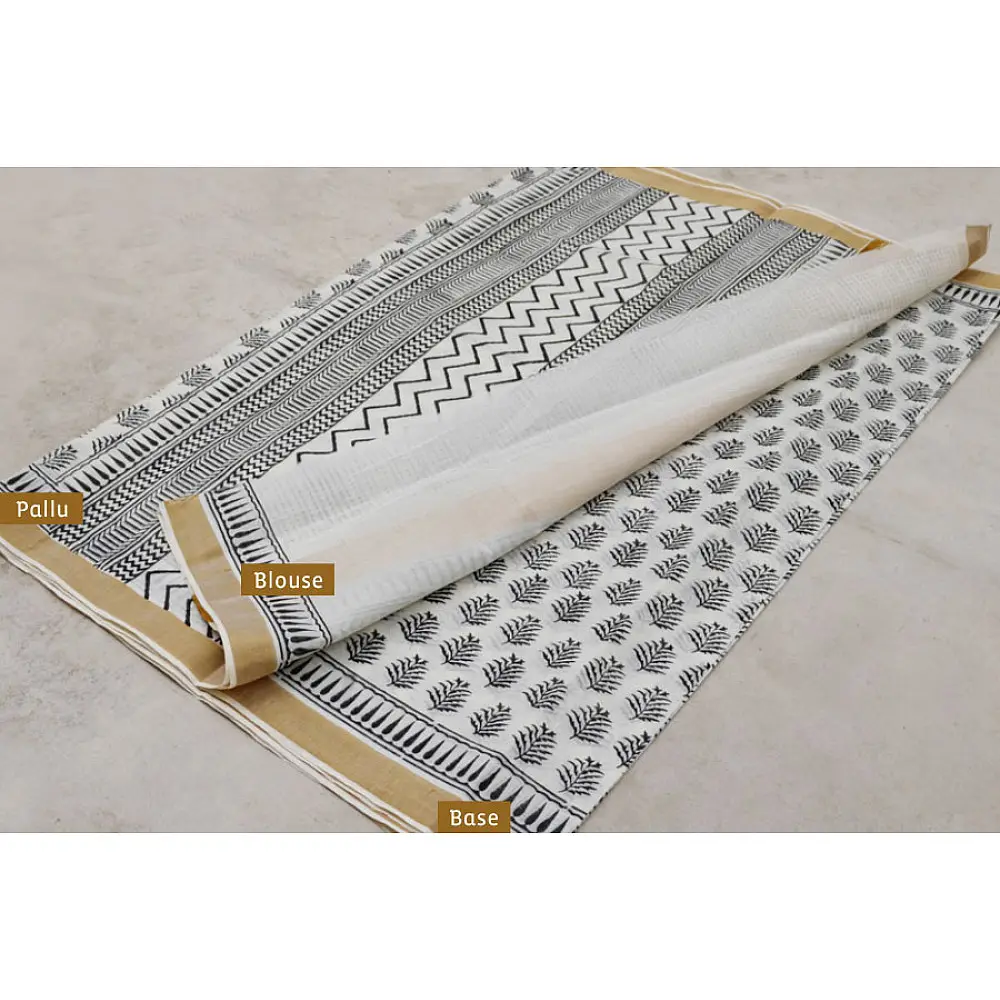
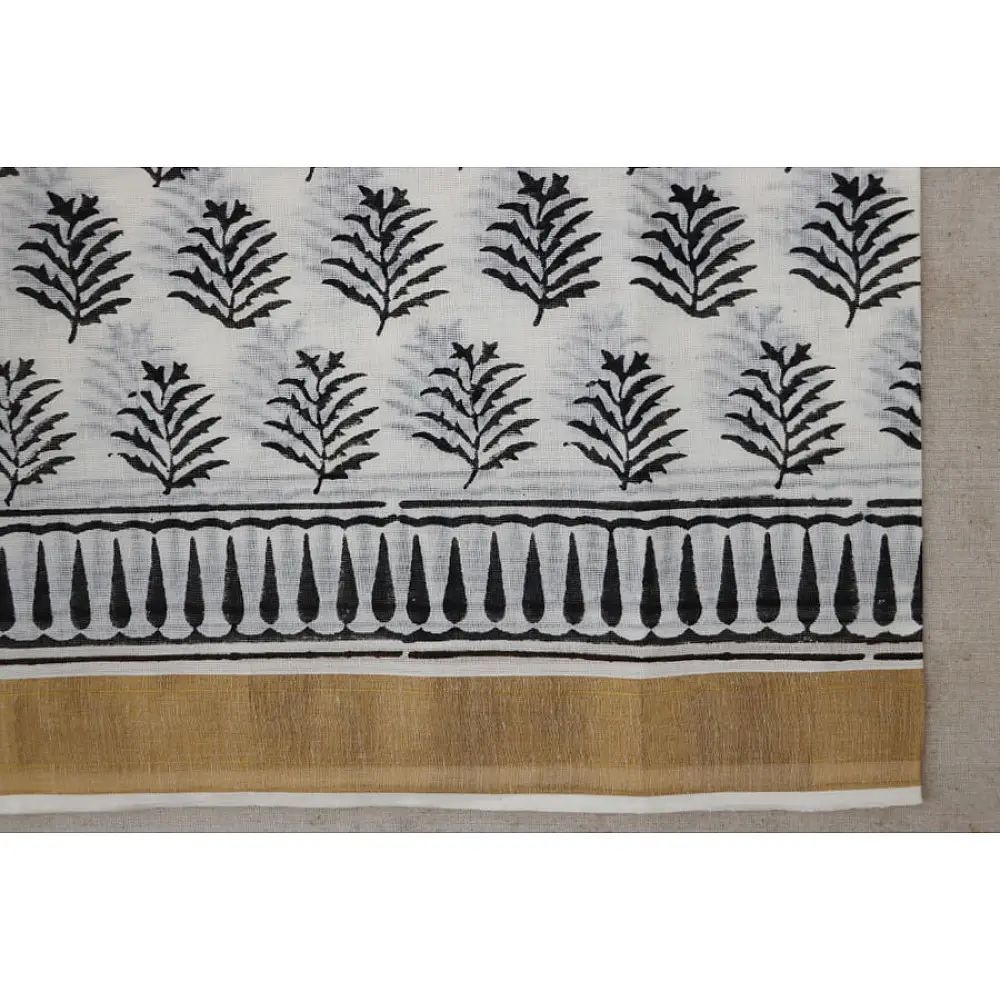
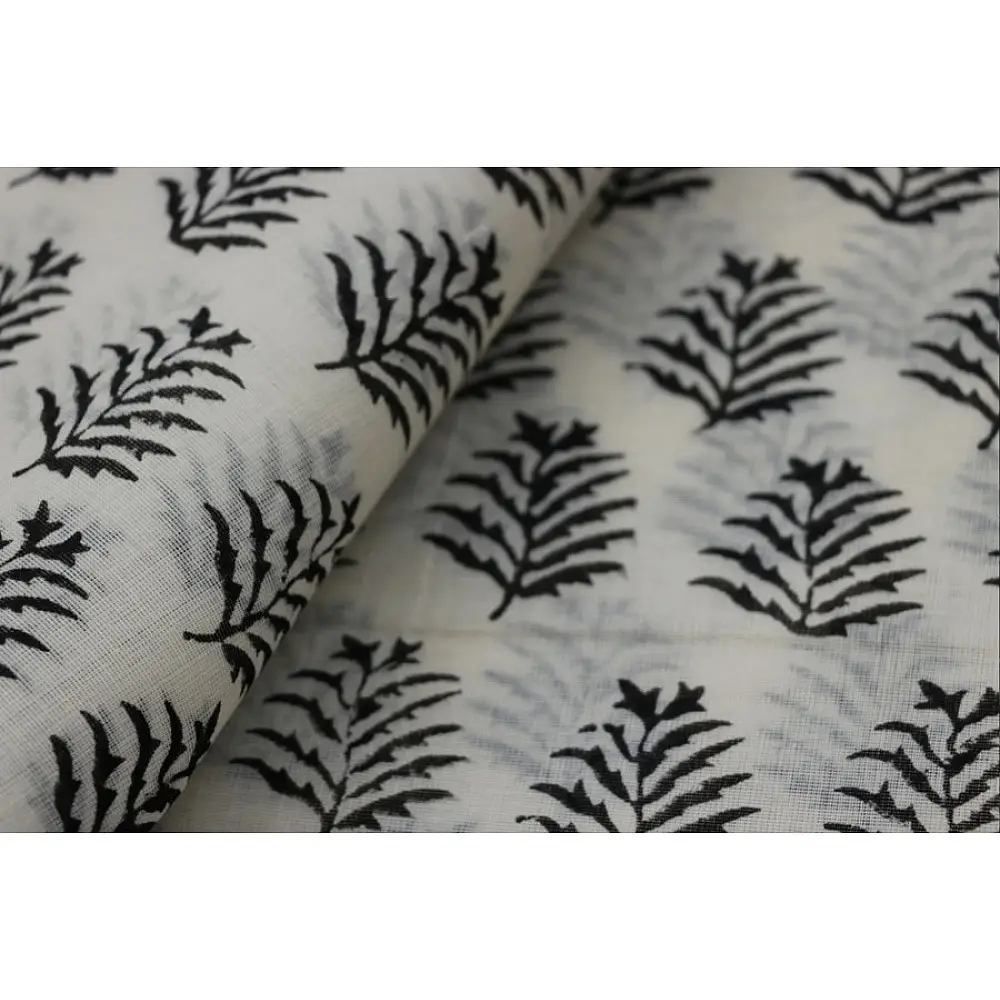
स्याह ❖ Block Printed . South Cotton Saree ❖ 8
- Availability: Out Of Stock
- Made & Mkt by: Innovative Craft Center
- Product Code: 9005-BS-08
- Weight: 300.00g
- Package Dimensions: 630.00cm x 118.00cm x 0.00cm
Rs.2,136.03

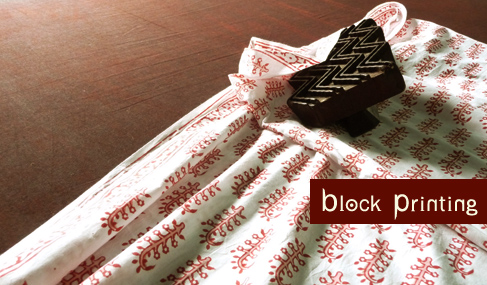
“The story goes as back as the times in history when my father would walk me to the river side, where lengths of colorful patterns waved up and down, with the gushing flow of Sabarmati. Things changed however, open banks were replaced by concrete blocks, flowing river by inert marshes, printing floors by long tables confined within four walls of the factories, washing got restricted to the water tanks, chemicals replaced natural colorants, and now, wooden blocks are fighting against much faster screen printing…” Master craftsman Faruk F. Chhipa recalls the days when he used to learn from his father Fakruddin Chhipa, who started ablock-printing unit in Ahmedabad, in 1964, under the name of ‘Fakira prints’. Employing around seventy skilled block printers, the unit can easily claim to be one of the biggest amongst 8-10 units in the city.
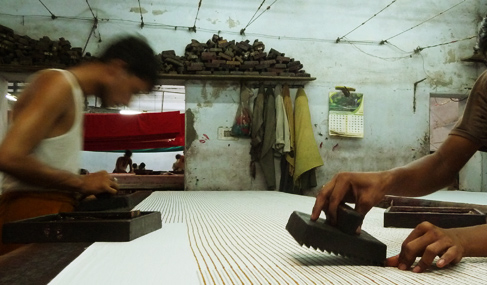
The practice of block printing is about two thousand years old. However, in India, printing and dyeing of cottons developed in Rajasthan, in the medieval age. Gujarat became popular for the use of wooden blocks for printing. Tents were created from printed fabrics and became a necessary part of royal processions. The seasons largely influenced the integration of the highly creative processes of weaving, spinning, dyeing and printing. Surat in Gujarat became one of the prime trading centers.
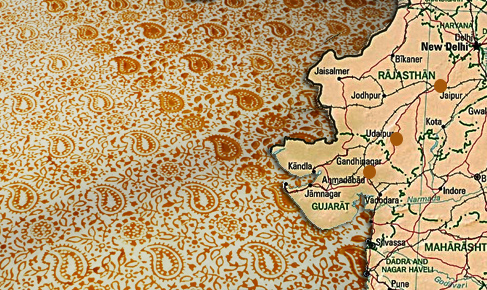
Hailing from the land of Maharajas, block-prints with their universally appealing degree of intricacy, competed their way to the weekly ‘haats’ and ‘melas’. Saudagars (the traders) from all over would come and sell their works to the landlords, Maharajas and their ladies. These very intricate and exuberant prints, typically made to adorn their turbans and chunris came to be known as Saudagari prints. Although a rarity now, some Saudagari blocks, preserved by the traditional craftsmen can be seen in the museums today.
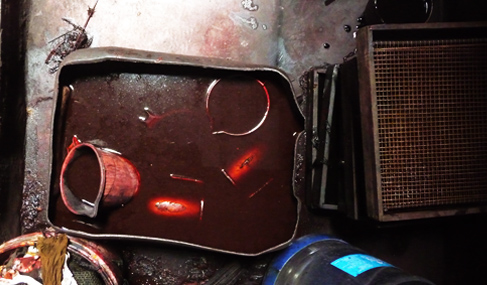
However, with changing times and with the onset of cities, block prints got popular by their place of origin i.e the villages (gaam in hindi) of India, to be called as the ‘Gaamthi’ prints.…vibrant colors, contrasting prints, varied patterns being their characteristic features. Originally, natural dyes were used, but today they have been replaced by chemical and artificial colors. The main colors used were, green from hinna, yellow the color of spring from turmeric, blue as in Krishna from indigo and black from rusting iron, near about 27 different colors could be achieved through plant parts and metals.
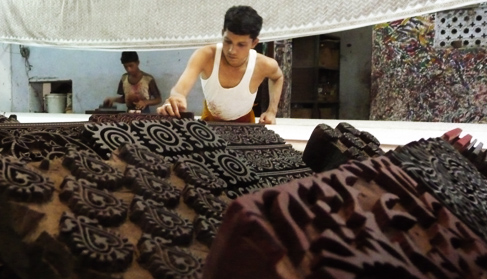
Judged by their level of perfection in detail, Pethapur has always been the centre for supremely intricate and accurate blocks, while the fabric is still traded from Bhimandi (Maharashtra) and Thirupur. Even though the motifs, the colors and the level of intricacy keeps changing with time and tastes of people, there are some unique blocks, which have retained their popularity over past 100 years.
Made of seasoned teak wood, blocks are the main tools of the printer. With designs etched on the underside and two to three cylindrical holes drilled vertically and horizontally across the body of the block, the block makers of Pethapur ensure free air passage and release of excess printing paste, making their blocks so special.
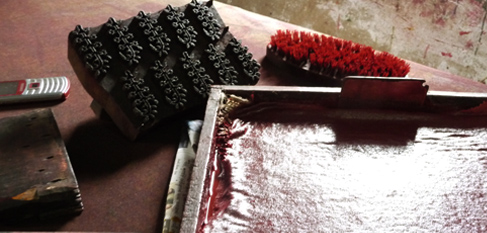
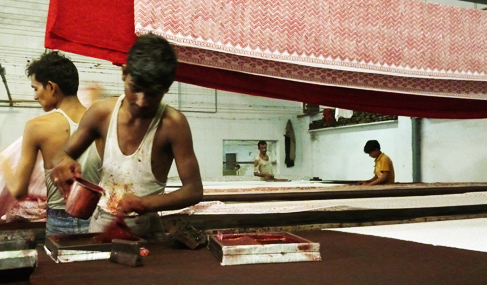
To begin the process, grey fabric (off-white, starched) is bleached to get the white, which is then given any color of choice using chemical dye. Printing on top with chemical colors is a tricky process, as it takes time for the colorants to react with the air, to give the actual color of the patterns. Complex patterns may need printing with 3-4 blocks, to achieve the final results. The fabric is then washed and sun dried.
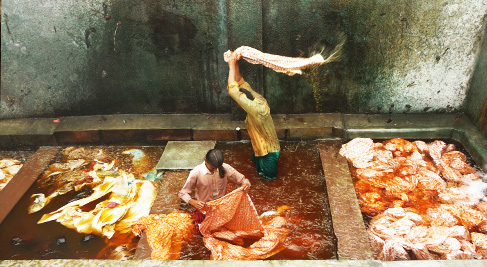
Screen printing has carved out a niche in these traditional block printing units due to increase in demand, decreasing number of admirers of the natural and completely hand made, low running cost, reliability of delivery in time. But the numerous combinations achievable by the same age old blocks, with some colors and a little playfulness in hand, still stands unparalleled….“Hand ka koi end nahi hai”, as quoted by the master craftsman.
-225x150w.webp "Kusumaprabha . कुसुमांप्रभा ✦ Handcrafted Glass Earring - Polka Bug")
-225x150w.webp "Kusumaprabha . कुसुमांप्रभा ✦ Handcrafted Glass Earring - Polka Bug")
Firozabad is situated in the west of Uttar
Pradesh. This industrial town of Uttar Pradesh, very popularly called the ‘Glass City of India’ is a renow..
Rs.1,719.95
-225x150w.webp "Kusumaprabha . कुसुमांप्रभा ✦ Handcrafted Glass Earring - Lotus Bud")
-225x150w.webp "Kusumaprabha . कुसुमांप्रभा ✦ Handcrafted Glass Earring - Lotus Bud")
Firozabad is situated in the west of Uttar
Pradesh. This industrial town of Uttar Pradesh, very popularly called the ‘Glass City of India’ is a renow..
Rs.2,580.18
-225x150w.webp "Kusumaprabha . कुसुमांप्रभा ✦ Handmade Glass Earring - Fish")
-225x150w.webp "Kusumaprabha . कुसुमांप्रभा ✦ Handmade Glass Earring - Fish")
Firozabad is situated in the west of Uttar
Pradesh. This industrial town of Uttar Pradesh, very popularly called the ‘Glass City of India’ is a renow..
Rs.1,670.22
-225x150w.webp "Kusumaprabha . कुसुमांप्रभा ✦ Handcrafted Glass Earring - Frosted Glass Daisy")
-225x150w.webp "Kusumaprabha . कुसुमांप्रभा ✦ Handcrafted Glass Earring - Frosted Glass Daisy")
Firozabad is situated in the west of Uttar
Pradesh. This industrial town of Uttar Pradesh, very popularly called the ‘Glass City of India’ is a renow..
Rs.1,670.22
-225x150w.webp "Kusumaprabha . कुसुमांप्रभा ✦ Handcrafted Glass Earring - Amber Yellow Flame Bloom")
-225x150w.webp "Kusumaprabha . कुसुमांप्रभा ✦ Handcrafted Glass Earring - Amber Yellow Flame Bloom")
Firozabad is situated in the west of Uttar
Pradesh. This industrial town of Uttar Pradesh, very popularly called the ‘Glass City of India’ is a renow..
Rs.1,670.22
-225x150w.webp "Kusumaprabha . कुसुमांप्रभा ✦ Handmade Glass Pale Pink Moth Earring")
-225x150w.webp "Kusumaprabha . कुसुमांप्रभा ✦ Handmade Glass Pale Pink Moth Earring")
Firozabad is situated in the west of Uttar
Pradesh. This industrial town of Uttar Pradesh, very popularly called the ‘Glass City of India’ is a renow..
Rs.1,849.95
-225x150w.webp "Kusumaprabha . कुसुमांप्रभा ✦ Handmade Glass Earring - Shiuli Flower")
-225x150w.webp "Kusumaprabha . कुसुमांप्रभा ✦ Handmade Glass Earring - Shiuli Flower")
Firozabad is situated in the west of Uttar
Pradesh. This industrial town of Uttar Pradesh, very popularly called the ‘Glass City of India’ is a renow..
Rs.1,670.22
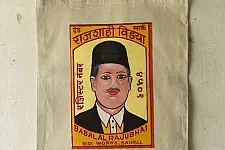
-225x150w.webp "Carnival on Canvas | Matchbox Label Painted on Canvas Bag - (Two Color Option)")
One of a Kind
Theater, street plays, wanderer storytellers have always given face to what were mere descriptions in the scripts. These tales, a brainchild of our ep..
Rs.1,199.98
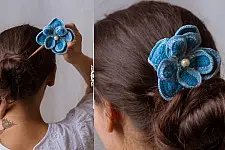
-225x150w.webp "Crochet ✩ Hair Stick - Blue Lotus")
The name "croche" comes from the French word "crochet", meaning small hook. In India it is right to say that with the arrival of the first batch of Nu..
Rs.749.93
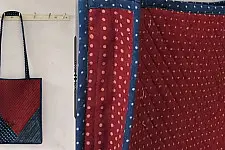
-225x150w.webp "Bolsa | Block Printed Quilted Handbag - D")
Bagru, a town at the outskirts of Jaipur(Rajasthan) is oneof the textile hubs. It is known for centuries for its natural dying, syahibegar printing, i..
Rs.2,799.79
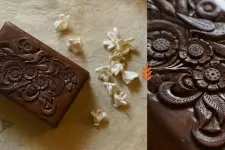
-225x150w.webp "Phullai | Walnut wood box")
Out Of Stock
A carpet of dried maple leaves and the sound of two pairs of tiny feet squirreling around, crushing them beneath, abrupt spurs of giggle merging with ..
Rs.4,999.83
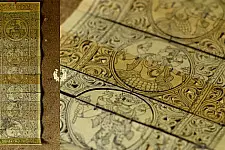
-225x150w.webp "Sira | Tala Pattachitra Painting")
Out Of Stock
Drawn symbols are probably the oldest way of preservation of information and wisdom, starting with depiction of life scenes in Stone Age caves, to tra..
Rs.1,320.12
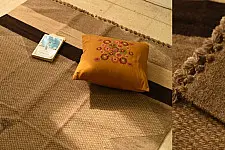
-225x150w.webp "Sulochana ~ Woolen Durrie ( 4' X 6' ) | Earthy")
One of a Kind
Probably the lesser known offspring of Artisans’ Alliance, Jawaja, the durries of Beawar, Rajasthan, are no less than the leather craft of this 35 yea..
Rs.11,460.12


ABOUT KABBISH - The beauty of a craft is in its effect on you, KABBISH derives
its inspiration from color black “black is poetic, it’s not Gothi..
Rs.2,249.78

-50 %
Out Of Stock
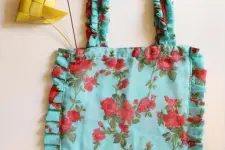
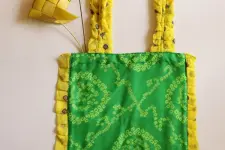
Gathering commences in the middle of deserted pavilions where velvet carpets adorn the Dessert lands & Manganiyars play folk music as a bugle for ..
Rs.512.10 Rs.1,025.18

-50 %
Out Of Stock
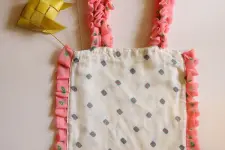
Gathering commences in the middle of deserted pavilions where velvet carpets adorn the Dessert lands & Manganiyars play folk music as a bugle for ..
Rs.512.10 Rs.1,025.18

-50 %
Out Of Stock
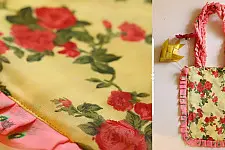
Gathering commences in the middle of deserted pavilions where velvet carpets adorn the Dessert lands & Manganiyars play folk music as a bugle for ..
Rs.512.10 Rs.1,025.18
-50 %
Out Of Stock
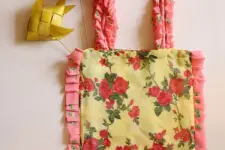
Gathering commences in the middle of deserted pavilions where velvet carpets adorn the Dessert lands & Manganiyars play folk music as a bugle for ..
Rs.512.10 Rs.1,025.18
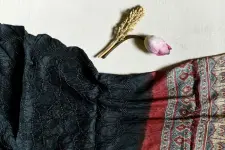
-225x150w.webp "Ada . अदा | Ajrakh Bandhani Tussar Silk Stole - Black")
-10 %
Out Of Stock
A familiar chatter swells in the air as feet chase the trail of a carelessly flying odhani in the by-lanes of Bhuj, spilling colors all over. While&nb..
Rs.3,070.11 Rs.3,411.84
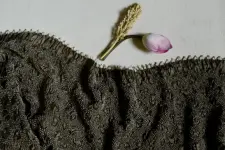
-225x150w.webp "Ada . अदा | Bandhani Tussar Silk Dupatta - Heart Design in Greenish Gray Colour")
One of a Kind
-10 %
A familiar chatter swells in the air as feet chase the trail of a carelessly flying odhani in the by-lanes of Bhuj, spilling colors all over. While&nb..
Rs.9,309.81 Rs.10,344.83
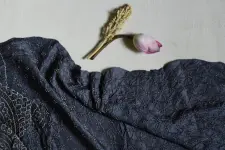
-225x150w.webp "Ada . अदा | Bandhani Tussar Silk Stole - Grey")
One of a Kind
-10 %
A familiar chatter swells in the air as feet chase the trail of a carelessly flying odhani in the by-lanes of Bhuj, spilling colors all over. While&nb..
Rs.3,460.10 Rs.3,845.15