

- Availability: Out Of Stock
- Made & Mkt by: Purnarjeevana
- Product Code: 1403-P-01
- Weight: 350.00g
- Package Dimensions: 600.00cm x 114.00cm x 0.00cm

Holding a wicker basket containing yellow vermillion, which she willingly smears on the forehead of any consenting devotee in the Yellamma temple grounds.... a senior Devadasi dressed in a Patteda saree positions herself in front of one of the entrances to the temple. She is accompanied by a few other women, similarly dressed, sitting on a high perch near the entrance and chanting prayers in praise of goddess Yellamma.
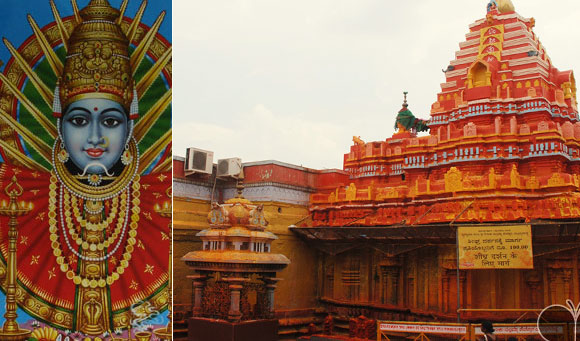
Tale goes back to 10th century AD, Devadasis were women... typically residing in the temples and were educated as artists and courtesans. It is not clear if the Yellamma Temple Saundatti has its roots in the Devadasi tradition. There are many stories about the origin of the Yellamma cult. The most prevalent one says that Renuka, who was the daughter of a Brahmin, married a sage called Jamadagni and was the mother of five sons. She used to bring water from the river Malaprabha for the sage's worship and rituals. One day, while she was at the river, she saw a group of youngsters engaged in water sports and forgot to return home on time, which made Jamadagni suspect her chastity. He ordered his sons one by one to punish their mother but four of them refused on one pretext or the other.
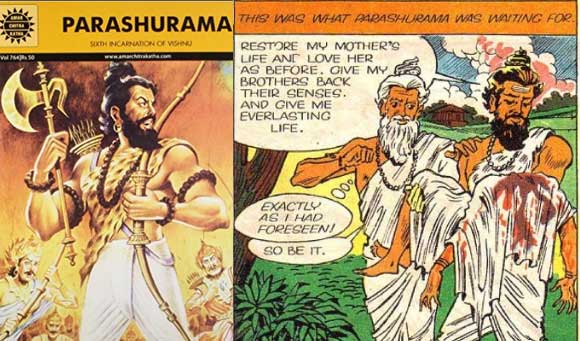
The sage cursed them to become eunuchs and got her beheaded by his fifth son, Parashuram. To everybody's astonishment Renuka's head multiplied by tens & hundreds and moved to different regions. This miracle made her four eunuch sons and others to become her followers who worshiped her head.
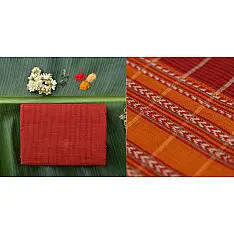
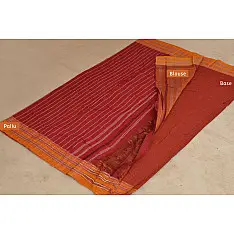
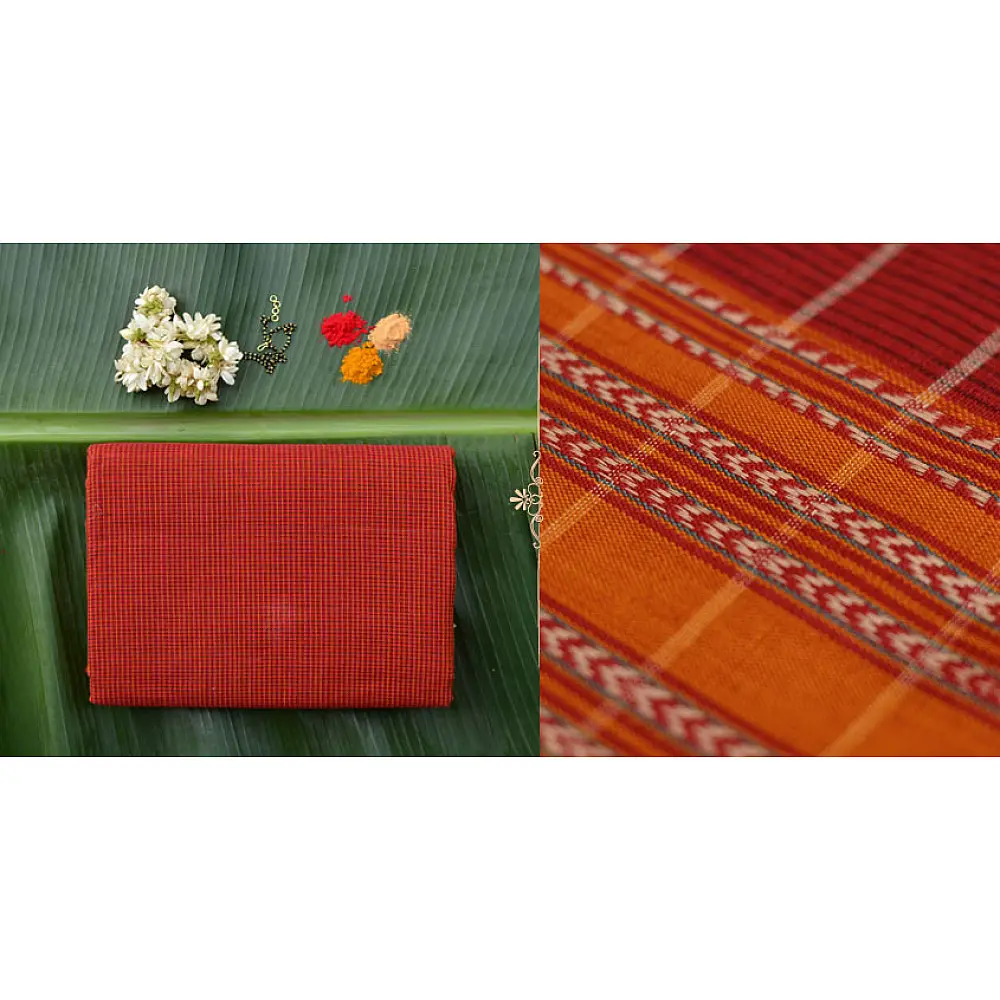
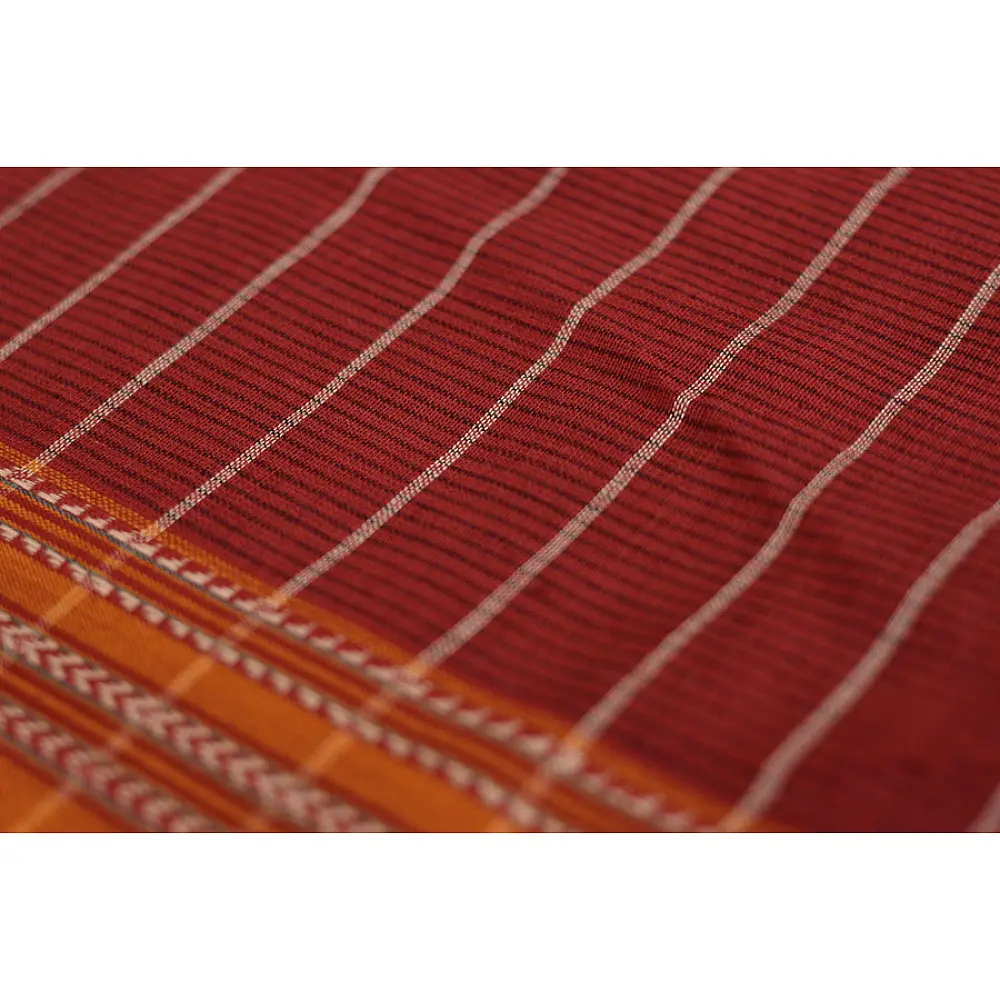
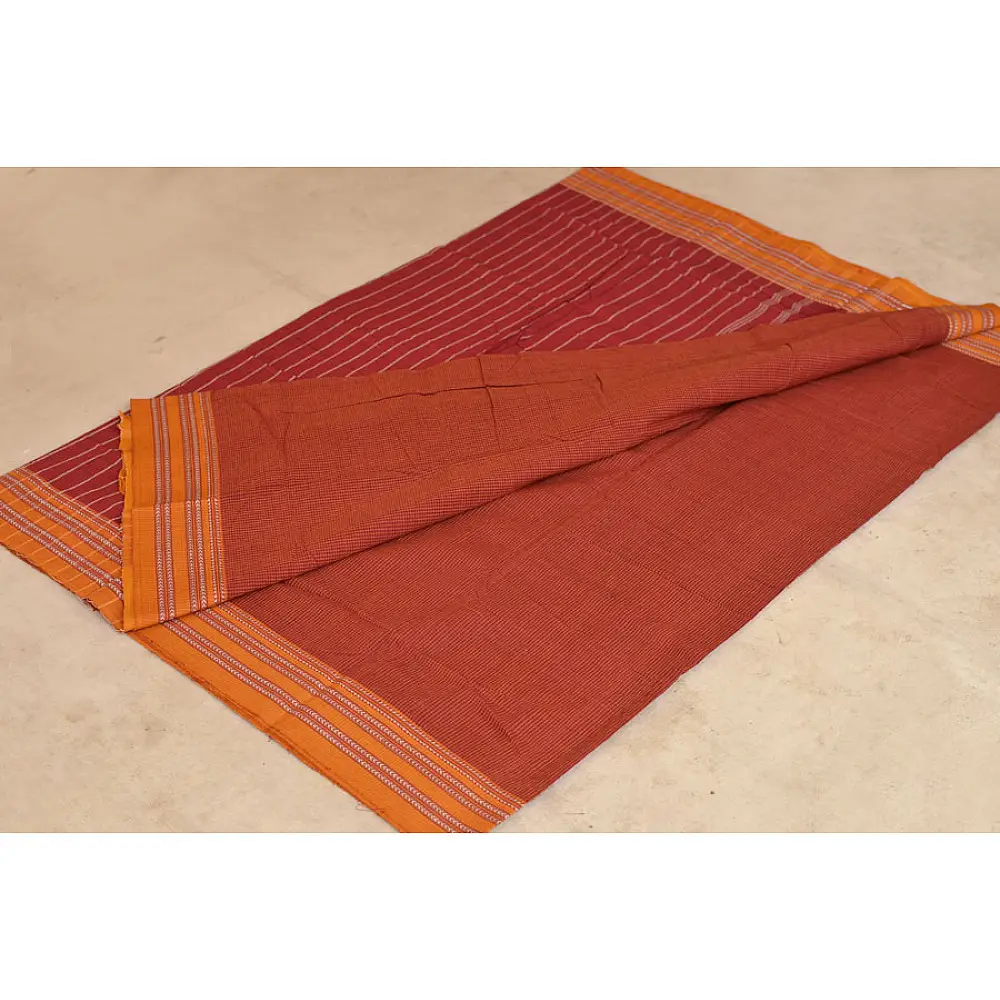
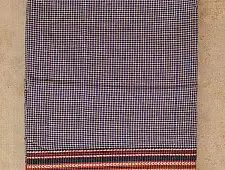
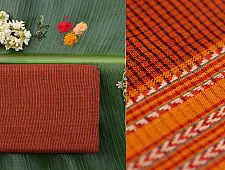
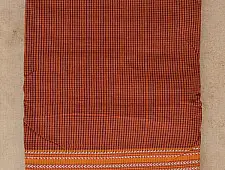
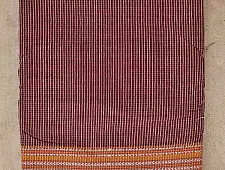
Patteda sari as an integral part has played a significant role in bringing together the socio-cultural aspect of the region from time immemorial. It was used as a wedding sari for the bride and also to adorn goddess Yellamma Saundatti by the devotees. Patteda Anchu is one of the first varieties woven centuries ago in Gajendragarh village of Gadag district in north Karnataka.
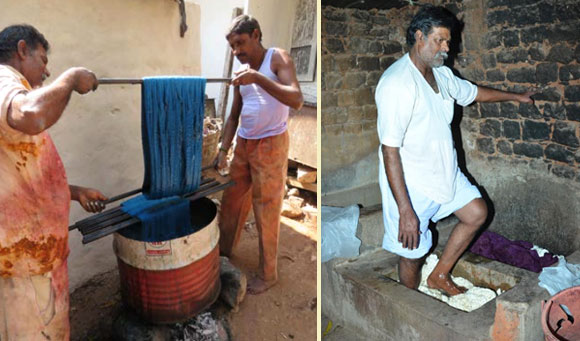
Image by Punarjeevana
karnataka weaving history goes back to 10th century. Records from China mention the presence of Indian merchants in ports of South China, indicating active trade with overseas kingdoms. South India exported textiles, spices, medicinal plants etc. Many indian literary sources such as the works of Harihara, Bilhana and other poets of the medieval period speak of a variety of fabrics produced in Karnataka and also bear references to taxes that were payable on yarn, looms and dyes.
Earlier the width of the pateda sarees was 38 inches and length, 5.5 yards but now it is woven in 44 inches and 6.25 yards. old paintings and sclupteres show women traditionally wearing the saree. The saree being an unstitched drape enhances the shape of the wearer while only partially covering the midriff. In Indian philosophy, the navel of the supreme being is considered as the source of life and creativity, so saree was an auspicious garment offered to the temple goddess when the daughter of a household got married.
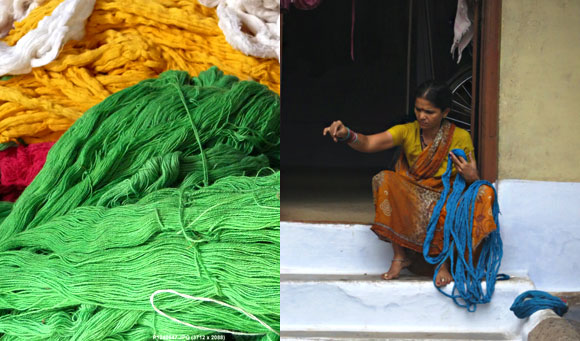
Process of Patteda saree starts from procuring the yarn- 20, 40 or 60 count yarns were procured from Coimbatore. After removing impurity from the yarn, according to design, artisan dyes the yarn. Earlier it was dyed with natural dyes but now it is dyed with Naphol dyes and colours have gone beyond the original red and mustard.
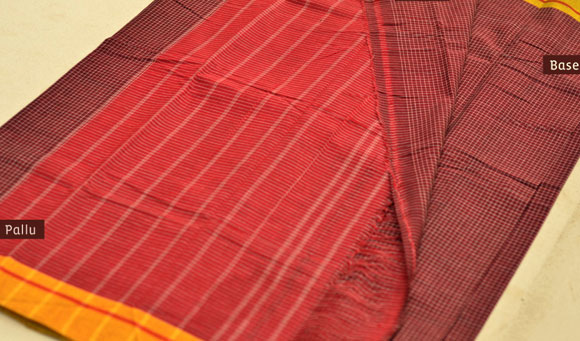
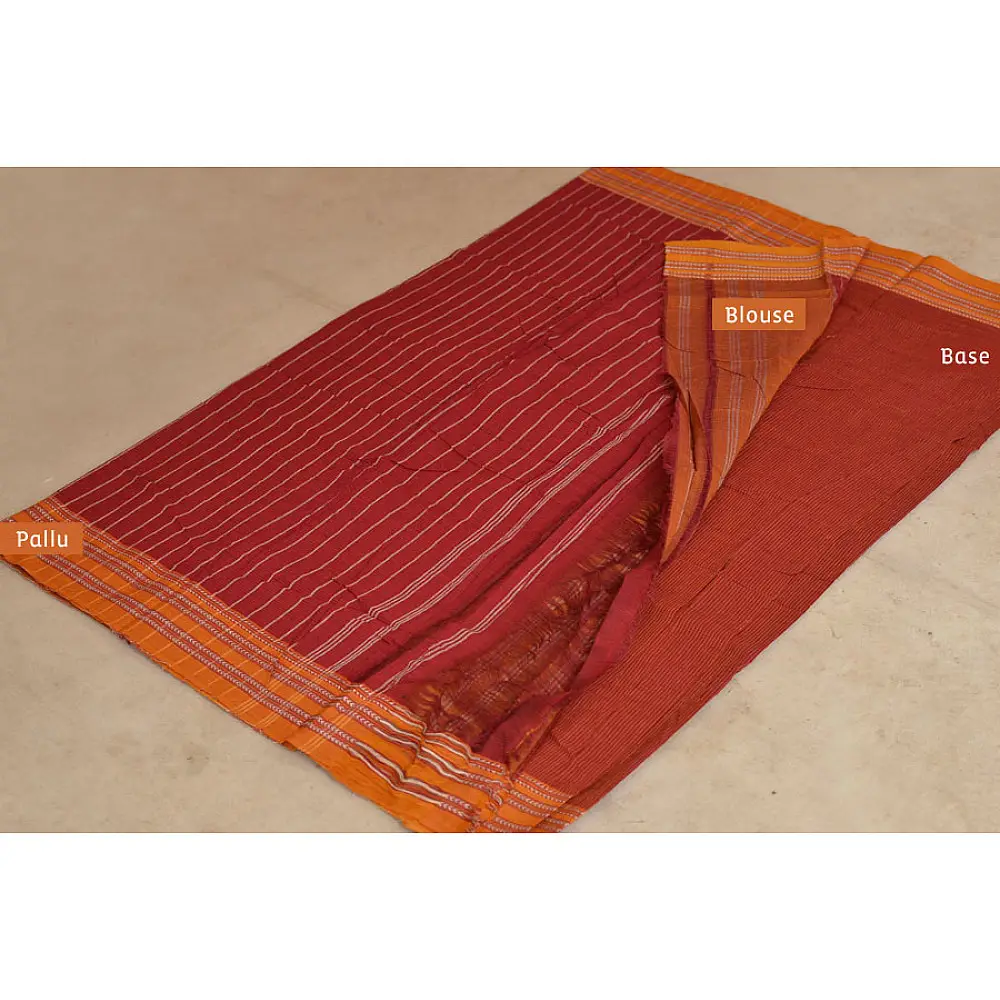
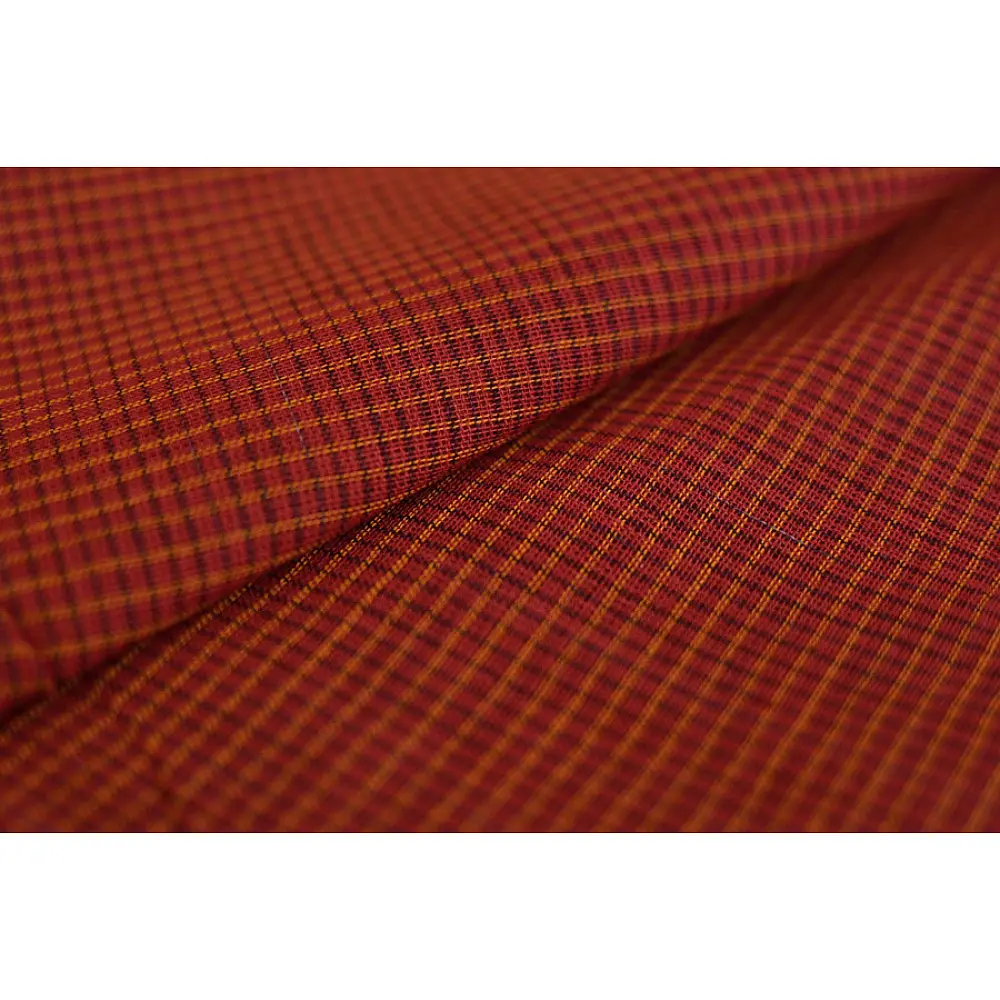
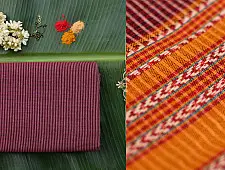
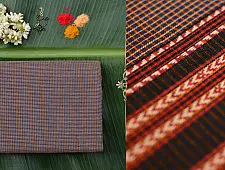
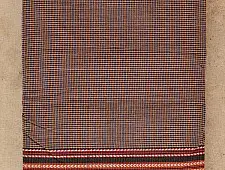
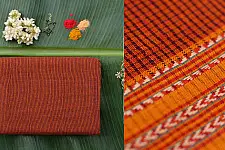
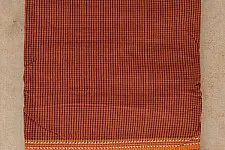
There are many kinds of Pateda sarees, based on checks and colors like kempukaddi, kavali hoova, raagavali, kondichikki, kaddigekannu, chowkaani, kumkuma etc. Kempukaddi is woven with fine checks of dark brown and red color with a yellow color border and is the only saree woven the most while the rest of them are very rare to find.
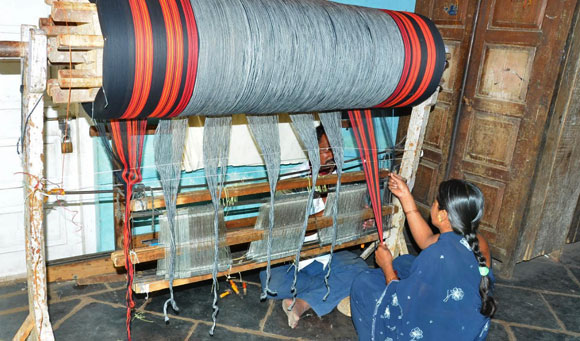
Image by Punarjeevana
After putting the yarn on the warp (reshmi hari) and setting up the shuttle pit loom, weaver start weaving. The Patteda Anchu weaving with check body and plain contrasting borders is done using three shuttles. One big shuttle carries the weft yarn for the body and small shuttles carry weft yarns for the borders.
Related Products
-225x150w.webp "Handmade Wooden Hanging Hanuman Mask")
-225x150w.webp "Handmade Wooden Hanging Hanuman Mask")
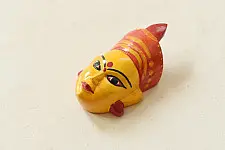
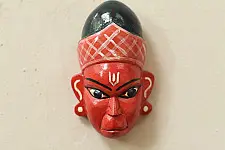
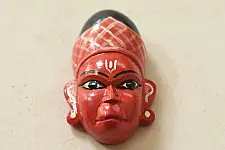
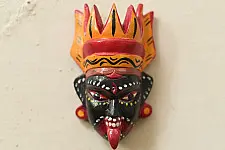
-225x150w.webp "Kusumaprabha . कुसुमांप्रभा | Designer Glass Earring - Blue Jhumka")
-225x150w.webp "Kusumaprabha . कुसुमांप्रभा | Designer Glass Earring - Blue Jhumka")
-225x150w.webp "Folk Love ~ Kutchi Handmade Embroidered Necklace")
-225x150w.webp "Folk Love ~ Kutchi Handmade Embroidered Necklace")
-225x150w.webp "Folk Love ~ Banjara Handcrafted Embroidered Necklace")
-225x150w.webp "Folk Love ~ Banjara Handcrafted Embroidered Necklace")
-225x150w.webp "Embroidered Cotton Silk Blouse Piece ( Unstitched ) - Yellow")
-225x150w.webp "Embroidered Cotton Silk Blouse Piece ( Unstitched ) - Yellow")

-225x150w.webp "Sankhla ✼ Wooden Vases (Set of Two) ✼ 8")
-225x150w.webp "Damodar . दामोदर ✩ Handspun Pure Cotton Dhoti Khes - Off White")
-225x150w.webp "Damodar . दामोदर ✩ Handspun Pure Cotton Dhoti Khes - Off White")
-225x150w.webp "A pocket full of joy ~ Patola Clutch Purse / Black Sling Bag")
-225x150w.webp "A pocket full of joy ~ Patola Clutch Purse / Black Sling Bag")
-225x150w.webp "Ceramic . Hangings | Handmade Ceramic Chimes - Leaves & Birds")



-225x150w.webp "Ada . अदा | Ajrakh Bandhani Tussar Silk Stole - Black")
-225x150w.webp "Ada . अदा | Bandhani Tussar Silk Dupatta - Heart Design in Greenish Gray Colour")
-225x150w.webp "Ada . अदा | Bandhani Tussar Silk Stole - Grey")