Out Of Stock


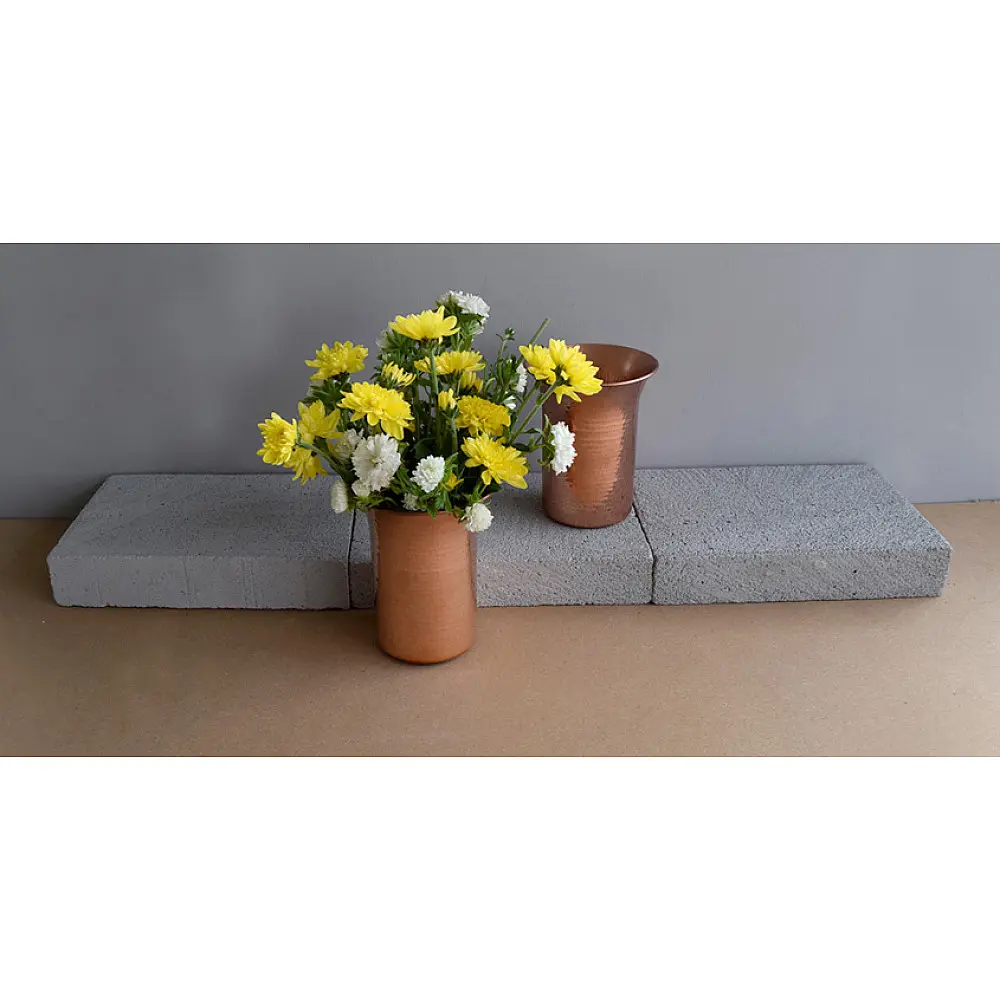
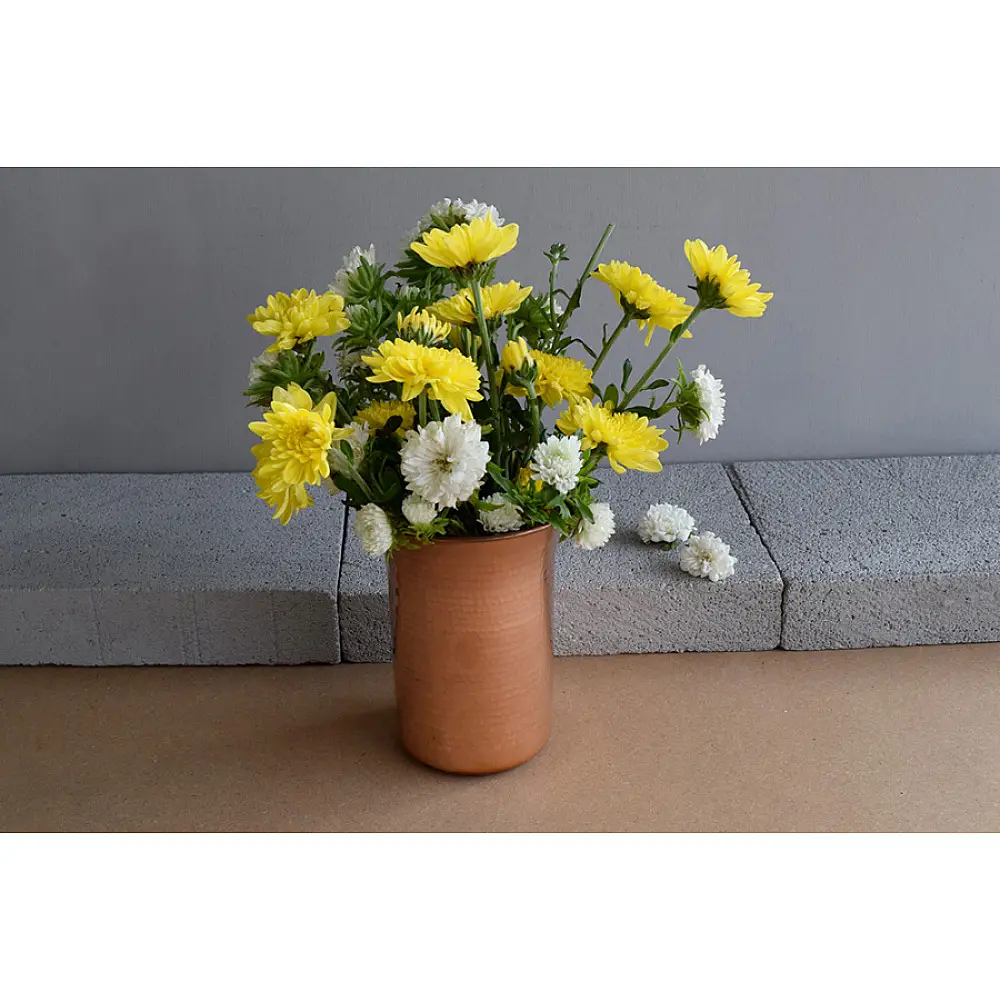
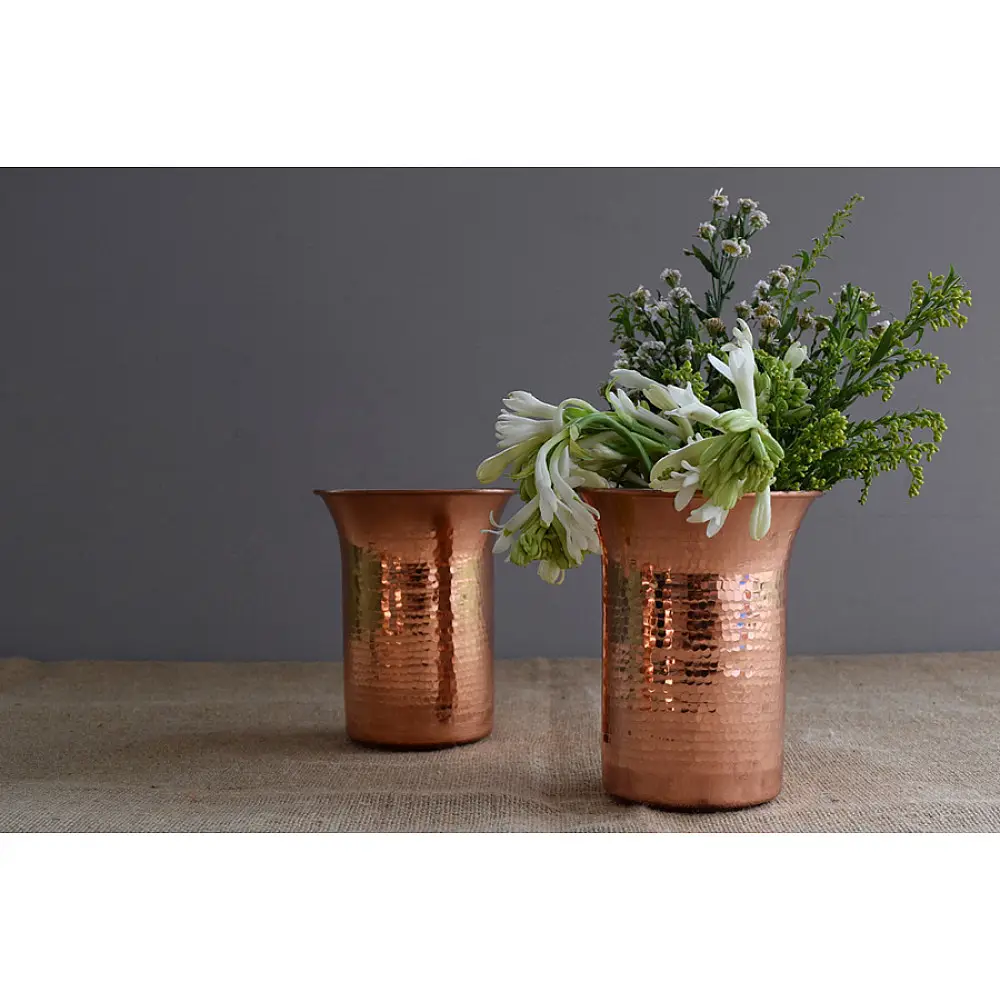
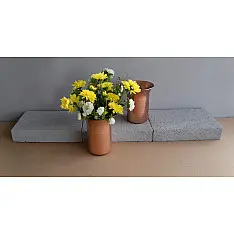
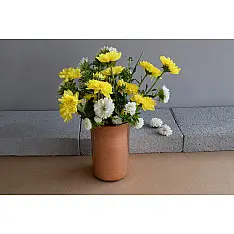
ताम्र ✤ Tulipina { Single Piece }
- Availability: Out Of Stock
- Made & Mkt by: Coppre
- Product Code: 4018-F-U-26
- Weight: 450.00g
- Package Dimensions: 4.40in x 4.40in x 5.50in
Rs.1,900.00

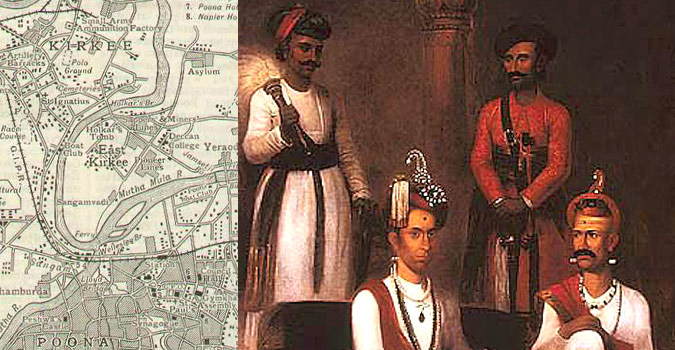
The legacy of the Tambat Craftspeople who handcraft Coppre's products dates to the 17th century when they were invited to Pune by the Peshwas when Shivaji set up the city as the capital city of the Maratha Empire.
When the Tambat craftspeople migrated from Konkan to Pune, they formed their settlement in Kasba Peth, an already established nucleus of old Pune. Their precincts came to be known as Tambat Ali (Ali:precincts). These narrow and dusty alleys of Tambat Ali where the timeless sound of metal-hammers clang on copper, have remained pretty much the same as they were almost 300 years ago.
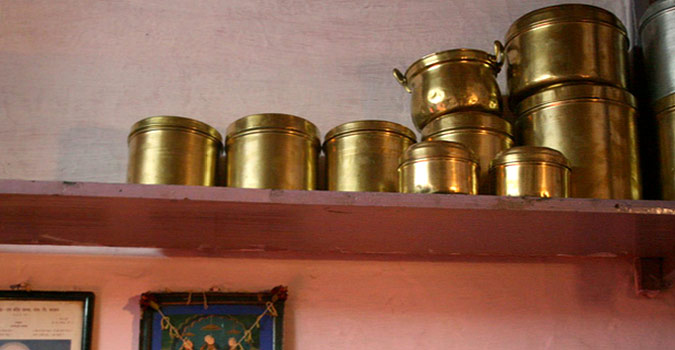
From making armour, coins, canons, copper utensils, ritual wares for the Peshwa rulers, the Craftspeople embraced the culinary and ritual needs of Maharashtrian communities and crafted traditional products such as utensils and puja items.Distinguishing feature of Tambat craft
‘Matharkaam’ or beaten work is the distinguishing feature of Tambat craft. The hand-beaten indentations, made by profiled beating hammers, strengthen the object and enhance the inherent rich surface by imparting a mirror-like appearance. It is a skill intensive craft and needs strength, dexterity and a keen hand-foot-eye coordination.
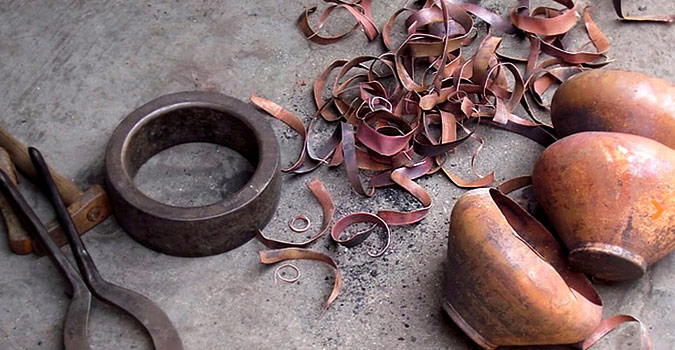
It is the only skill that the community could save from the onslaught of mechanization with the coming of British rule, which to date has not leant itself to be mimicked on any machine.
The loss of the patronage of the Peshwas, the introduction of mechanization and the bans imposed by the British, forced the Tambats to set up their own shops to sell their wares to the commoners. Over the years, the members of the Tambat community practicing this craft have continued to dwindle. There were upto 800 Tambat households in the early 1970s. By the early 90s, The Tambat households in Pune city fell to 250. Currently, about 80-100 families directly depend on the Tambat Craft for their livelihood.
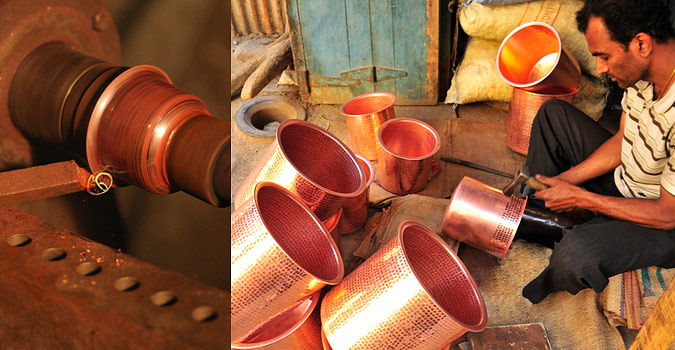
Hit by changing traditions, rising copper prices on the commodity markets in recent years, the convenience offered by materials like stainless steel and plastic and the provocative economic opportunities outside the confines of their craft, has led to a near stagnation. Yet some families of the community persevere with this craft of shaping objects from sheets of copper they carry on the ghadkaam (raising, sinking and shaping of the utensil), the crafting of ritual wares, nakshikaam (repousse and chasing); and the crafting of one-off temple objects.
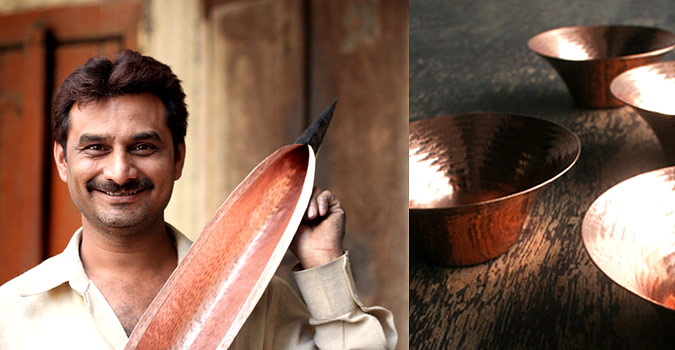
Passed on through apprenticeship from one generation to the next, today the craft remains in the hands of a few craftspeople with even fewer willing to take on this heritage craft.


Ajrakh Block Printing KutchAjrakh is believed to have the universe, or sky as its theme. Blue
symbolizes the sky, red symbolizes twilight and the ni..
Rs.3,900.00


Ajrakh Block Printing KutchAjrakh is believed to have the universe, or sky as its theme. Blue
symbolizes the sky, red symbolizes twilight and the ni..
Rs.3,900.00

Ajrakh Block Printing KutchAjrakh is believed to have the universe, or sky as its theme. Blue
symbolizes the sky, red symbolizes twilight and the ni..
Rs.4,200.00

Ajrakh Block Printing KutchAjrakh is believed to have the universe, or sky as its theme. Blue
symbolizes the sky, red symbolizes twilight and the ni..
Rs.4,200.00

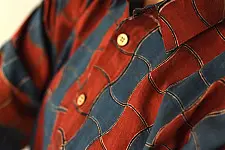
Ajrakh Block Printing KutchAjrakh is believed to have the universe, or sky as its theme. Blue
symbolizes the sky, red symbolizes twilight and the ni..
Rs.3,900.00
-225x150w.webp "Kopal ❅ Handloom Linen - Embroidered Saree")
-225x150w.webp "Kopal ❅ Handloom Linen - Embroidered Saree")
New
Out Of Stock
Bhagalpur, is one of the oldest towns of Bihar, references to which can be found in Indian epics like Mahabharata and Ramayana, as the kingdom of ‘Ang..
Rs.6,610.00
-225x150w.webp "Kopal ❅ Handloom Linen Embroidered Saree - Sky Blue")
-225x150w.webp "Kopal ❅ Handloom Linen Embroidered Saree - Sky Blue")
New
One of a Kind
Bhagalpur, is one of the oldest towns of Bihar, references to which can be found in Indian epics like Mahabharata and Ramayana, as the kingdom of ‘Ang..
Rs.4,000.00
-225x150w.webp "Batik Painting ~ Two Women")
-225x150w.webp "Batik Painting ~ Two Women")
One of a Kind
Batic Craft Story
Originally batik printed cloth was used by the tribals of surrounding areas for their draped garments, but today, all sorts of d..
Rs.4,900.00
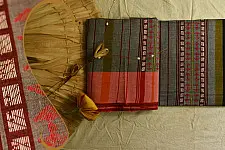
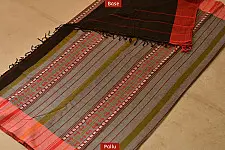
Out Of Stock
The Nadia district of West Bengal is a famous center of Vaishnavism. It is best known to devotees as the residence of Sri Advaita Acharya. After Lord ..
Rs.4,550.00
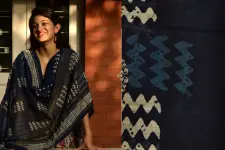
One of a Kind
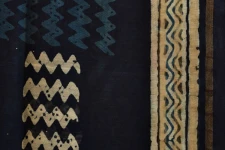
Lying in the western frontiers of India, the Gujarat province with its 1600 km long coastline has been the centre for international trade since ancien..
Rs.2,270.00
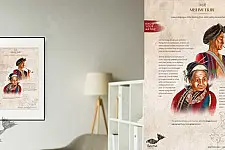
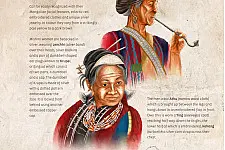
Mishmi Tribe | Arunachal Pradesh | PosterThe Mishmi are one of 26 indigenous groups inhabiting Arunachal Pradesh. The Indian Clans are called Idu, Mij..
Rs.520.00

Hot
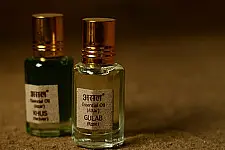
Natural Perfume (Attar)
Truly Natural Attars are rare and in limited supply. Attar is one of the oldest forms of Aromatherapy that uses..
Rs.680.00
-225x150w.webp "Rasika . रसिका ~ Patola Silk Dupatta ~ Maroon Diamond Design")
-225x150w.webp "Rasika . रसिका ~ Patola Silk Dupatta ~ Maroon Diamond Design")
Out Of Stock
Man, an eternal traveler has traversed landscapes... on foot, on his rides, on flights in search of better lands, wealth and at times merely for wande..
Rs.5,440.00
-225x150w.webp "Igloo ~ Himalayan Woolen Socks With Hair Band - Green")
-225x150w.webp "Igloo ~ Himalayan Woolen Socks With Hair Band - Green")
One of a Kind
-21 %
On a winter afternoon in the Himalayas, whether it is the foothills of Uttarakhand or the sublime vallies in the mighty ranges of Ladakh or Nepal, a t..
Rs.1,150.00 Rs.1,450.00

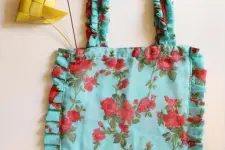
-50 %
Out Of Stock
Gathering commences in the middle of deserted pavilions where velvet carpets adorn the Dessert lands & Manganiyars play folk music as a bugle for ..
Rs.512.00 Rs.1,025.00

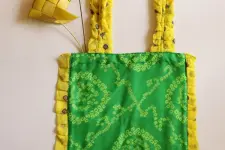
-50 %
Out Of Stock
Gathering commences in the middle of deserted pavilions where velvet carpets adorn the Dessert lands & Manganiyars play folk music as a bugle for ..
Rs.512.00 Rs.1,025.00

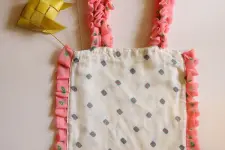
-50 %
Out Of Stock
Gathering commences in the middle of deserted pavilions where velvet carpets adorn the Dessert lands & Manganiyars play folk music as a bugle for ..
Rs.512.00 Rs.1,025.00
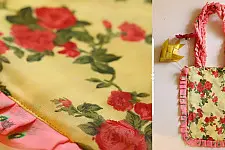
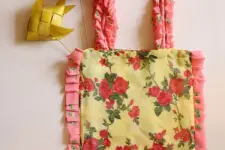
-50 %
Out Of Stock
Gathering commences in the middle of deserted pavilions where velvet carpets adorn the Dessert lands & Manganiyars play folk music as a bugle for ..
Rs.512.00 Rs.1,025.00
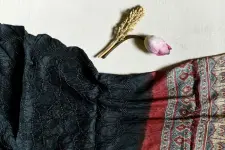
-225x150w.webp "Ada . अदा | Ajrakh Bandhani Tussar Silk Stole - Black")
-10 %
Out Of Stock
A familiar chatter swells in the air as feet chase the trail of a carelessly flying odhani in the by-lanes of Bhuj, spilling colors all over. While&nb..
Rs.3,070.00 Rs.3,412.00
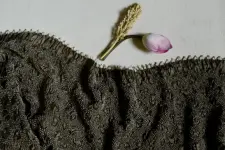
-225x150w.webp "Ada . अदा | Bandhani Tussar Silk Dupatta - Heart Design in Greenish Gray Colour")
-10 %
Out Of Stock
A familiar chatter swells in the air as feet chase the trail of a carelessly flying odhani in the by-lanes of Bhuj, spilling colors all over. While&nb..
Rs.9,310.00 Rs.10,345.00
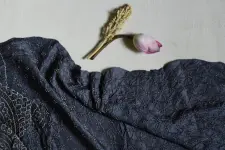
-225x150w.webp "Ada . अदा | Bandhani Tussar Silk Stole - Grey")
One of a Kind
-10 %
A familiar chatter swells in the air as feet chase the trail of a carelessly flying odhani in the by-lanes of Bhuj, spilling colors all over. While&nb..
Rs.3,460.00 Rs.3,845.00
-234x234.webp "Majuli | Handwoven Cotton Runner From Assam - Maroon")
-234x234.webp "Majuli | Handwoven Cotton Runner From Assam - Maroon")