

- Availability: Out Of Stock
- Made & Mkt by: Kosher
- Product Code: 3788-BJNE-6
- Weight: 100.00g
- Package Dimensions: 41.00cm x 14.00cm x 0.00cm

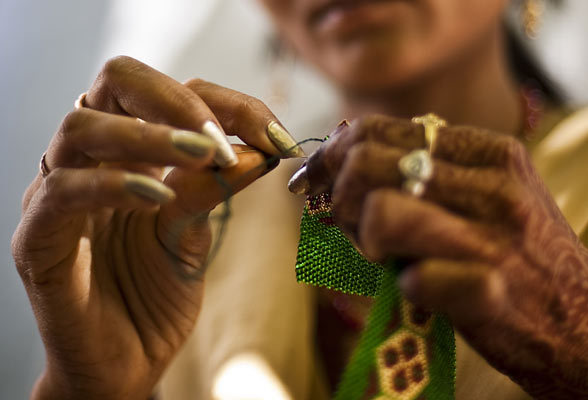
An adolescent girl is sitting on the porch of a neatly arranged hut, fiddling with glass beads and threads, making earnest effort to bring out a pattern to suffice the ritual. She has a little understanding about the outside world and has never stepped outside her village. Her friends in the community, like her, have also inherited that same art of creating objects of fascination with beads. They are sure that the only thing that can make their future bloom is these beads in their hands.
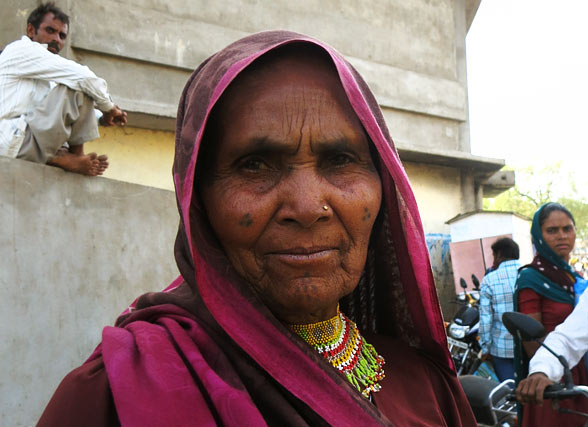
In the tribal region of Jhabua, Alirajpur and Dahod districts, the stature of woman is only decided through bead work, the more efficient and elaborate bead work she makes and wears, the higher the stature she is given. The bead work also lends a sort of hierarchy for a woman in the family structure. The craft tradition is passed through the generations from mothers to daughters and the designs are mostly inspired from tribal art with slight changes made to suit contemporary tastes. Tucked in deciduous forests spanning across west-central India, this region is inhabited by some of the most culturally rich tribal communities of India and they have managed to preserve their cultural identity with the changing times. The terrain is hilly with the occasional green patches with randomly distributed tribal settlements, who obtain their livelihood from the surrounding forests.
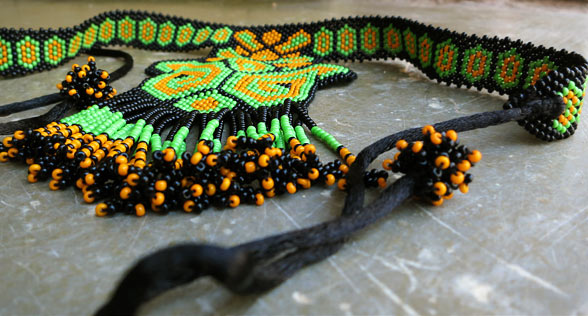
Thousands of years ago, when the beads were considered to be of high monetary value, they would be transported from one place to another in the form of necklaces which the tribal folk would wear around their necks for easy transport. Traditionally the tribes used beads as money, talismans and for decoration purposes but later the beads were used in making ornaments, handbags, table runners and other accessories. The technique is believed to have evolved as a craft after embroidery.
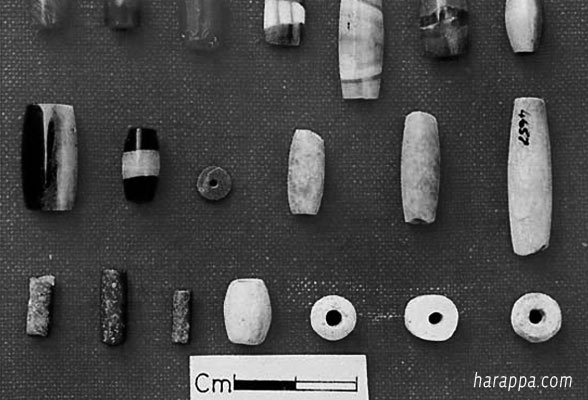
In the ancient Indus Valley or Harappan Culture, craftsmen made millions of tiny beads and the constructions made from them were considered masterful. When the western traders came to India, they wanted to be involved in goods exchanges. They discovered that beads could be used as a medium of exchange (like currency), were durable and transportable. However, they also soon found that the tribes who received beads had particular tastes and desires, and that not just any bead style, type, or color was universally popular.
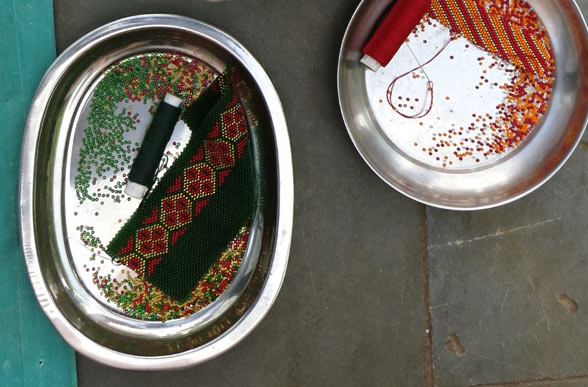
When a woman plans to make bead ornaments, she first cleans the floor and ‘Sadalo’ (an old rag) is spread out. She takes the beads from their holder thread and sorts them in different heaps according to their colors. To sort out the threads, she unwinds the sling of the thread and loops it around her toe. With the ends of the threads still in her hand she goes on picking individual threads one by one. The common practice is to use the same colored thread with the same colored bead and the necklaces made with the beads are classified in terms of number of threads being used in them such as 3, 8, 10 or 12 Dora (thread) necklaces.
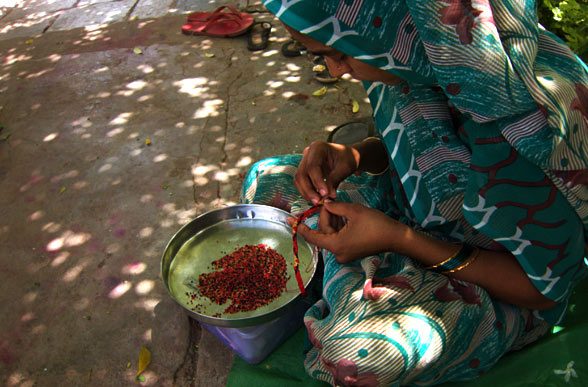
Certain colors are specifically worn to mark certain occasions for example white is used for marriages while green colored jewelry is worn for engagements. Some of the traditional patterns are ‘Phulki’, ‘Hayedi’, ‘Pati’, and ‘Toteni’ which are inspired from natural surroundings. These designs are unique to the craft and passed from one generation to the next. No sketches or graphs are made, but the designs are verbally pre-decided by the women. Most of the designs follow age old patterns with slight modifications in the choice of colors.
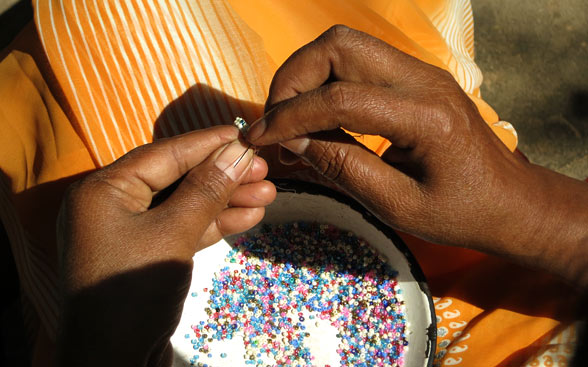
Once the design is complete, the woman adorns it in her community and gets praises for her beautiful creation. It is sort of meditation for them, as they put each individual bead into the pattern personally, the work in itself is a chant, then bringing peace to the creator and wearer both.
Related Products
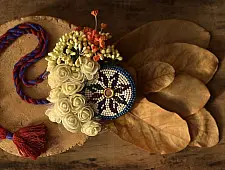
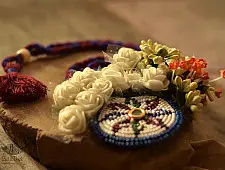
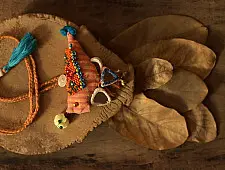
-225x150w.webp "Ishana . इशाना ✯ German Silver Dual-Line Textured Bead Choker Necklace:")
-225x150w.webp "Ishana . इशाना ✯ German Silver Dual-Line Textured Bead Choker Necklace:")
-225x150w.webp "Ishana . इशाना ✯ German Silver Pinecone Motif Hasli Choker Necklace - B")
-225x150w.webp "Ishana . इशाना ✯ German Silver Pinecone Motif Hasli Choker Necklace - B")
-225x150w.webp "Ishana . इशाना ✯ German Silver Triangular Spike Choker Necklace: - A")
-225x150w.webp "Ishana . इशाना ✯ German Silver Triangular Spike Choker Necklace: - A")
-225x150w.webp "Ishana . इशाना ✯ German Silver Lotus Motif Earring")
-225x150w.webp "Ishana . इशाना ✯ German Silver Lotus Motif Earring")
-225x150w.webp "Ishana . इशाना ✯ German Silver Earring - Elephant Motif")
-225x150w.webp "Ishana . इशाना ✯ German Silver Earring - Elephant Motif")
-225x150w.webp "Ishana . इशाना ✯ German Silver Earring - B")
-225x150w.webp "Ishana . इशाना ✯ German Silver Earring - B")
-225x150w.webp "Ishana . इशाना ✯ German Silver Earring - A")
-225x150w.webp "Ishana . इशाना ✯ German Silver Earring - A")
-225x150w.webp "Sadaa . सदा ✡ Begampuri Cotton Saree - Blue")
-225x150w.webp "Handmade Wooden Hanging Mask - Ganesha")
-225x150w.webp "Handmade Wooden Hanging Mask - Ganesha")
-225x150w.webp "Terracotta Tales | Pottery Art ~ Owl T Light Holder")
-225x150w.webp "Terracotta Tales | Pottery Art ~ Owl T Light Holder")
-225x150w.webp "Prabha . प्रभा | Unique Dhokra Brass Earring")
-225x150w.webp "Prabha . प्रभा | Unique Dhokra Brass Earring")
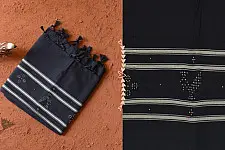
-225x150h.webp "Gulmohar . गुलमोहर - Handwoven Tangaliya Cotton Dupatta - Navy Blue")
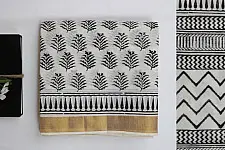



-225x150w.webp "Ada . अदा | Ajrakh Bandhani Tussar Silk Stole - Black")
-225x150w.webp "Ada . अदा | Bandhani Tussar Silk Dupatta - Heart Design in Greenish Gray Colour")
-225x150w.webp "Ada . अदा | Bandhani Tussar Silk Stole - Grey")
-234x234.webp "Kanupriya ꙰ Handmade Trible Bubble Design Kada")
-234x234.webp "Kanupriya ꙰ Handmade Trible Bubble Design Kada")
-234x234w.webp "Kanupriya ❉ White Metal - Rabari Unisex Waist Belt / Kamar Bandh")