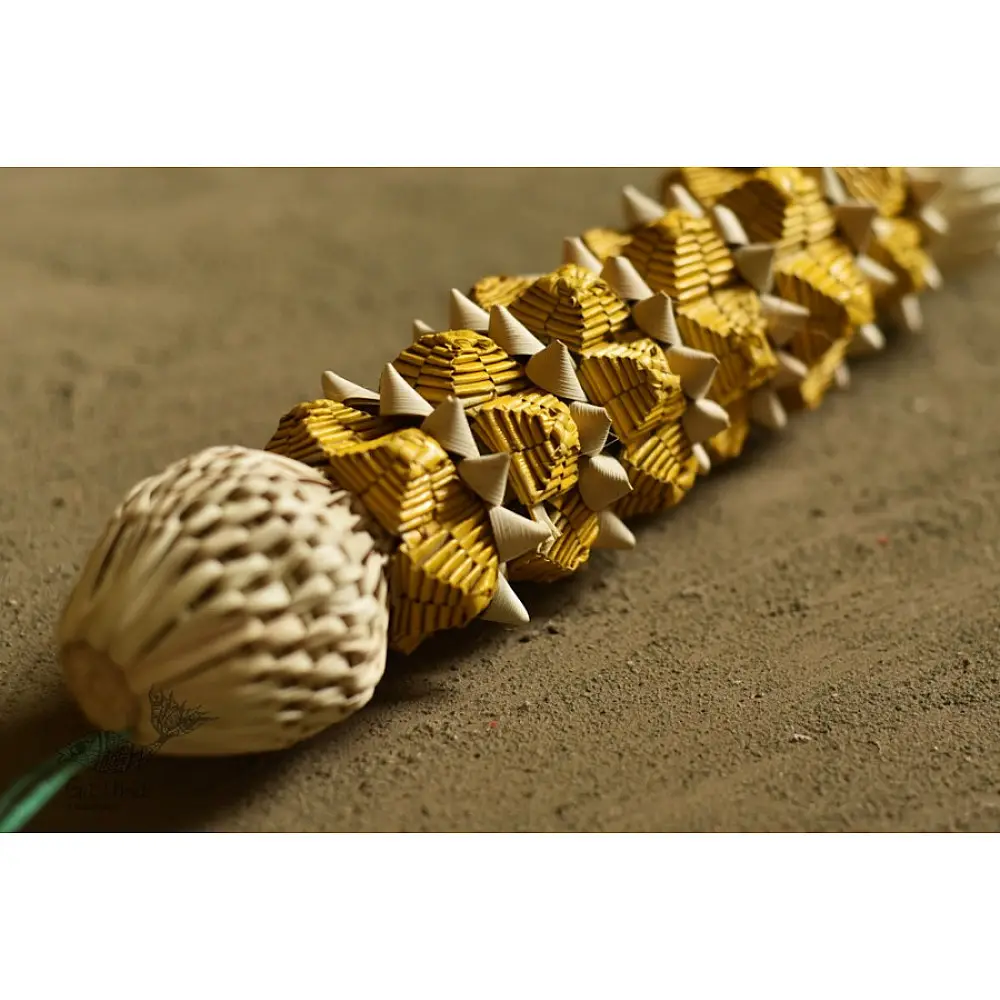
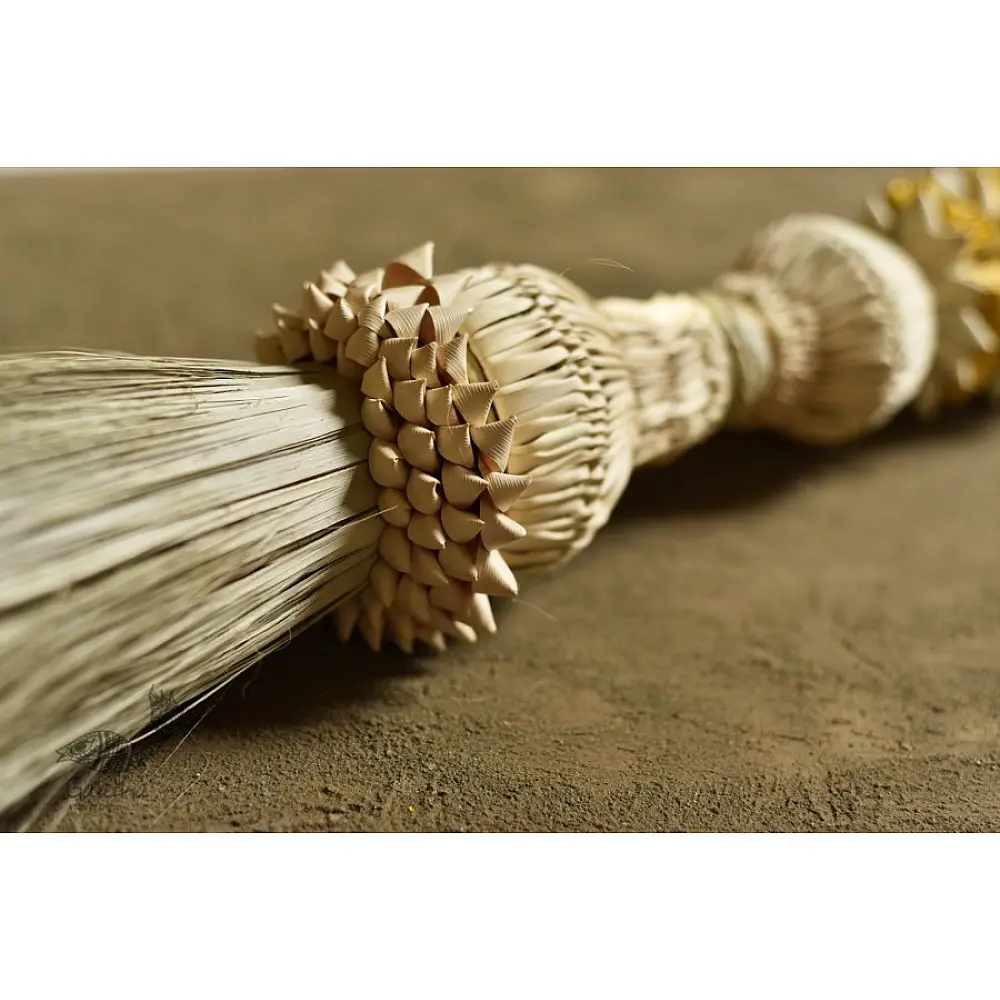
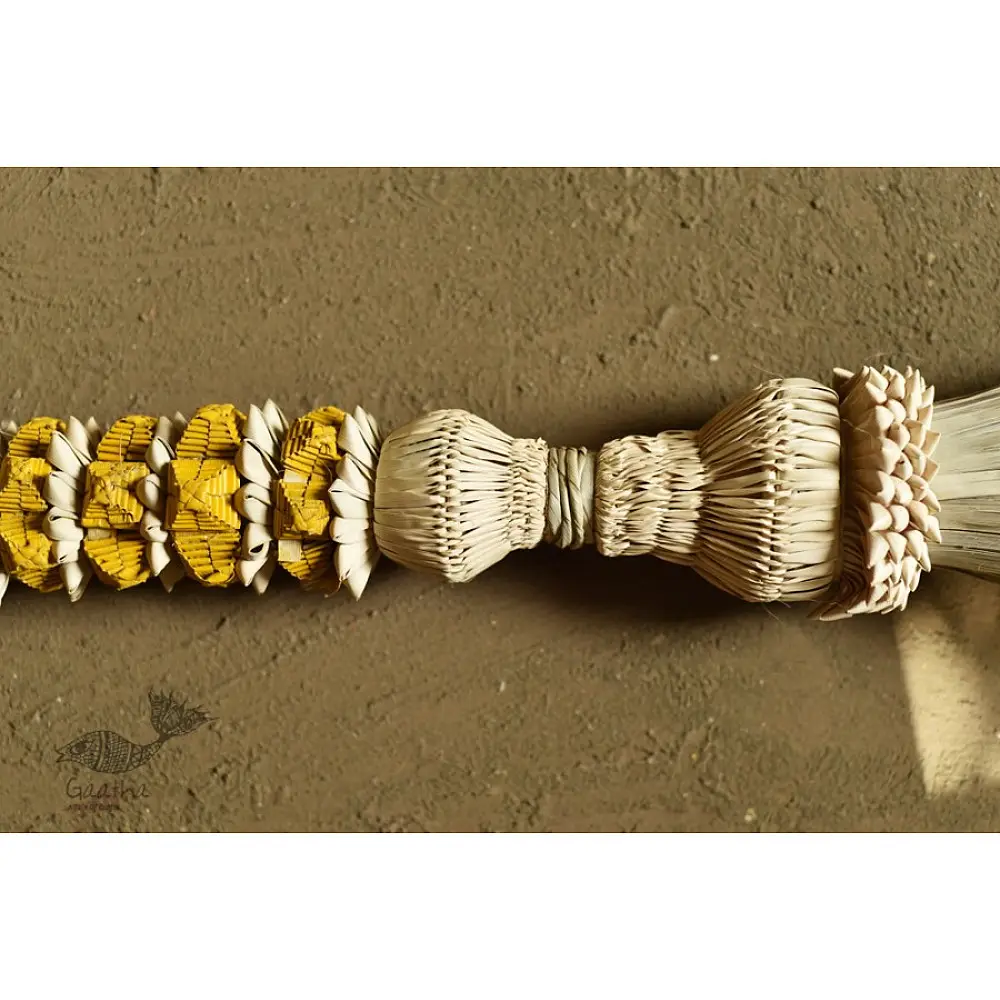


- Availability: Out Of Stock
- Made & Mkt by: Gaatha
- Product Code: 3788-BWH-09
- Weight: 700.00g
- Package Dimensions: 66.00cm x 0.00cm x 0.00cm

While superstitions surrounding our lives might be a big turn off for the present generation, probing slightly deeper may reveal reasons deeply ingrained in our value system. However, it may also not be entirely correct to accept them, it is nonetheless interesting to know about their origins. In Indian households we get told off by our elders if we accidentally touch a broom with our feet, they say ‘it is an embodiment of Lakshmi, brings wealth into the house by taking away dregs and dust, do not dishonor it.’
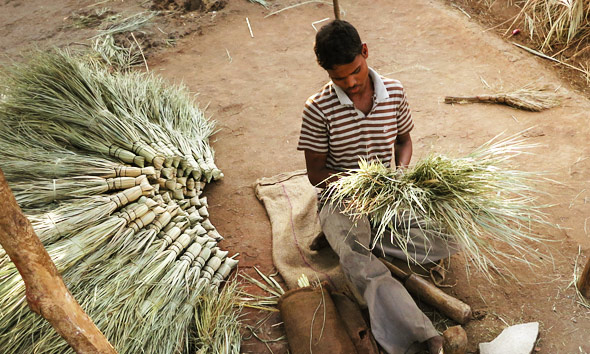
A broom is considered a sacred utility in Indian households. In rural India, it is the first thing that a lady of the house picks up at the break of the dawn, to clean the courtyard and the porch. Called by names like ‘Jhadu’, ‘Bhuari’ etc, it is regarded as feminine and often associated with the ‘Goddess of wealth’.
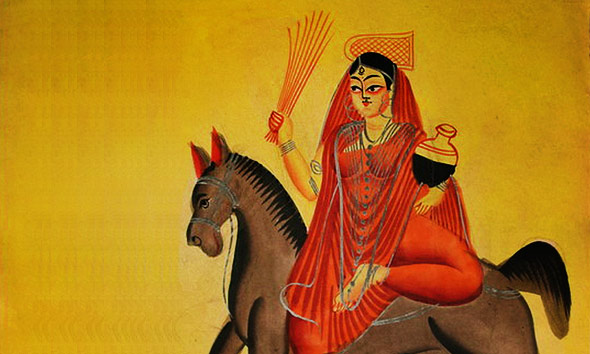
Besides being an indispensable tool of daily use, a broom also has a religious significance. In Jainism, monks and nuns keep a broom with them to keep out insects and animals from their paths as they walk. It prevents killing them unconsciously and is considered as an act of non-violence. Goddess ‘Sheetala’, worshiped in Hinduism, Buddhism and some tribal cultures holds a broom in her right hand. She is a goddess associated with smooth transition of seasons and prosperity. In some cultures, brooms are used by ‘Tantric healers’ to cure psychic problems (again the symbolism of warding off mental dirt).
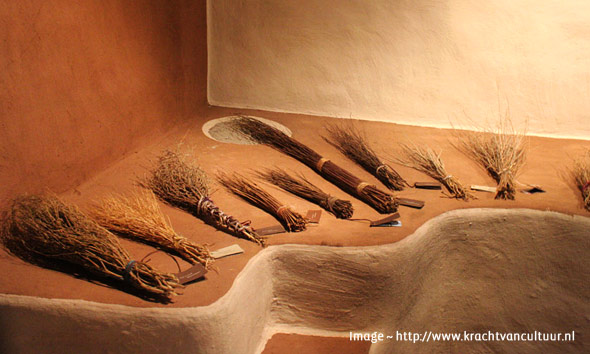
For an object as simple as broom, Indian craft communities have come up with more than a hundred varieties, utilizing different plant species and construction techniques found vernacularly. India is home to 537 aboriginal tribe communities and every community has their long established methods of living in harmony with surroundings by valuing, preserving and using wild forest resources to their benefits. Several wasteland species and seasonal grasses are used for making brooms. In some regions, waste of harvest, fine twigs, hay, straw, plant leaves are also used.
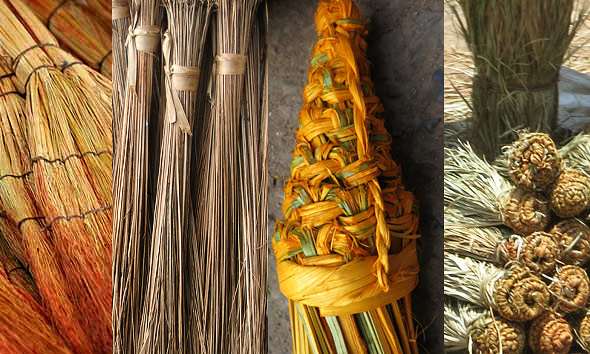
Material for making brooms changes with usage and area of application. To brush aside dust from smooth floors, a broom with fine strands is used. For sweeping water or other fluid materials, a broom with thick and stronger strands is used. For sweeping pliable areas such as grass or open land, a broom with branched strands is used.
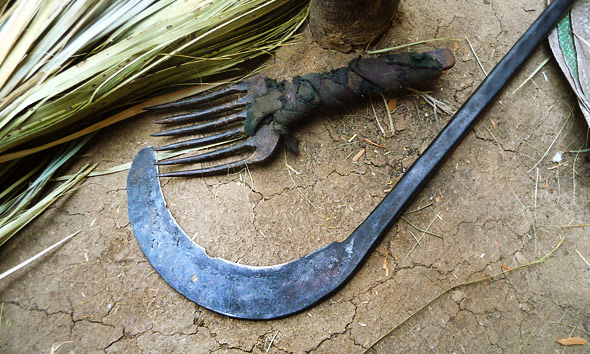
The basic process of making a broom starts with procuring the strands of approximately same length. These are then formed into a bundle and tied together from one end. To increase the gripping comfort, around one fifth of the holding side of the broom is wound with thread or dried grass strips and tied. The process involves various simple tools, which are used to cut, slice or shred the base straw into finer lengths.
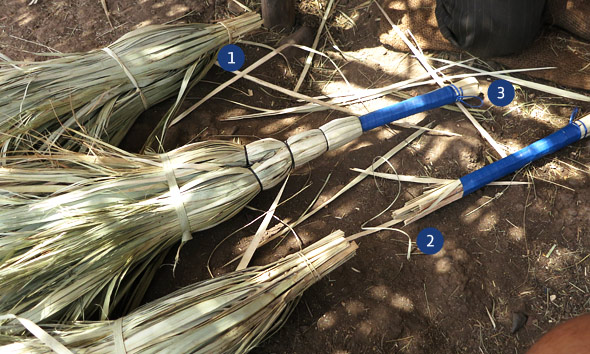
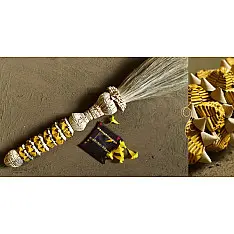
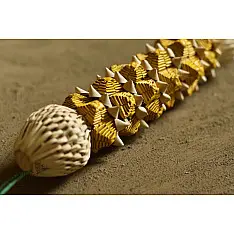
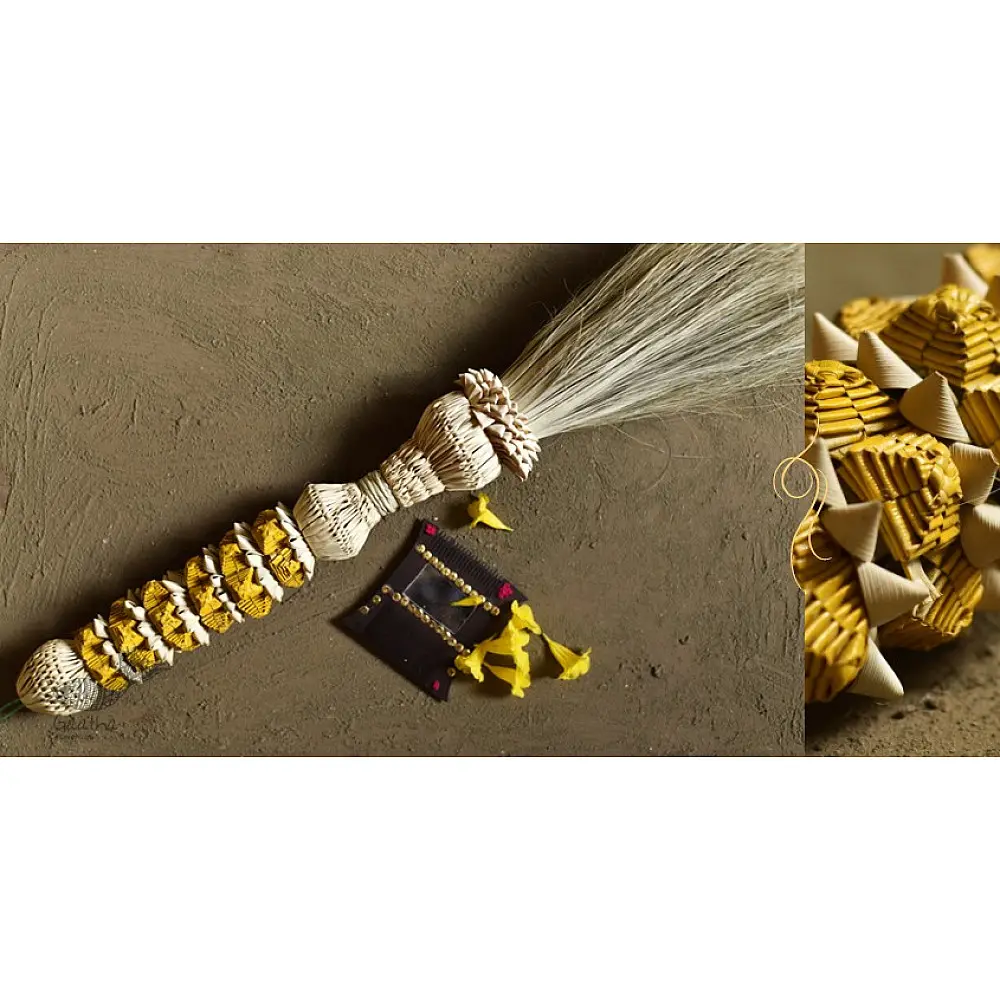
Furthermore, several innovations have been done to make brooms aesthetically more pleasant and robust in construction. In central region of India, artisans make brooms with palm leaves. The leaves are shredded with a teethed tool and then two or three shredded lengths are joined by braiding. The resulting broom is quite unique in its form with braided strands throughout its length.
From ‘Witches’ on a broomstick to peacock feathered ‘Tantrics’, brooms have fairly managed to enrich our folklore and domestic lives. Ever heard of a broom, which is sentimentally attached to its owner? There cannot be any, because as the myth goes ‘A broom gets attached to the place it sweeps and so, to respect its sanctity and its relation with the place, the owner never takes it along when shifting places’.
-225x150w.webp "Salt Deserts of Kutch | Kutchi Bhujodi Hand-spun Raw Woollen Shawl - Cream")
-225x150w.webp "Salt Deserts of Kutch ☼ Kutchi Bhujodi Handwoven Raw Wool Shawl")
-225x150w.webp "Salt Deserts of Kutch ☼ Kutchi Bhujodi Handwoven Raw Wool Shawl")
-225x150w.webp "Salt Deserts of Kutch ☼ Bhujodi Handloom Raw Woolen Shawl - Grey & Blue Stripes")
-225x150w.webp "Salt Deserts of Kutch ☼ Bhujodi Handloom Raw Woolen Shawl - Grey & Blue Stripes")
-225x150w.webp "Salt Deserts of Kutch ☼ Kutchi Bhujodi Handloom Raw Woolen Shawl - Yellow Broad Stripes")
-225x150w.webp "Salt Deserts of Kutch ☼ Kutchi Bhujodi Handloom Raw Woolen Shawl - Yellow Broad Stripes")
-225x150w.webp "Salt Deserts of Kutch ☼ Kutchi Bhujodi Handspun Raw Woolen Shawl - Yellow")
-225x150w.webp "Salt Deserts of Kutch ☼ Kutchi Bhujodi Handspun Raw Woolen Shawl - Yellow")
-225x150w.webp "Salt Deserts of Kutch ☼ Kutchi Bhujodi Handspun Raw Woolen Shawl - Maroon")
-225x150w.webp "Salt Deserts of Kutch ☼ Kutchi Bhujodi Handspun Raw Woolen Shawl - Maroon")
-225x150w.webp "Salt Deserts of Kutch ☼ Kutchi Bhujodi Handspun Raw Woolen Shawl - Red")
-225x150w.webp "Salt Deserts of Kutch ☼ Kutchi Bhujodi Handspun Raw Woolen Shawl - Red")
-225x150w.webp "Falguni | Handloom Himalayan Woolen Stole ~ Teal Green")
-225x150w.webp "Falguni | Handloom Himalayan Woolen Stole ~ Teal Green")
-225x150w.webp "Handmade Wooden Mask - Ganesh")
-225x150w.webp "Handmade Wooden Mask - Ganesh")
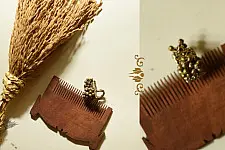
-225x150.webp "Kanupriya ~ Tribal / Vintage Jewelry - Brass Toe Ring with Metal Ghungru")
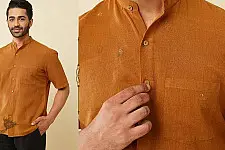
-225x150w.webp "Ekansh . एकांश | Handloom Cotton - Mustard Handwoven Men's Shirt")



-225x150w.webp "Ada . अदा | Ajrakh Bandhani Tussar Silk Stole - Black")
-225x150w.webp "Ada . अदा | Bandhani Tussar Silk Dupatta - Heart Design in Greenish Gray Colour")
-225x150w.webp "Ada . अदा | Bandhani Tussar Silk Stole - Grey")