Out Of Stock


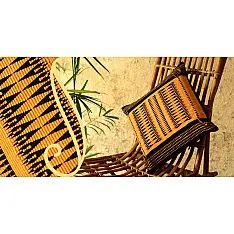
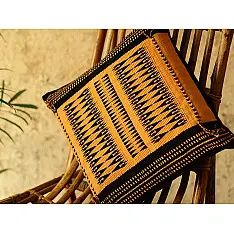
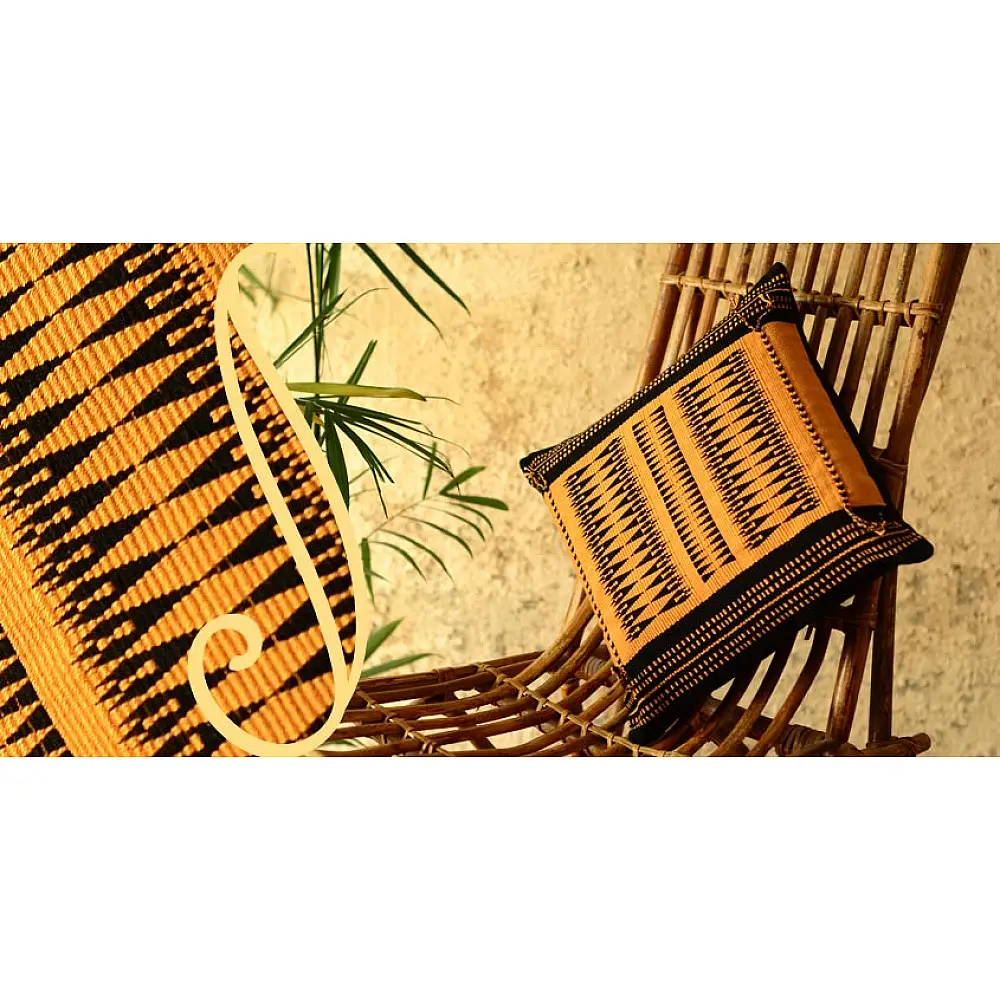
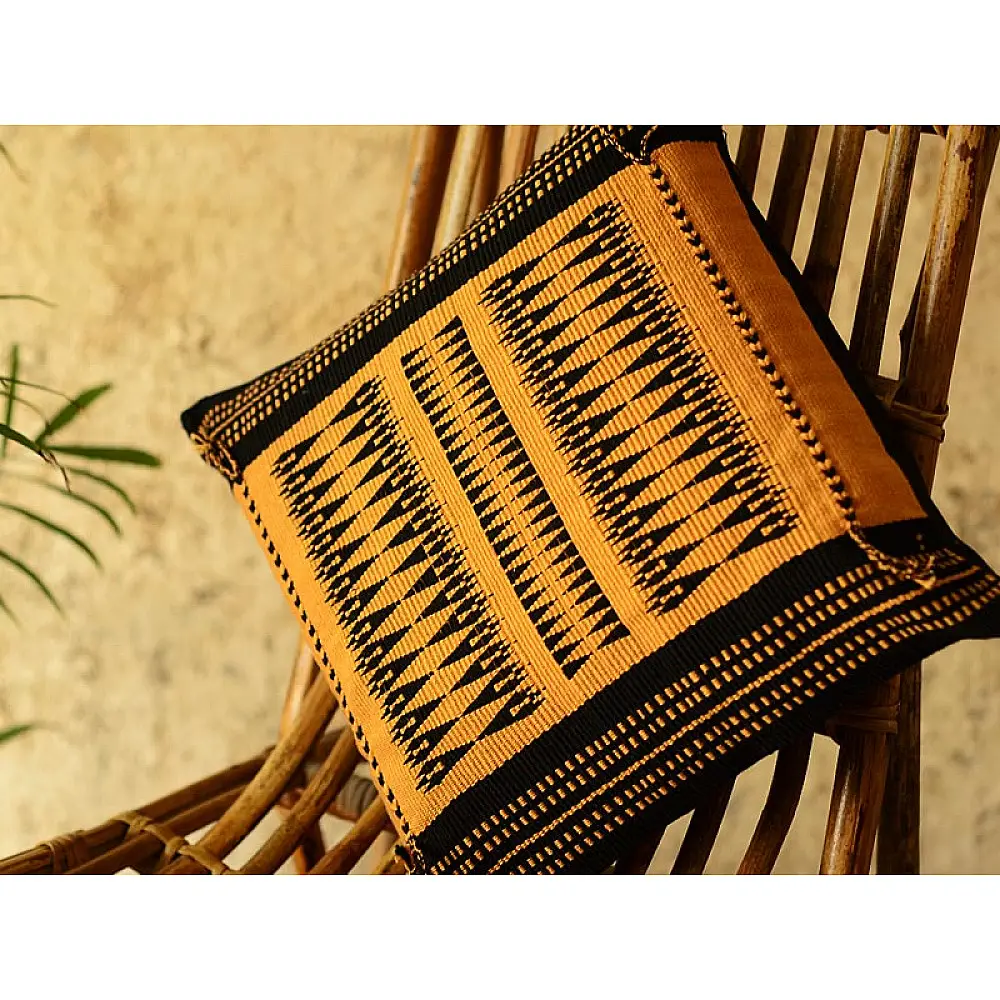
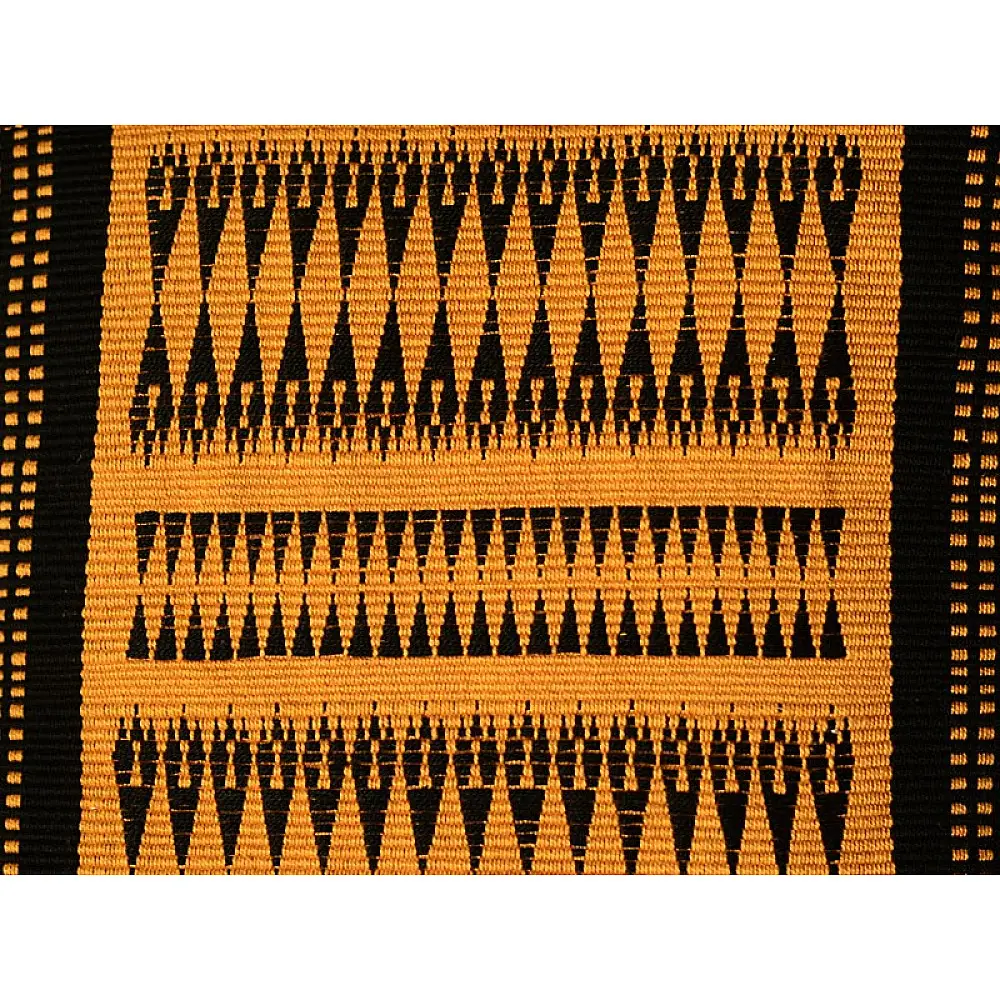
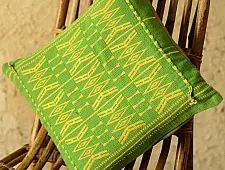
Chizami weaves: Cushion cover (12X12) ~ 14
- Availability: Out Of Stock
- Made & Mkt by: Chizami weaves
- Product Code: 3749-c14
- Weight: 50.00g
- Package Dimensions: 30.00cm x 30.00cm x 0.00cm
Rs.375.00

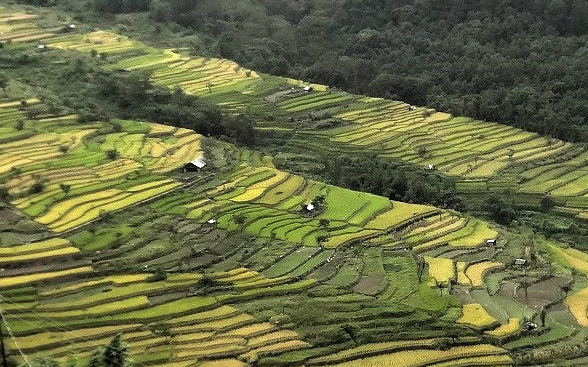
Harvest season is over in the valley and the entire village is having their first meal of fresh produce. The basic need of food is now met and soon women will begin installing their traditional looms to weave clothing for approaching season. Nagaland lies in the far eastern frontiers of India, amid hills, mahogany forests and falcons. It is a home for sixteen major Naga tribes: Angami, Ao, Chakhesang, Chang, Khiamniungan, Konyak, Lotha, Phom, Pochury,Rengma, Sangtam, Sumi, Yimchunger, Zeliang, Dhimasa and Kachari, each one with their own dialects and customs. The origin of name ‘Naga’ is uncertain, but it is majorly agreed that the name was derived from a Sanskrit word ‘Naga’ meaning snake or serpent.
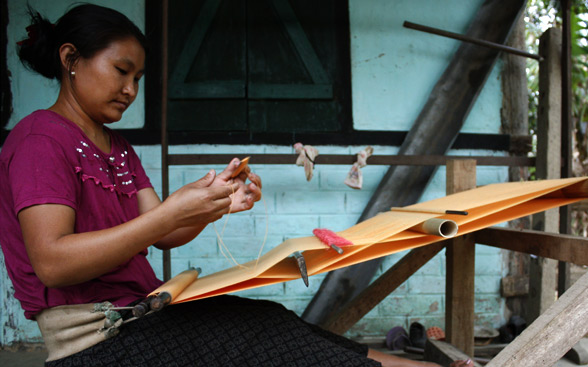
All the tribes in Nagaland are of Mongoloid stock and share few basic cultural beliefs. People from this province have a knack of decorating everything, from their vessels to their deadly weapons. Their artistry becomes evident as one sees their elaborately decorated cultural dresses and representational weaves. The ornamentation and embellishments follow a complex symbolism, mainly derived from their ethnic rituals and superstitions. With each tribe, the symbolism differs and it can be very difficult to conclude a set of ideas when it comes to Naga symbolism.
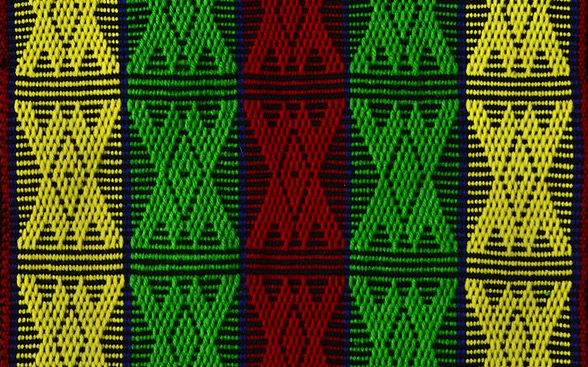
Naga weaves are characterized by their patterns and motifs which are generated by combining threads of different colors in warp and weft. The costumes are quite varied and help in identifying each tribe. Woven fabrics include shawls, wraps, waistcloths, bodice, skirts, aprons and lungi.
Their fabric has a characteristic structural simplicity with a distinct color combination. The costumes differ with the accomplishments; no one can adorn certain costumes without the right to wear them. The designs and colors vary between tribes and villages and reflect upon the wearer’s stand in society. The costumes worn on particular ceremonies and festivities have a special value. Women being experts in choice of colors and patterns, realize the motifs in their weaves with simple straight lines, geometric shapes or embellishments.
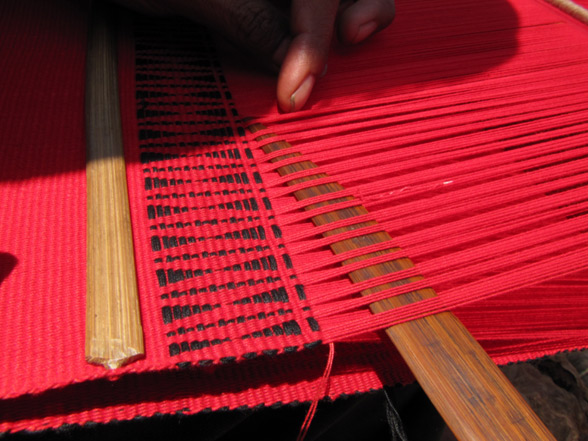
Contrary to other Indian weaving clusters, women weavers play a major role in Nagaland weaving. As per the custom, a woman is prohibited from weaving only when she is pregnant or when her husband is off fighting in a war. There is also a custom that the weaver cannot leave the house until the weave is completed. It is mandatory for a girl to know the art of spinning and weaving before she is married off.
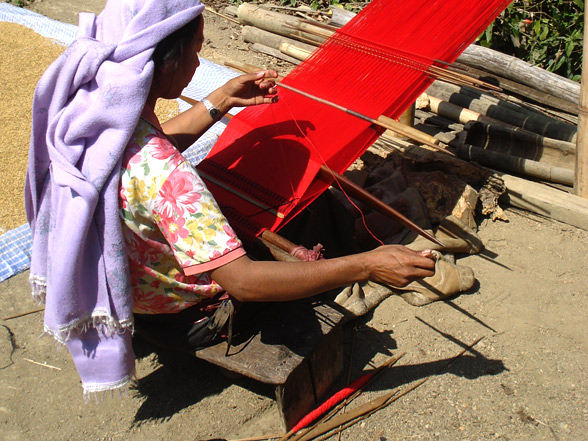
Naga loom is a variant of Indonesian tension loom, with a horizontally suspended warp, first warp beam is at higher elevation and tied to a wall, while the lower warp beam on other side has a cloth strap (Alphi) attached to it, which is worn by women around their waist. This generates the needed tension in warp (Kotong) while weaving. Using supplementary weft patterning along with in-laid wefts, the weaver creates geometric patterns on a warp faced base. The periodic warp twisting and shuttle movement is done by hands only which makes the process quite time consuming and tedious. The whole process to accomplishing a final piece stretches up-to 30 hours. For shawls, two or three loom widths are stitched together so that the center piece differs from the adjacent width. Nagas are also quite efficient in hand-spinning and gathering indigenous colors from natural resources.
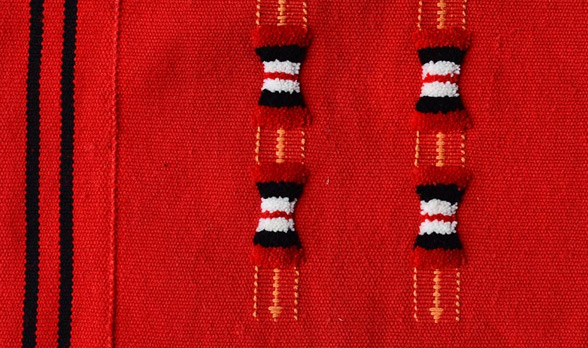
Traditionally deep red, blue, yellow and black are taken into account to bring traditional motifs alive. Pregnant women are not involved in dyeing process as per the superstition that the baby might get colored. Blue color is generated by the leaves of a local shrub (Strobilanthes flaccidifolius); it is a universal Naga dye and grown in almost every village in abundance. Red color dyeing process is said to be avoided by young girls, because of being the color of blood, the dyer might get killed in a raid or suffer a violent death. Rather old women are asked to dye threads. Yellow is procured from a local wood called ‘uthuo’. There is a tradition of not carrying out dyeing process near harvest time.
Sheltered in highlands and dense forests, Nagas have always been self-sufficient, sustaining on simple craft forms developed for their own use. Their craftsmanship has been in constant ferment with time. The natives still rely on these traditional practices taking into account the changes as per modern usage.
Related Products
Out Of Stock
Harvest season is over in the valley and the entire village is having their first meal of fresh produce. The basic need of food is now met ..
Rs.375.00
Out Of Stock
Harvest season is over in the valley and the entire village is having their first meal of fresh produce. The basic need of food is now met ..
Rs.375.00
-225x150w.webp "Kopal ❅ Handloom Linen - Embroidered Saree")
-225x150w.webp "Kopal ❅ Handloom Linen - Embroidered Saree")
New
Out Of Stock
Bhagalpur, is one of the oldest towns of Bihar, references to which can be found in Indian epics like Mahabharata and Ramayana, as the kingdom of ‘Ang..
Rs.6,610.00
-225x150w.webp "Kopal ❅ Handloom Linen Embroidered Saree - Sky Blue")
-225x150w.webp "Kopal ❅ Handloom Linen Embroidered Saree - Sky Blue")
New
One of a Kind
Bhagalpur, is one of the oldest towns of Bihar, references to which can be found in Indian epics like Mahabharata and Ramayana, as the kingdom of ‘Ang..
Rs.4,000.00
-225x150w.webp "Kopal ❅ Handloom Linen Embroidered Saree - Light Green")
-225x150w.webp "Kopal ❅ Handloom Linen Embroidered Saree - Light Green")
New
One of a Kind
Bhagalpur, is one of the oldest towns of Bihar, references to which can be found in Indian epics like Mahabharata and Ramayana, as the kingdom of ‘Ang..
Rs.6,410.00
-225x150w.webp "Kopal ❅ Handloom Linen Embroidered Saree - Light Yellow")
-1-225x150w.webp "Kopal ❅ Handloom Linen Embroidered Saree - Light Yellow")
New
One of a Kind
Bhagalpur, is one of the oldest towns of Bihar, references to which can be found in Indian epics like Mahabharata and Ramayana, as the kingdom of ‘Ang..
Rs.6,890.00
-225x150w.webp "Kopal | Handmade ~ Kalamkari Silk Saree - Black & White")
-225x150w.webp "Kopal | Handmade ~ Kalamkari Silk Saree - Black & White")
New
One of a Kind
it is very difficult to find an art without nature, cause nature is everywhere. Mother nature has inspired us in every way from the beginning especial..
Rs.7,770.00
-225x150w.webp "Kopal | Handmade ~ Kalamkari Silk Saree - Peacock & Peahen Pallu Motif")
-225x150w.webp "Kopal | Handmade ~ Kalamkari Silk Saree - Peacock & Peahen Pallu Motif")
New
One of a Kind
it is very difficult to find an art without nature, cause nature is everywhere. Mother nature has inspired us in every way from the beginning especial..
Rs.7,770.00
-225x150w.webp "Kopal ❅ Handloom Linen Embroidered Saree - Light Orange")
-225x150w.webp "Kopal ❅ Handloom Linen Embroidered Saree - Light Orange")
New
One of a Kind
Bhagalpur, is one of the oldest towns of Bihar, references to which can be found in Indian epics like Mahabharata and Ramayana, as the kingdom of ‘Ang..
Rs.6,410.00

Out Of Stock
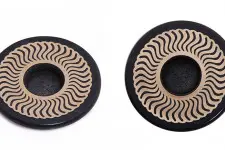
Music, they say, is the silence between two notes. The silence becomes even more omnipresent as it makes rare appearances between the constant sounds ..
Rs.1,150.00
-225x150w.webp "Kafi | Ajrakh Block Print ~ Handloom Linen Stole - Hina Colour")
Out Of Stock
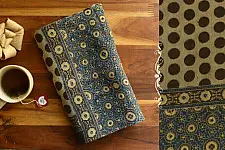
Long time ago, there was a king of Sindh, who like any other king, was fond of royal luxuries and used to sleep on a new bedspread everyday. One day, ..
Rs.1,900.00
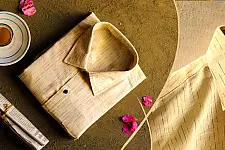

The East India Company imported raw cotton from India while they dumped the local Indian market with inferior machine-made cloth. This led to a great ..
Rs.1,500.00
-225x150w.webp "Mountain Loom ✜ Himalayan Handloom Cotton Stole")
-225x150w.webp "Mountain Loom ✜ Himalayan Handloom Cotton Stole")
-10 %
Out Of Stock
Large fields, small hills, going uphill in the summer and coming downhill in the winter, amidst the beautiful mountains… this is the life of the Bhoti..
Rs.1,226.00 Rs.1,363.00
Out Of Stock
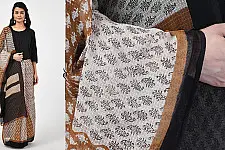
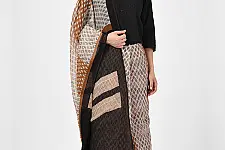
Bagru, a town at the outskirts of Jaipur(Rajasthan) is one of the textile hubs. It is known for centuries for its natural dying, syahi begar printing,..
Rs.2,250.00
One of a Kind
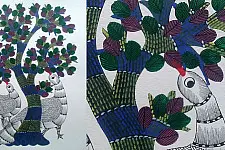
A synesthetic expression…where songs and words dance on canvas, colours and patterns make musical harmonies…The Gond tribal painting is an experience ..
Rs.1,620.00
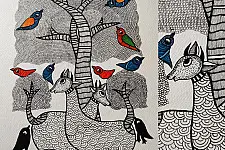
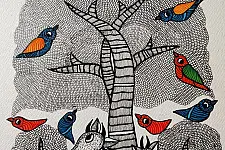
A synesthetic expression…where songs and words dance on canvas, colours and patterns make musical harmonies…The Gond tribal painting is an experience ..
Rs.3,000.00

-50 %
Out Of Stock
Gathering commences in the middle of deserted pavilions where velvet carpets adorn the Dessert lands & Manganiyars play folk music as a bugle for ..
Rs.512.00 Rs.1,025.00

-50 %
Out Of Stock
Gathering commences in the middle of deserted pavilions where velvet carpets adorn the Dessert lands & Manganiyars play folk music as a bugle for ..
Rs.512.00 Rs.1,025.00

-50 %
Out Of Stock
Gathering commences in the middle of deserted pavilions where velvet carpets adorn the Dessert lands & Manganiyars play folk music as a bugle for ..
Rs.512.00 Rs.1,025.00
-50 %
Out Of Stock
Gathering commences in the middle of deserted pavilions where velvet carpets adorn the Dessert lands & Manganiyars play folk music as a bugle for ..
Rs.512.00 Rs.1,025.00
-225x150w.webp "Ada . अदा | Ajrakh Bandhani Tussar Silk Stole - Black")
-10 %
Out Of Stock
A familiar chatter swells in the air as feet chase the trail of a carelessly flying odhani in the by-lanes of Bhuj, spilling colors all over. While&nb..
Rs.3,070.00 Rs.3,412.00
-225x150w.webp "Ada . अदा | Bandhani Tussar Silk Dupatta - Heart Design in Greenish Gray Colour")
-10 %
Out Of Stock
A familiar chatter swells in the air as feet chase the trail of a carelessly flying odhani in the by-lanes of Bhuj, spilling colors all over. While&nb..
Rs.9,310.00 Rs.10,345.00
-225x150w.webp "Ada . अदा | Bandhani Tussar Silk Stole - Grey")
One of a Kind
-10 %
A familiar chatter swells in the air as feet chase the trail of a carelessly flying odhani in the by-lanes of Bhuj, spilling colors all over. While&nb..
Rs.3,460.00 Rs.3,845.00