-1000x1000.webp "buy handcrafted batik painting - Jalaram")
-1000x1000.webp "buy handcrafted batik painting - Jalaram")
-1000x1000.webp "buy handcrafted batik painting - Jalaram")
-1000x1000.webp "buy handcrafted batik painting - Jalaram")
One of a Kind
-80x80.webp "buy handcrafted batik painting - Jalaram")
-80x80.webp "buy handcrafted batik painting - Jalaram")
-80x80.webp "buy handcrafted batik painting - Jalaram")
-80x80.webp "buy handcrafted batik painting - Jalaram")
Batik Painting ~ Jalaram
- Availability: 1
- Made & Mkt by: Gaatha
- Product Code: 3877-BP26-01
- Weight: 850.00g
- Package Dimensions: 34.00cm x 35.00cm x 25.00cm
Rs.4,900.00

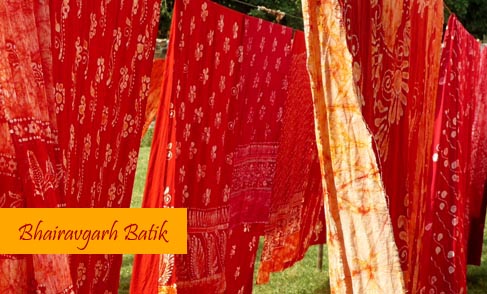
A few kilometers from Ujjain, on the banks of river Kshipra, is the small town of Bhairavgarh. Known for the temple of Kaal Bhairav, the fearful manifestation of Shiva, also for tantriks who perform occult rituals in cremation grounds and the fables of king Vikramaditya and vampire spirit Betaal, this town also holds within itself, something not so dark and mystifying.
Glowing yellows and intense hues of reds brighten the streets of this town, with fluttering lengths of cloth printed with patterns of melted wax.

Batik, the ancient technique of wax resist dyeing, is believed to have been practiced in Africa, China, Japan and India for more than 2000 years. Bhairavgarh became the hub of Batik printing in Madhya Pradesh, when craftsmen from Gujarat and Rajasthan came here during the reign of the Mughals, around 400 years ago.
Originally batik printed cloth was used by the tribals of surrounding areas for their draped garments, but today, all sorts of dress materials, sarees and home furnishings are made in with this technique and sold across the country.

In the workshops of Bhairavgarh, craftsmen are busy doing what seem to be swift doodles on fabric, but what emerge are beautiful motifs of flowers and leaves, creepers spiraling and twisting in perfect symmetry. Vats of hot wax slowly steaming on gas burners stand alongside large sand covered tables, on which the animation of wax lines would take place. Sand avoids melted wax from touching the table and sticking the fabric along with it. With a stylus made by tying coconut husk on a metal rod, craftsmen draw out perfect wax patterns on fabric, with no guidelines, no rough sketches. Spontaneous images that come to their mind are immediately transferred on to fabric like improvised harmonies.
Some also use wooden blocks for creating slightly more restraint designs, although the melted wax gives even the crisp blocks a slight quirky flavour, with its slightly out of the lines colouring.

Once the wax dries, the fabric is dipped in dye. Colour stains the exposed area and when the wax is melted in hot water, white motifs can be seen on a coloured field. This process of application of wax and then dyeing is repeated for as many colours as required, starting from the lightest, and going to the darkest.
Large areas of the cloth are sometimes covered entirely with wax and once dry, the fabric is crushed, to break the cooled wax. After dyeing, this gives the typical cracked effect characteristic of Batik.
The base fabric is sourced from Rajasthan or Tamil Nadu, but craftsmen sometimes use local Chanderi and Maheshwari fabric as the base for printing, combining two handicrafts of the state for a charming fusion.
Natural dyes are used only rarely, usually for Kalamkari designs, but other than that, the use of vivid chemical dyes is prevalent. Industrial candle wax has replaced natural wax, due to which the proportion of wax that can be reused has decreased. These are resultants of a demand for cheaper materials and faster processes.

In a state where refined, delicate weaves like Chanderi and Maheshwari dominate, along with the fine block prints of Bagh, the batik of Bhairavgarh strives to carve its niche, and how beautifully it does!
Related Products
-225x170w.webp "Batik Painting ~ Dancing Girl")
-225x170w.webp "Batik Painting ~ Dancing Girl")
One of a Kind
Batic Craft Story
Originally batik printed cloth was used by the tribals of surrounding areas for their draped garments, but today, all sorts of d..
Rs.5,200.00
-225x170w.webp "Batik Painting ~ Maa Kaali")
-225x170w.webp "Batik Painting ~ Maa Kaali")
One of a Kind
Batic Craft Story
Originally batik printed cloth was used by the tribals of surrounding areas for their draped garments, but today, all sorts of d..
Rs.5,200.00
-225x170w.webp "Batik Painting ~ Ambika")
-225x170w.webp "Batik Painting ~ Ambika")
One of a Kind
Batic Craft Story
Originally batik printed cloth was used by the tribals of surrounding areas for their draped garments, but today, all sorts of d..
Rs.5,200.00
-225x170w.webp "Batik Painting ~ Sai Baba")
-225x170w.webp "Batik Painting ~ Sai Baba")
Out Of Stock
Batic Craft Story
Originally batik printed cloth was used by the tribals of surrounding areas for their draped garments, but today, all sorts of d..
Rs.5,000.00
-225x170w.webp "Batik Painting ~ Bahuchara Ma")
-225x170w.webp "Batik Painting ~ Bahuchara Ma")
One of a Kind
Batic Craft Story
Originally batik printed cloth was used by the tribals of surrounding areas for their draped garments, but today, all sorts of d..
Rs.4,900.00
-225x150w.webp "Kopal ❅ Handloom Linen - Embroidered Saree")
-225x150w.webp "Kopal ❅ Handloom Linen - Embroidered Saree")
Bhagalpur, is one of the oldest towns of Bihar, references to which can be found in Indian epics like Mahabharata and Ramayana, as the kingdom of ‘Ang..
Rs.6,610.00
-225x150w.webp "Kopal ❅ Handloom Linen Embroidered Saree - Sky Blue")
-225x150w.webp "Kopal ❅ Handloom Linen Embroidered Saree - Sky Blue")
Bhagalpur, is one of the oldest towns of Bihar, references to which can be found in Indian epics like Mahabharata and Ramayana, as the kingdom of ‘Ang..
Rs.4,000.00
-225x150w.webp "Kopal ❅ Handloom Linen Embroidered Saree - Light Green")
-225x150w.webp "Kopal ❅ Handloom Linen Embroidered Saree - Light Green")
Bhagalpur, is one of the oldest towns of Bihar, references to which can be found in Indian epics like Mahabharata and Ramayana, as the kingdom of ‘Ang..
Rs.6,410.00
-225x150w.webp "Kopal ❅ Handloom Linen Embroidered Saree - Light Yellow")
-1-225x150w.webp "Kopal ❅ Handloom Linen Embroidered Saree - Light Yellow")
Bhagalpur, is one of the oldest towns of Bihar, references to which can be found in Indian epics like Mahabharata and Ramayana, as the kingdom of ‘Ang..
Rs.6,890.00
-225x150w.webp "Kopal | Handmade ~ Kalamkari Silk Saree - Black & White")
-225x150w.webp "Kopal | Handmade ~ Kalamkari Silk Saree - Black & White")
New
One of a Kind
it is very difficult to find an art without nature, cause nature is everywhere. Mother nature has inspired us in every way from the beginning especial..
Rs.7,770.00
-225x150w.webp "Kopal | Handmade ~ Kalamkari Silk Saree - Peacock & Peahen Pallu Motif")
-225x150w.webp "Kopal | Handmade ~ Kalamkari Silk Saree - Peacock & Peahen Pallu Motif")
New
One of a Kind
it is very difficult to find an art without nature, cause nature is everywhere. Mother nature has inspired us in every way from the beginning especial..
Rs.7,770.00
-225x150w.webp "Kopal ❅ Handloom Linen Embroidered Saree - Light Orange")
-225x150w.webp "Kopal ❅ Handloom Linen Embroidered Saree - Light Orange")
Bhagalpur, is one of the oldest towns of Bihar, references to which can be found in Indian epics like Mahabharata and Ramayana, as the kingdom of ‘Ang..
Rs.6,410.00
-225x150w.webp "Handloom Cotton Saree | IKAT Pallu { Chatni }")
-225x150w.webp "Handloom Cotton Saree | IKAT Pallu { Chatni }")
One of a Kind
Khadi means hand spun and handwoven cloth. In 1918 Mahatma Gandhi opened his movement for Khadi as a relief programme for the poor masses living in In..
Rs.3,100.00
-225x150w.webp "Joyance | Tangaliya Tray Cum Platter")
-225x150w.webp "Joyance | Tangaliya Tray Cum Platter")
One of a Kind
Legend tells us that, centuries ago, in the stark landscape of Saurashtra, a shepherd man married a woman from the weaver community amidst great oppos..
Rs.2,740.00
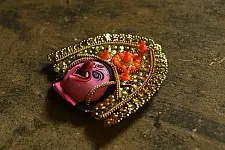
Mask, a noun suggesting something put on to change or hide identity, to get out of ones or into another character... may or may not be worn.... Wearab..
Rs.1,100.00
-225x150w.webp "Venu . वेणु | Jhoomar Handcrafted Bamboo Lantern")
-225x150w.webp "Venu . वेणु | Jhoomar Handcrafted Bamboo Lantern")
According to a myth of a tribe in north-eastern India, all human beings descend on earth with the help of ladders. The material of these ladders varie..
Rs.1,699.00
Happy Faces Handmade FoundationOne ‘O’ Eight Knots is a social enterprise that aims to empower women artisans by providing them a platform where they ..
Rs.1,570.00
Out Of Stock
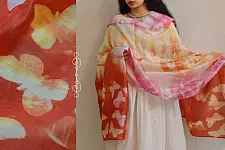
Shibori ~ Shibori is a Japanese counterpart for Indian traditional Tie n Dye Technique practised in Rajasthan & Gujarat in India & many o..
Rs.2,700.00
-225x150w.webp "Home And Living | Handmade Embroidered ~ Joon biri style Wall art")
-225x150w.webp "Home And Living | Handmade Embroidered ~ Joon biri style Wall art")
Venus Home Decor is known for transforming traditional textile expressions into contemporary
design statements. Celebrated for its distinctive texti..
Rs.3,666.00

-50 %
Out Of Stock
Gathering commences in the middle of deserted pavilions where velvet carpets adorn the Dessert lands & Manganiyars play folk music as a bugle for ..
Rs.512.00 Rs.1,025.00

-50 %
Out Of Stock
Gathering commences in the middle of deserted pavilions where velvet carpets adorn the Dessert lands & Manganiyars play folk music as a bugle for ..
Rs.512.00 Rs.1,025.00

-50 %
Out Of Stock
Gathering commences in the middle of deserted pavilions where velvet carpets adorn the Dessert lands & Manganiyars play folk music as a bugle for ..
Rs.512.00 Rs.1,025.00
-50 %
Out Of Stock
Gathering commences in the middle of deserted pavilions where velvet carpets adorn the Dessert lands & Manganiyars play folk music as a bugle for ..
Rs.512.00 Rs.1,025.00
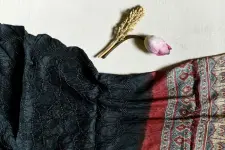
-225x150w.webp "Ada . अदा | Ajrakh Bandhani Tussar Silk Stole - Black")
-10 %
Out Of Stock
A familiar chatter swells in the air as feet chase the trail of a carelessly flying odhani in the by-lanes of Bhuj, spilling colors all over. While&nb..
Rs.3,070.00 Rs.3,412.00
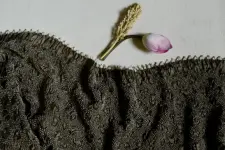
-225x150w.webp "Ada . अदा | Bandhani Tussar Silk Dupatta - Heart Design in Greenish Gray Colour")
-10 %
Out Of Stock
A familiar chatter swells in the air as feet chase the trail of a carelessly flying odhani in the by-lanes of Bhuj, spilling colors all over. While&nb..
Rs.9,310.00 Rs.10,345.00
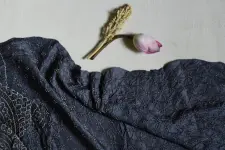
-225x150w.webp "Ada . अदा | Bandhani Tussar Silk Stole - Grey")
One of a Kind
-10 %
A familiar chatter swells in the air as feet chase the trail of a carelessly flying odhani in the by-lanes of Bhuj, spilling colors all over. While&nb..
Rs.3,460.00 Rs.3,845.00
-234x234.webp "Batik Painting ~ Jalaram")
-234x234.webp "Batik Painting ~ Jalaram")
-234x234.webp "Aripan | Madhubnai Painting - Krishna Raas")

-234x234.webp "Roots & Reeds | Handcrafted ~ Water Hyacinth Meteka Magazine Holder")
-234x234.webp "Roots & Reeds | Handcrafted ~ Water Hyacinth Meteka Magazine Holder")
-234x234.webp "Soof | Hand Embroidered ~ Wall Hanging Key Organizer")
-234x234.webp "Soof | Hand Embroidered ~ Wall Hanging Key Organizer")