

- Availability: Out Of Stock
- Made & Mkt by: Gaatha
- Product Code: 3788Cb-247
- Weight: 450.00g
- Package Dimensions: 30.00cm x 20.00cm x 1.50cm
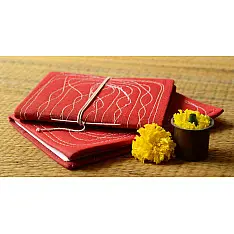
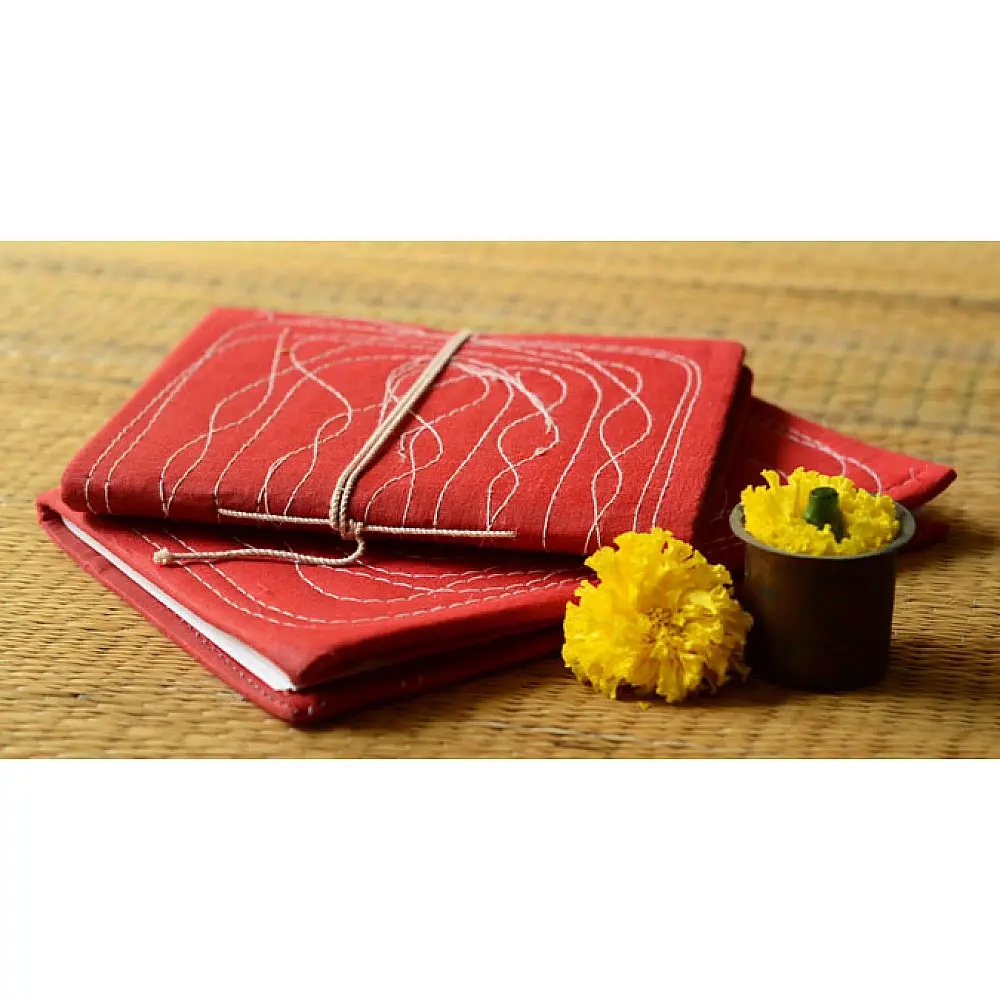
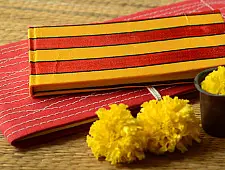
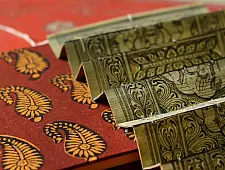
 On the festival of Diwali, Hindu traders and businessmen worship the goddess of prosperity and start new account keeping books, marking their new year. Covered in the auspicious colour red for good luck, the “bahi-khata” notebooks are an important tool for the business community. The double entry system of account keeping is believed to have originated in Asia about 2000 years ago. Notebook makers beautifully customized the pages for the purpose of accounting, without the use of ink drawn tables. They crimped the pages to give subtle folds to the paper, to be used as columns; “naam” for debit and “jama” for credit, much like modern methods of accounting.
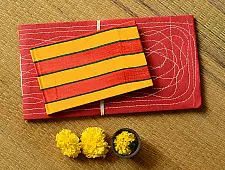
The bahi-khata style of stitching has remained unchanged over the years, the only change being the use of sewing machines for the fabric cover.Popular in Gujarat and Rajasthan, this book binding business, in a way, supports small scale industry of women, who supplement their household incomes by stitching the fabric covers of the notebooks on sewing machines.

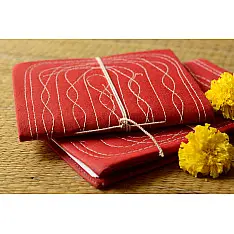
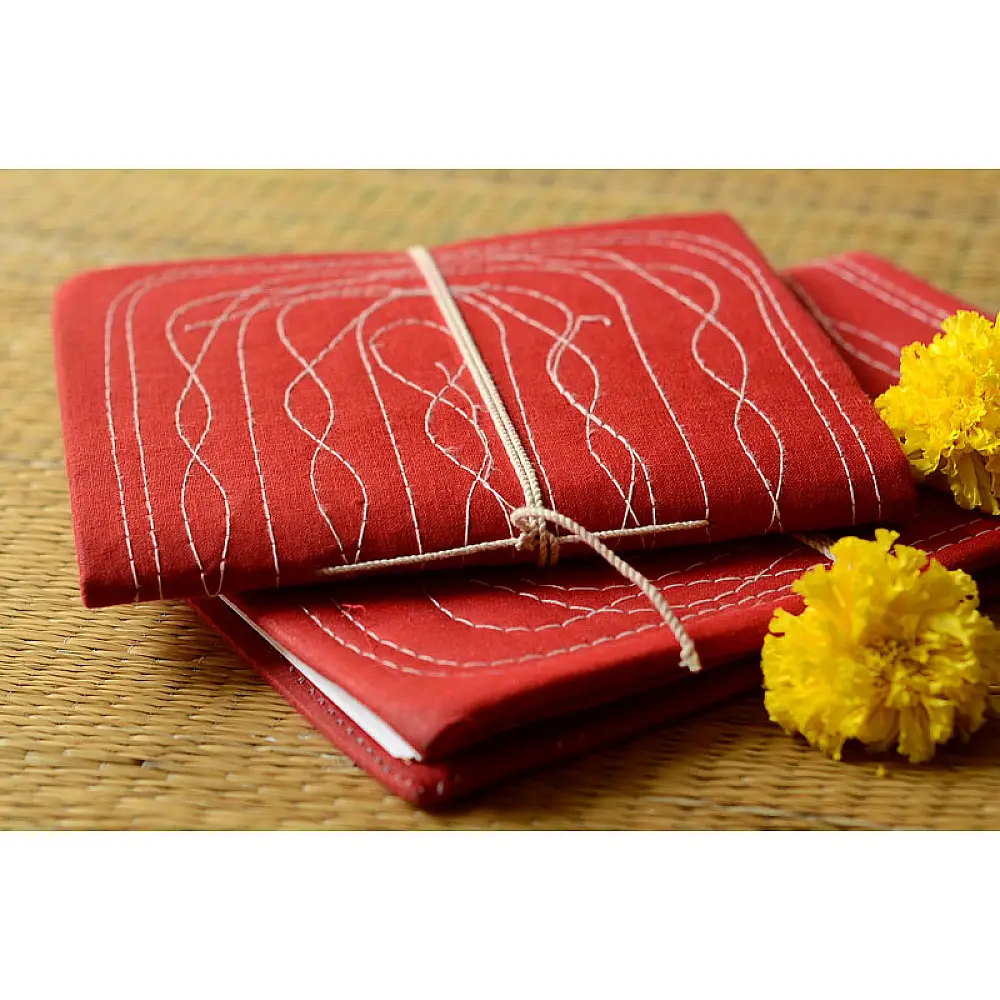
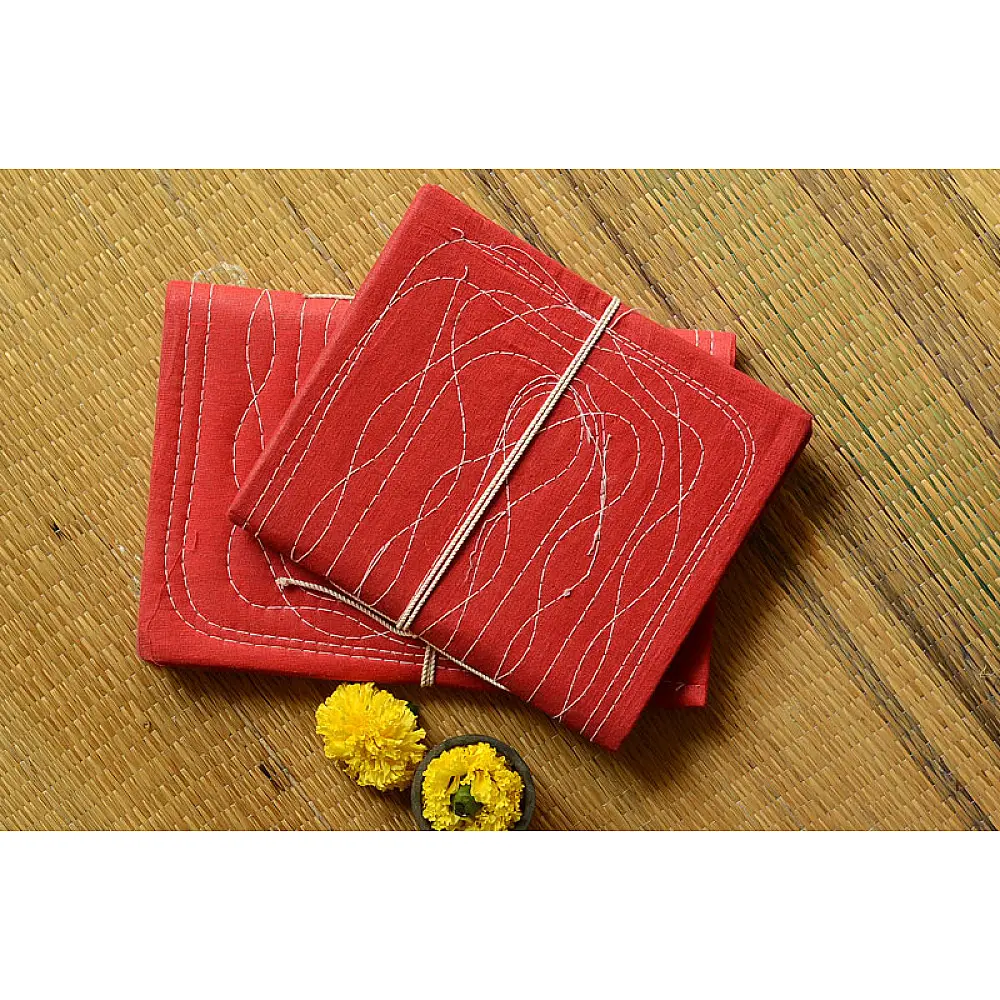
The fabric covers of the books are first stitched into a pillow cover like shape, to insert the cardboard in and then, the two are fixed together with thecharacteristic white curvilinear stitches that the notebooks are known for. This wavy pattern of dashed lines has remained constant during the switch from hand stitching to machine stitching. According to the craftsmen, this is probably because this way, it is faster to make and the stitches are evenly distributed, giving better hold to the cardboard cover.

Cut paper is folded into sections and pressed with a wooden folder. The sections are hand stitched with needle and thread in the middle and joined with other sections at the spine. Once the required numbers of sections are joined, it is time to attach them with the cover. A binding cloth is stuck to the centre of the sections of paper and the cover for reinforcement. Sometimes the binders add a decorative paper at the beginning and end of the notebook. The outer cover, binding cloth and paper bundles are finally stuck together with glue and left to dry.

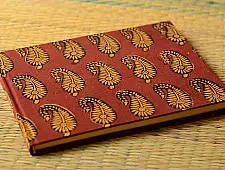
In another type of notebooks, there is only one large section of paper which is directly stitched to the spine with a thick cotton thread and a punching tool called “ari”. One end of the thread is left long, to be wrapped around the notebook, to prevent the pages from opening. Today, computerized account keeping is fast replacing manual systems and one sees businessmen worshipping their laptops instead of notebooks on Diwali. Yet, the book binders are finding new ways to make and sell their craft. With many kinds of coloured paper and a variety of fabrics, ranging from printed, to patchwork, to zaris, the notebooks now find their way into the lives of artists, students, or just about anyone who may need something to write on. The hand bound bahi-khata or “pothi” notebooks, even in their original form, make quirky alternatives to their mass produced machine made cousins.

The sinuating white stitches, beautifully meandering and complementing the fabric, take the notebooks from the systematic world of account keeping, to the world of vivid imagination, doodles, scribbles and stories…
Related Products
-225x150w.webp "Ishana . इशाना ✯ German Silver Dual-Line Textured Bead Choker Necklace:")
-225x150w.webp "Ishana . इशाना ✯ German Silver Dual-Line Textured Bead Choker Necklace:")
-225x150w.webp "Ishana . इशाना ✯ German Silver Pinecone Motif Hasli Choker Necklace - B")
-225x150w.webp "Ishana . इशाना ✯ German Silver Pinecone Motif Hasli Choker Necklace - B")
-225x150w.webp "Ishana . इशाना ✯ German Silver Triangular Spike Choker Necklace: - A")
-225x150w.webp "Ishana . इशाना ✯ German Silver Triangular Spike Choker Necklace: - A")
-225x150w.webp "Ishana . इशाना ✯ German Silver Lotus Motif Earring")
-225x150w.webp "Ishana . इशाना ✯ German Silver Lotus Motif Earring")
-225x150w.webp "Ishana . इशाना ✯ German Silver Earring - Elephant Motif")
-225x150w.webp "Ishana . इशाना ✯ German Silver Earring - Elephant Motif")
-225x150w.webp "Ishana . इशाना ✯ German Silver Earring - B")
-225x150w.webp "Ishana . इशाना ✯ German Silver Earring - B")
-225x150w.webp "Ishana . इशाना ✯ German Silver Earring - A")
-225x150w.webp "Ishana . इशाना ✯ German Silver Earring - A")


-225x150w.webp "Boond . बूँद ● Natural Essential Fragrant Oil ● Audh (Agarwood) - Pure & Handcrafted Fragrance")
-225x150w.webp "Joon . जून ☽ Handloom Ajrakh Pure Cotton Brown Saree")
-225x150w.webp "Joon . जून ☽ Handloom Ajrakh Pure Cotton Brown Saree")
-225x150w.webp "Wooden Cutlery ✼ Platters ( Set of Two)")
-225x150w.webp "Wooden Cutlery ✼ Platters ( Set of Two)")



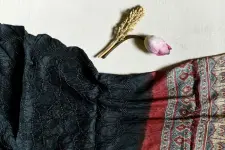
-225x150w.webp "Ada . अदा | Ajrakh Bandhani Tussar Silk Stole - Black")
-225x150w.webp "Ada . अदा | Bandhani Tussar Silk Dupatta - Heart Design in Greenish Gray Colour")
-225x150w.webp "Ada . अदा | Bandhani Tussar Silk Stole - Grey")