


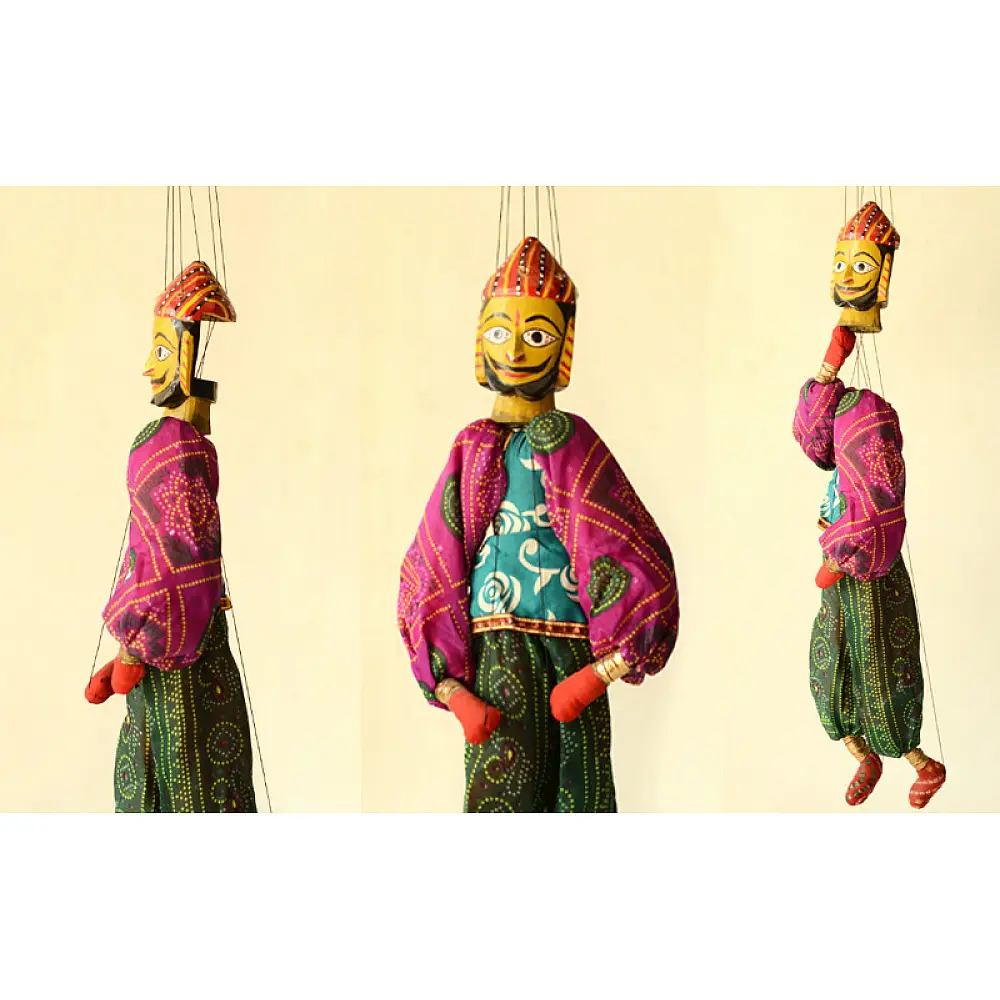


- Availability: Out Of Stock
- Made & Mkt by: Gaatha
- Product Code: 37883762-22
- Weight: 350.00g
- Package Dimensions: 65.00cm x 16.00cm x 5.00cm

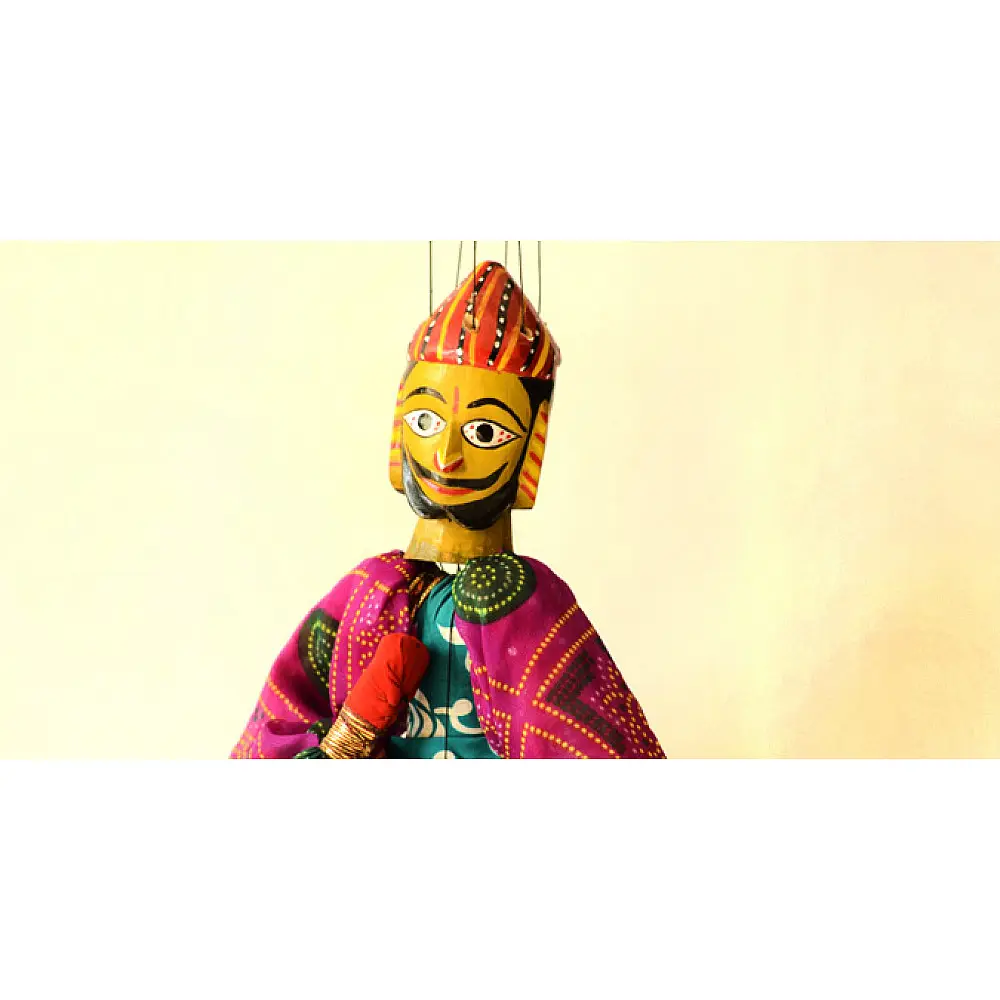
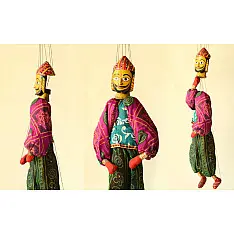
Bright colourful clothes, beautiful large eyes, nimble limbs dancing in front of an enthralled audience… this is not a dancer performing, but the puppet moving with the deft fingers of the puppeteer.
.jpg)
Kathputli is an ancient and one of the most popular performing arts of Rajasthan, a state in western India. The word “kathputli” derives from “kaath” or wood and “putli” or toy.
Socially, puppet players from a caste group are attached through the “jajmani system” to other castes. Traditionally, it was a system of patronage supported by kings and well-off families. The patrons would look after the artists in return for the artists singing praises of the patrons’ ancestors. Thus the artists, or Bhats, became genealogists.
These artists preferred to move out of their village and travel to places like Bihar, Uttar Pradesh, Nepal and are even believed to have reached Burma and Ceylon.
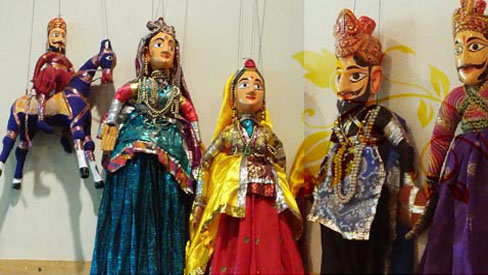
Among various stories performed at a Kathputli show, the most well known one is a story about the king Amar Singh Rathode of Rajasthan, who lived around the time of Shahjahan. It was originally a story of fifty-two kathputlis so long and episodic, that it was almost never narrated in full. The theme would remain the same, with some comic humour added to convey serious issues. There was no fixed time limit for a show. Every show would be a unique and effervescent interaction between the puppeteers and the audience.
This was a narrative they carried with them. Once a show was done, they packed up and left to find a new audience.
The puppet show comprises of a tent, or tambudi which may be made with seven bamboo poles or with two lightweight cots put up lengthwise. The backdrop, front and decorative curtains are supported on this frame. The puppeteers are concealed behind this arrangement. The puppet consists of three parts – the head and shoulders made of wood, the hands and torso which are stuffed with cotton and covered with the character’s garment and the string. Legs are not designed in traditional puppets, with a few exceptions.
The sounds for the performance are taken care of by two instruments – the dholak, or hand drum and the boli / shrutti. This is a musical instrument made of two thin and small bamboo strips which have a reed in between and produces a sharp sound by blowing air in and out on it. The sound of the boli is the speech of the puppets and the drummer translates this for the audience.
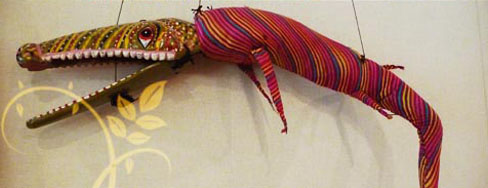
Today, the cast has been reduced to seven. Many new characters are born and music is replacing the traditional boli / shrutti and dholak sounds of this narrative. These days the puppeteers sell the puppets for money as infrequent performances cannot sustain them.
Yet, the word puppetry still has a strong association with the Kathputli of Rajasthan and it remains a vibrant form of entertainment across all ages and geographical boundaries.
-225x150w.webp "Satyawati | Handloom Chanderi Woven Boota Saree - Bluish Grey")


-225x150w.webp "A pocket full of joy ~ Patola Silk Clutch Purse / Sling Bag - Purple")
-225x150w.webp "A pocket full of joy ~ Patola Silk Clutch Purse / Sling Bag - Purple")
-225x150w.webp "Damodar . दामोदर ✩ Handloom Cotton x Cotton Dhoti Khes")
-225x150w.webp "Damodar . दामोदर ✩ Handloom Cotton x Cotton Dhoti Khes")
-225x150w.webp "Jaanki . जानकी ✽ Handwoven Banarasi Silk Saree ✽ 29")



-225x150w.webp "Ada . अदा | Ajrakh Bandhani Tussar Silk Stole - Black")
-225x150w.webp "Ada . अदा | Bandhani Tussar Silk Dupatta - Heart Design in Greenish Gray Colour")
-225x150w.webp "Ada . अदा | Bandhani Tussar Silk Stole - Grey")
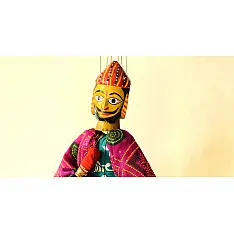
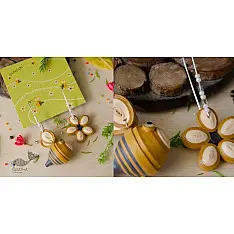
-234x234.webp "Budbud | Paper Quilling - Phool Bhanwara | Mismatched Earring")