

- Availability: Out Of Stock
- Made & Mkt by: Gaatha
- Product Code: 2019-BDM-H
- Weight: 500.00g

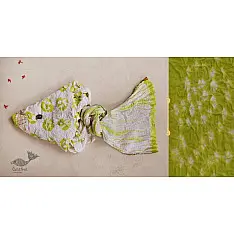
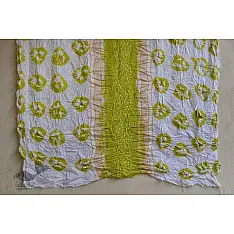
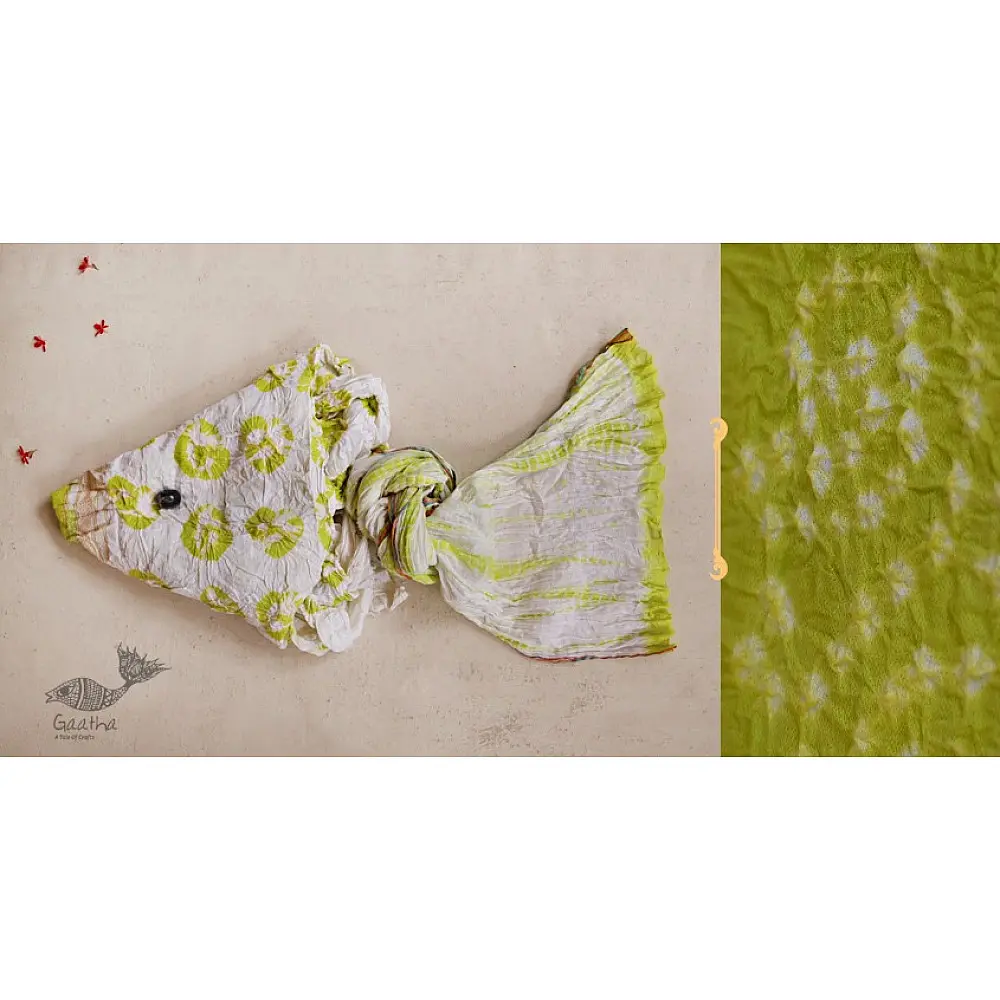
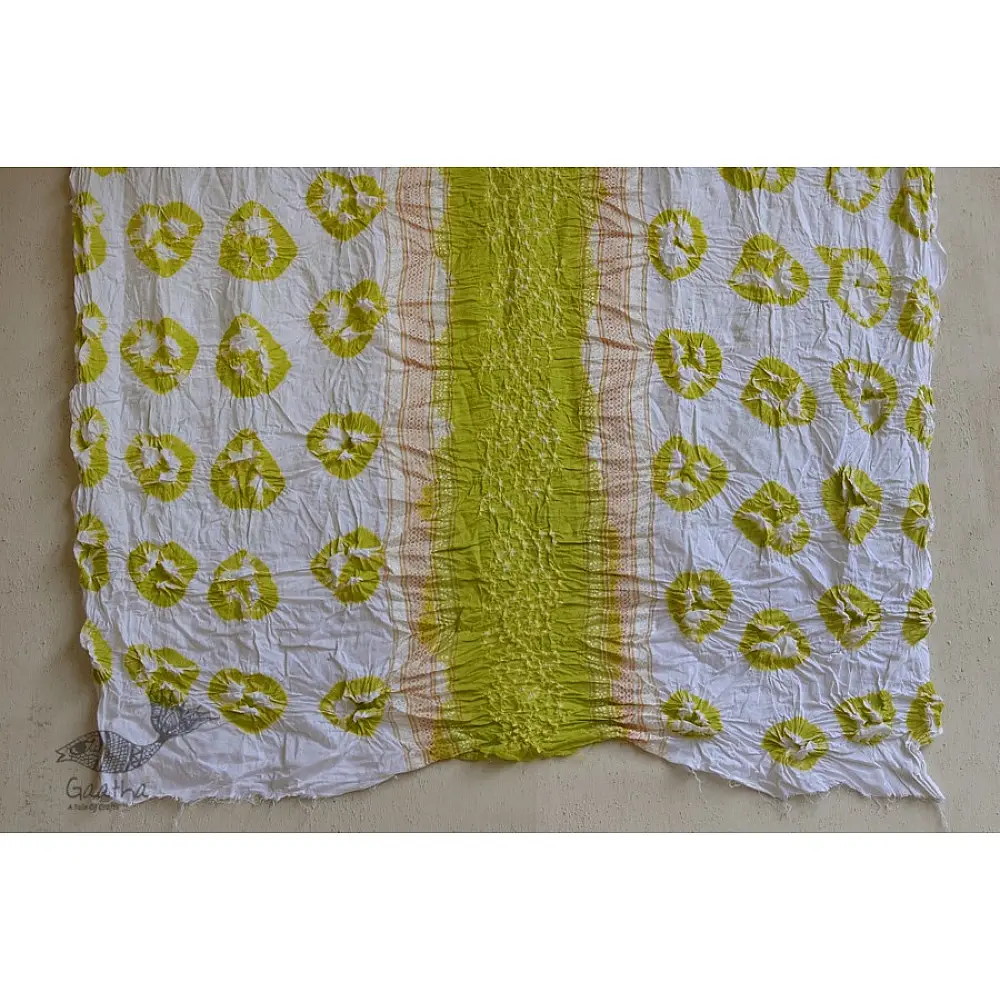
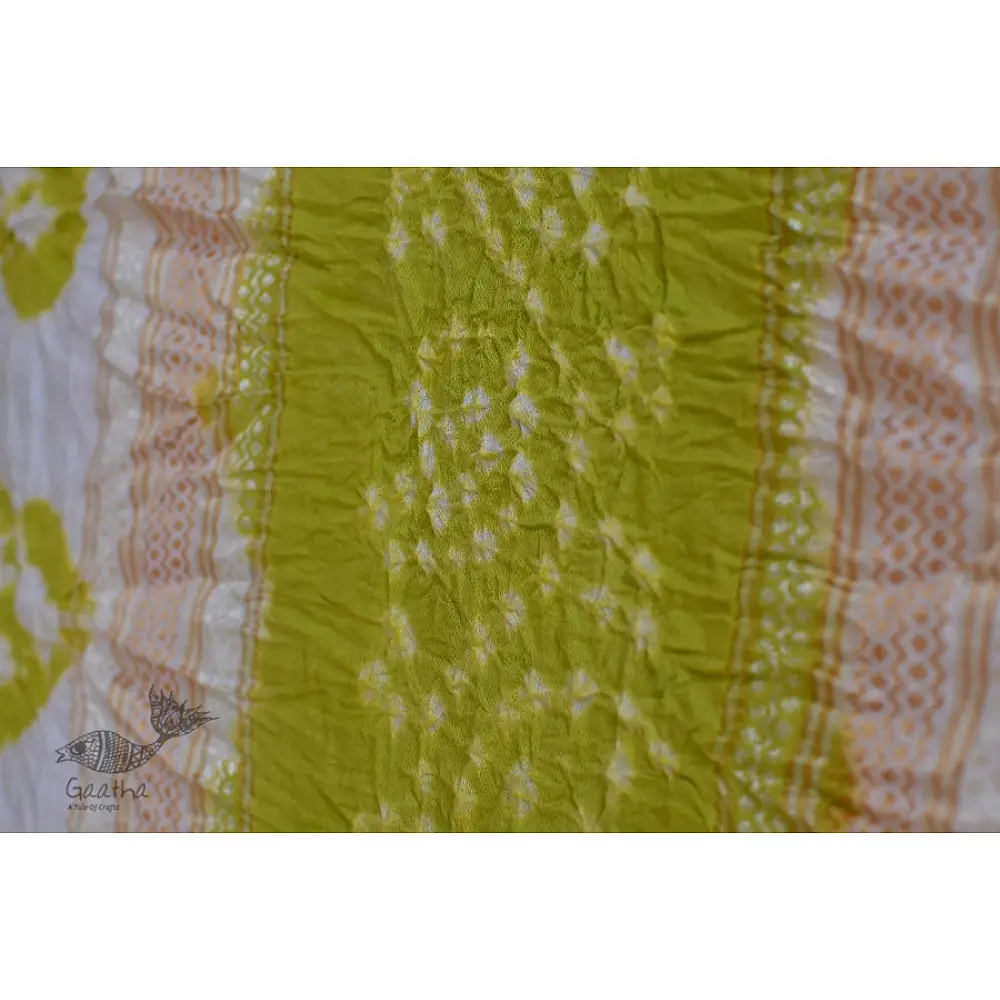
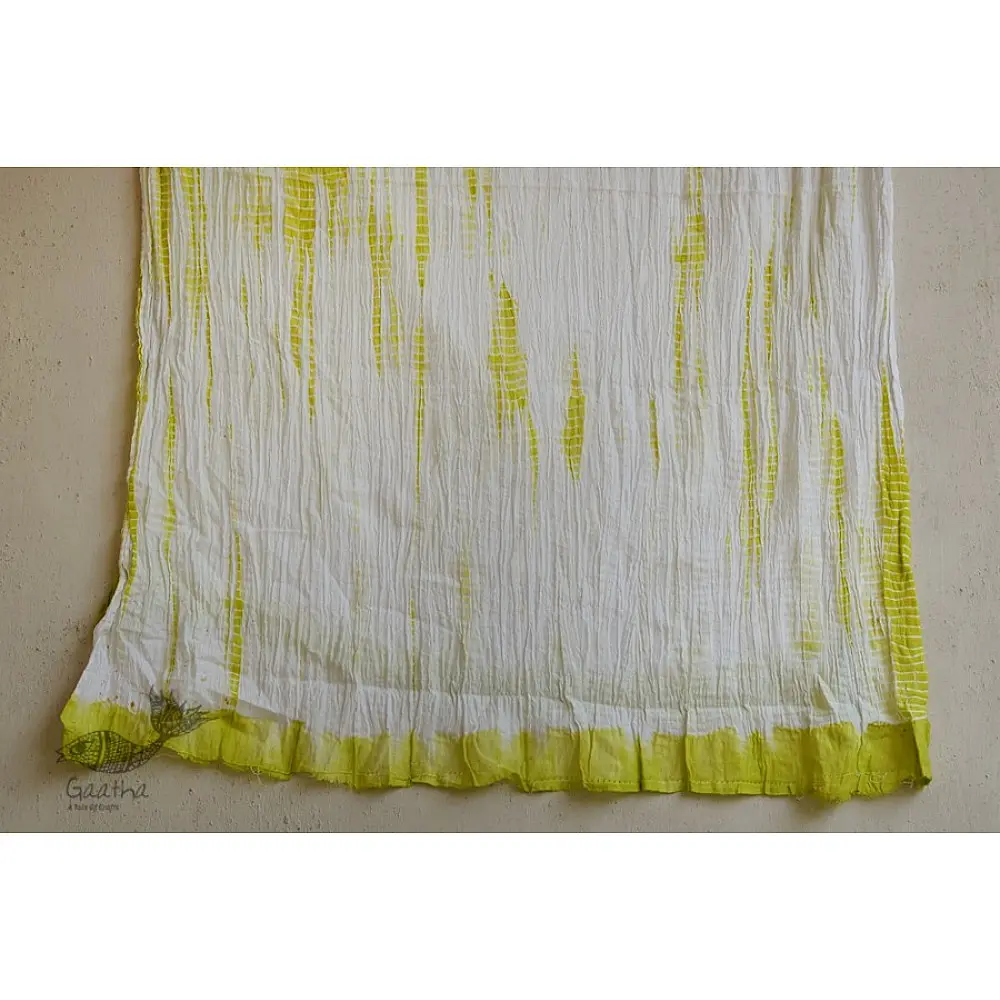
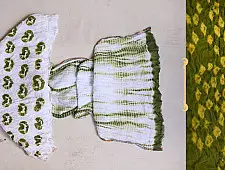
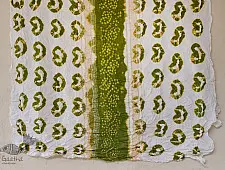
A familiar chatter swells in the air as feet chase the trail of a carelessly flying odhani in the by-lanes of Bhuj, spilling colors all over. While the women are busy tying knots in fabric, their whispered secrets quietly sneak into these tied bundles. They remain unnoticed but intact till the connoisseur hands unfurl the knots and set the stories free to engulf the wearer. Bandhani is not merely a fabric; it’s a canvas of anonymous tales soaked in many colors and ensuring that the wearer is wrapped in the warmth of native emotions. Bandhani is an expression used in Gujrat for textiles where different designs are produced by tying individual parts of the fabric before dyeing. The Gujrati word‘Bandhavun’ is derived from the Sanskrit word for tying ‘Bandhan’. The people engaged in producing designs on fabric as a result of tie-dying technique are known as ‘Bandhej’.
The tie and dye art of treating textiles is fairly universal, with many ingenious versions scripting new genres in various parts of the world. The technique of resist dying by binding the individual parts of the cloth to shield them from the dye is usually known in India as ‘Bandhani’. There is ample evidence to suggest that the relatively complex process of mordant-dyeing was known to the inhabitants of the ancient city of Mohenjo-Daro in about 2000 BC. So, it is possible that resist dyeing was also practiced. Archival facts further confirm that in 6th-7th century A.D Bandhani cloth was depicted on walls of the Ajanta caves. Here women are shown wearing bodices in a simple dotted tie and dye pattern, as well as skirts apparently made in Ikat fabric (another resist dyeing technique still wide spread in India). More recent to these paintings are the written references to Bandhani, which appears in the much quoted Harshacharitra by Bana (the court poet of king Harsha of Kannauj), where he celebrates the dyed patterns on the bride’s special odhani, an auspicious garment which is traditionally tie and dyed even today.
Adored by almost all women alike, Bandhani is highly popular amongst the Jain, Jat, Harijan, Meman and Rabari communities. The art of tie and dye assumes a different expression in every house. For instance, while the Rabaris prefer black stole with red dots dyed on wool, the Muslim population around here has great cultural sentiment attached to a large known as chandrokhani which is wrapped around for occasions like marriage. The Khatri, Parsi, Meman and Sonaar communities have a particular penchant for Bandhani on silk.
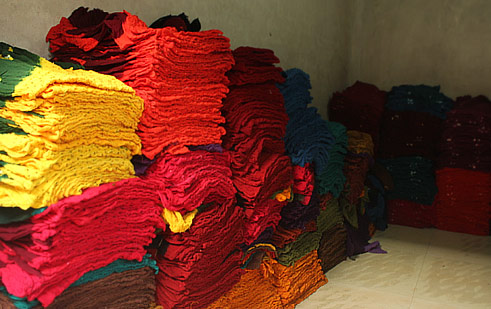
The main clusters practicing this craft have settled in Ahmdeabad, Surendranagar and Bhuj areas of Kutchh. The fabric required for this art is sourced from Bangalore, Mumbai, Bhagalpur, Ahmadabad and Surat. The fabric to be dyed is first carefully examined for quality by the cloth dealer. Then the layout pattern is marked after folding the fabric into four or more layers. Fields are delineated using a cord dipped in Geru (burnt sienna mixed in water). Consequently wooden blocks of desired motifs are dipped in the same Geru mixture and stamped within the marked fields.
The task of tying of motifs is predominantly carried out by the womenfolk who manage this along with the rest of the household chores at their homes in the village. The thread used for tying is usually plain cotton yarn which is mostly collected from industrial waste. It is led by the thumb and the forefinger of the right hand and is made to run through a fine millet stem bobbin, so that it runs smoothly and evenly. Knots are tied in two ways. One option requires raising the folds of the material with the pointed nails of the finger to create a little bunch around which thread may be tied. The second option requires use of filler materials, which are impregnated within the knots. A single stole can have 4000 to 5000 knots. More interestingly, women can tie up to 700 knots in a single day. It’s relatively easier tying knots in silk or cotton for the woolen knots have to be reaffirmed by biting them with the teeth.
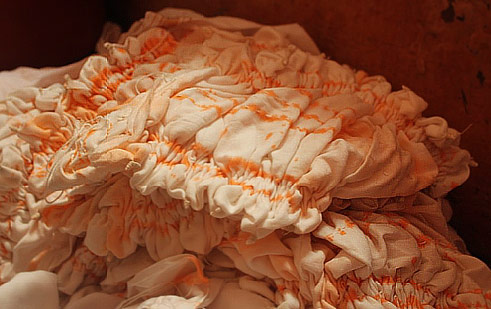
While women are busy tying knots, the men are actively engaged in the dying process which happens in more specialized workshops. The fabric carrying the tied knots is first soaked in cold water and then wrapped in a cloth to ensure that the ties are not undone. It is eventually dyed in the lightest color (mostly yellow) by immersing the tied fabric in a hot solution of dyes. It is finally rinsed, squeezed and dried. There is limited use of natural dyes in this process.
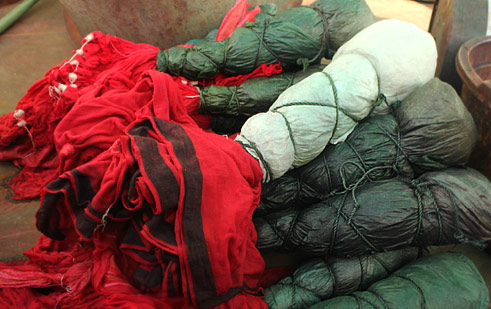
The textile can even be touched upon by manual application of certain colors for selective dying. Fast dyes, which can be directly applied, have made this process simpler. This technique is known as lipai. Naphthol dyes are effective in cold solutions and can be used to dye the next darker color. The dyed textile is washed by local washer men and starched if necessary. The ties of the folded Bandhani textile remain closed till they are sold or at the most opened at one corner to show the color scheme. For opening, the Bandhani material is pulled crosswise forcibly so that all the ties open up simultaneously as all the threads are rendered loose.
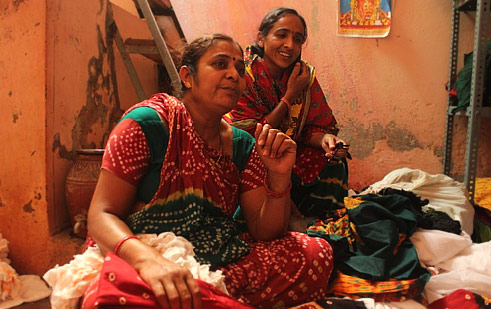
There are about a 50-60 such workshops in surendranagar today and a good 600 people are still engaged in this craft here. Bandhani is as popular today as it has always been. These tie and dye motifs for one, will never go out of fashion for the simple reason that womenfolk all over the country identify themselves with it. From draping the newly wed bride to becoming a constant companion as a chunri or odhani, these myriad Bandhini patterns run skin deep till they get absorbed by the soul.

Related Products
-225x150w.webp "Kopal ❅ Handloom Linen - Embroidered Saree")
-225x150w.webp "Kopal ❅ Handloom Linen - Embroidered Saree")
-225x150w.webp "Kopal ❅ Handloom Linen Embroidered Saree - Sky Blue")
-225x150w.webp "Kopal ❅ Handloom Linen Embroidered Saree - Sky Blue")
-225x150w.webp "Kopal ❅ Handloom Linen Embroidered Saree - Light Green")
-225x150w.webp "Kopal ❅ Handloom Linen Embroidered Saree - Light Green")
-225x150w.webp "Kopal ❅ Handloom Linen Embroidered Saree - Light Yellow")
-1-225x150w.webp "Kopal ❅ Handloom Linen Embroidered Saree - Light Yellow")
-225x150w.webp "Kopal | Handmade ~ Kalamkari Silk Saree - Black & White")
-225x150w.webp "Kopal | Handmade ~ Kalamkari Silk Saree - Black & White")
-225x150w.webp "Kopal | Handmade ~ Kalamkari Silk Saree - Peacock & Peahen Pallu Motif")
-225x150w.webp "Kopal | Handmade ~ Kalamkari Silk Saree - Peacock & Peahen Pallu Motif")
-225x150w.webp "Kopal ❅ Handloom Linen Embroidered Saree - Light Orange")
-225x150w.webp "Kopal ❅ Handloom Linen Embroidered Saree - Light Orange")
-225x150w.webp "Venu . वेणु ~ Sora Handcrafted Bamboo Rectangular Box - Set of 3")
-225x150w.webp "Venu . वेणु ~ Sora Handcrafted Bamboo Rectangular Box - Set of 3")
-225x150w.webp "Shorts | Batik Modal Silk Shorts - Purple ( Two Options )")
-225x150w.webp "Shorts | Batik Modal Silk Shorts - Purple ( Two Options )")

-1-225x150w.webp "Rasika . रसिका ~ Patola Silk Dupatta ~ Fuchsia Pink")
-1-225x150w.webp "Rasika . रसिका ~ Patola Silk Dupatta ~ Fuchsia Pink")



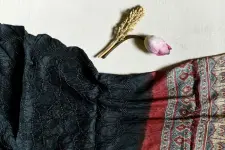
-225x150w.webp "Ada . अदा | Ajrakh Bandhani Tussar Silk Stole - Black")
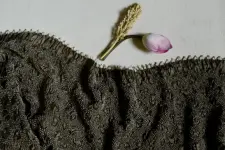
-225x150w.webp "Ada . अदा | Bandhani Tussar Silk Dupatta - Heart Design in Greenish Gray Colour")
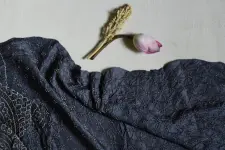
-225x150w.webp "Ada . अदा | Bandhani Tussar Silk Stole - Grey")