

-1000x1000w.webp "buy stitched woolen Navy Blue Jacket")
-1000x1000h.webp "buy stitched woolen Navy Blue Jacket")
-1000x1000h.webp "buy stitched woolen Navy Blue Jacket")
-1000x1000h.webp "buy stitched woolen Navy Blue Jacket")
-1000x1000h.webp "buy stitched woolen Navy Blue Jacket")

-80x80w.webp "buy stitched woolen Navy Blue Jacket")
-80x80h.webp "buy stitched woolen Navy Blue Jacket")
-80x80h.webp "buy stitched woolen Navy Blue Jacket")
-80x80h.webp "buy stitched woolen Navy Blue Jacket")
-80x80h.webp "buy stitched woolen Navy Blue Jacket")
- Availability: 10
- Made & Mkt by: Simply Kitsch
- Product Code: 4003-WJ24-IC-SK002
- Weight: 500.00g
- Package Dimensions: 35.00cm x 25.00cm x 25.00cm


Large fields, small hills, going uphill in the summer and coming downhill in the winter, amidst the beautiful mountains… this is the life of the Bhotias of Uttarakhand.
The beautiful hills of Uttarakhand are the abode of the craft of weaving wool, initiated by the women of the villages. A craft, that has found its roots in the region just 3-4 generations back, has now become inseparable from the lives of the natives, the Bhotias and the Gadvalis.

Bhotias are predominantly a nomadic tribe in Uttarakhand, India. They spend the winter months in Dhunda, obtaining wool and weaving fabrics, and the summer months in Harsil, growing beans, potatoes, apples and almonds. Every year a self appointed group of people (generally old who are incapable of farming) take charge of the rearing, carefully guiding the sheep from all the households towards the local pastures and the green lands while the rest are busy farming. September – October is the business time.

The sheep are back from forests, farms are ready to be harvested and apple orchards are blooming red with fruits. Harvesting is a community affair, with everyone harvesting each other’s fields together, singing songs, snacking; it is celebrated like a festive occasion.

At the end of summer, when the sheep are fat from lazily grazing in the plains and have fully grown hair, the tribe comes down from Harsil to Dunda to resume their weaving activities. After the sheep are sheared, the wool is washed and dried, ready to be made into yarns for weaving. Even though cleaning and carding of the wool is traditionally done by hand, two carding units were installed in Dhunda to fasten the process out of which only one is functional today. The process of carding converts the rough wool into a thin, clean, homogeneous strip which can easily be spun into a yarn of equal thickness throughout.

Spinning is done on a traditional spinning wheel, or Charkha after which the yarn is ready to be knitted or woven. For weaving, there are two types of looms, the upright loom for coarser fabric and the pit loom for finer fabric. Knitting, done with a pair of needles has attained a different level of fabric construction altogether with the motifs getting three dimensional. Sheep wool blended with rabbit hair gives extra softness, shimmer and whiteness to the weave. Once the fabric is made, it is washed and brushed to give a felt like effect. The different shades of grey of the woolen fabrics are not dyed colours, but the result of blending of white and black wool in certain ratios, before spinning of the yarn. With just these shades, they make different motifs, stripes and checks.

Popular products are knitted kangsuk (socks), saai (cap), laakhshu(gloves), mufflers and woven suit lengths, shawls, dan (carpet), stoles,dumkar (blanket) and paagad (belt). Most of their sales happen during the annual festival at Gangotri, which takes place when the idol of Holi Ganga is brought back to the temple with a great procession followed by pooja and yagnas marking the beginning of summers. Sometime in April – May, On the auspicious day of Akshaya Tritiya, the day when the mythical king Bhagirath brought down Ganga from Shiva’s hair, they open the doors of the temple of Gangotri. This day is a celebration marking the beginning of their resettlement after a six month long nomadic life.

Before the Indo-China war, trade between India and Tibet, helped natives from both the sides in their livelihood. Potatoes, grains and spices from India was exchanged for ghee, wax, wool and salt from Tibet. This stopped after 1962 when many of the traders from Tibet were still in India. Those traders settled here and came to be known as “Khampa”, and are Buddhist by religion. There are two other castes in the area, the “Rompa”, who are originally from the Indian side of the border and the “Kolee” who are weavers from Himachal. Their clothing, facial features and even the motifs of dragons on their weave clearly show a Tibetan influence. Both small and large scale industries are doing similar work, albeit less durable and inexpensive, thus being a threat to the survival of this craft. The younger generation is making use of government policies to get higher education and slowly leaving their family profession. Their looms stay unoccupied, preserved as antiques.

Unlike many Indian villages, and even “progressive” cities, here in this little hilly region, women are held in high respect because they are the ones who originally raised and supported the families.Women take care of the household, harvest the fields, weave and sell the woolen articles in the market.

Tantuk is an organization dedicated extensively in soft material crafts, we deal in textiles which are purely hand crafted by both men and women craft persons using varied techniques such as weaving, knitting, block printing and embroidery. In the current scenario of sustainability and preservation of our environment, we make a conscious effort to work with natural fibers such as wool, silk, cotton and various grasses and fibers.

Be it weaving, knitting, printing or embroidery, there is an urge to go down till every little detail or for that matter every single fiber. We are driven by our ambition to form a unique relation with the existing and to explore into the uncharted arenas of this vast world of crafts. Tantuk’s creations are inspired by the awe inspiring beauty of the Dev Bhoomi- Uttarakhand and are dedicated to the lovers of naturals.
Related Products

-225x170h.webp "Love in Fall ~ Handwoven Woolen Jacket")
-225x170h.webp "Love in Fall ~ Handloom Wool Jacket")

-225x170h.webp "Love in Fall ~ Handwoven - Wool Crop Jacket")
-225x170h.webp "Love in Fall ~ Handloom Woolen Jamavar Crop Jacket")
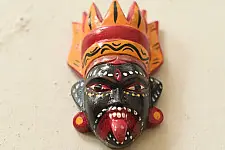
-225x150w.webp "Handmade Wooden Hanging Hanuman Mask")
-225x150w.webp "Handmade Wooden Hanging Hanuman Mask")
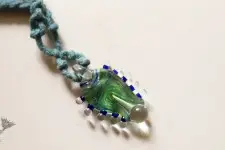
-225x150w.webp "Kusumaprabha . कुसुमांप्रभा | Designer Glass Earring - Blue Jhumka")
-225x150w.webp "Kusumaprabha . कुसुमांप्रभा | Designer Glass Earring - Blue Jhumka")
-225x150w.webp "Folk Love ~ Kutchi Handmade Embroidered Necklace")
-225x150w.webp "Folk Love ~ Kutchi Handmade Embroidered Necklace")
-225x150w.webp "Folk Love ~ Banjara Handcrafted Embroidered Necklace")
-225x150w.webp "Folk Love ~ Banjara Handcrafted Embroidered Necklace")

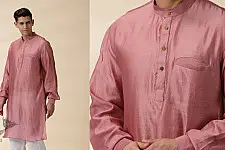
-225x150w.webp "Ekansh . एकांश | Blush Pink Chanderi Silk Long Kurta")
-225x150w.webp "Vasant . वसंत ~ Woolen Patola Shawl ~ Black Diamond Motif")
-225x150w.webp "Vasant . वसंत ~ Woolen Patola Shawl ~ Black Diamond Motif")
-225x150w.webp "Nandan . नंदन ✦ Handcrafted ~ Gond Painting ( 12\" x 16\" ) - Tribal Tale")
-225x150w.webp "Nandan . नंदन ✦ Handcrafted ~ Gond Painting ( 12\" x 16\" ) - Tribal Tale")




-225x150w.webp "Ada . अदा | Ajrakh Bandhani Tussar Silk Stole - Black")
-225x150w.webp "Ada . अदा | Bandhani Tussar Silk Dupatta - Heart Design in Greenish Gray Colour")
-225x150w.webp "Ada . अदा | Bandhani Tussar Silk Stole - Grey")

-234x234w.webp "Love in Fall ~ Handwoven Woolen Stitched Navy Blue Jacket")

-234x234w.webp "Love in Fall ~ Handwoven - Wool Crop Jacket")