


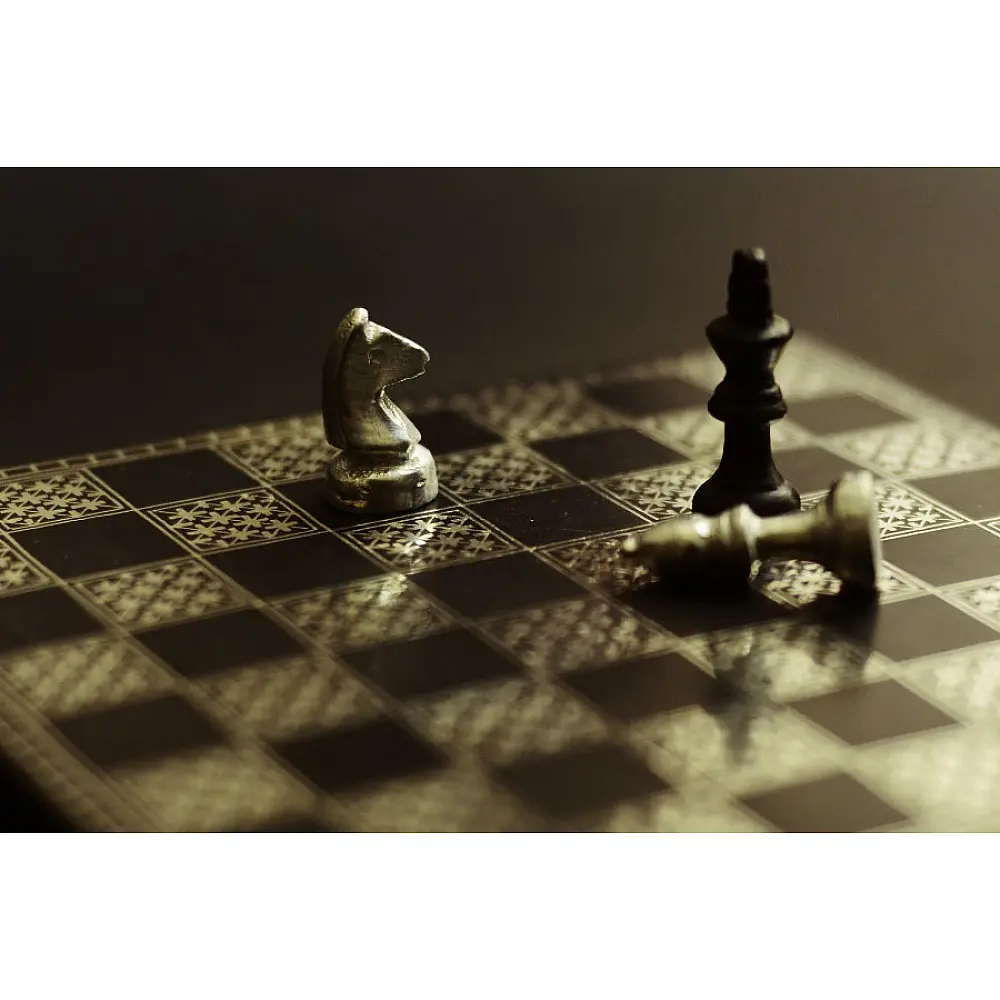
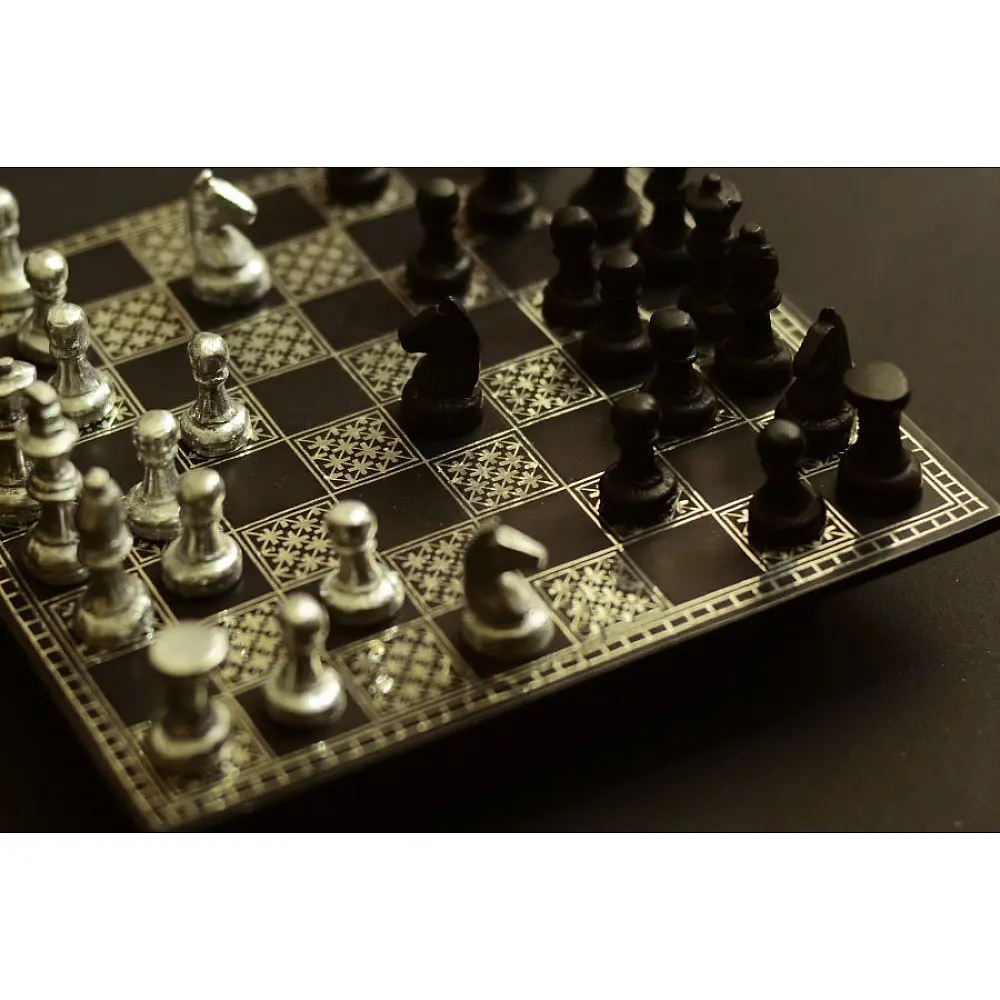
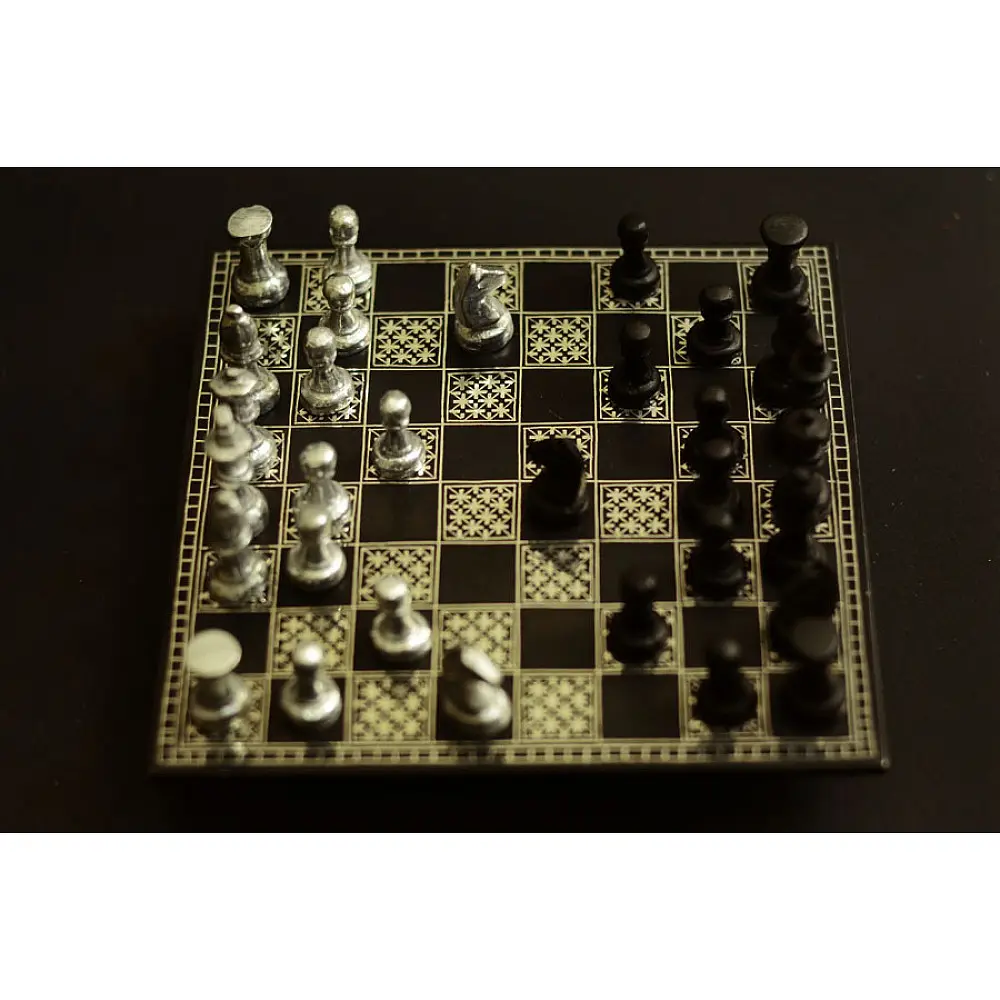


- Availability: Out Of Stock
- Made & Mkt by: Bidriwala
- Product Code: 4097-GB1-33
- Weight: 365.00g
- Package Dimensions: 14.00cm x 14.00cm x 2.00cm

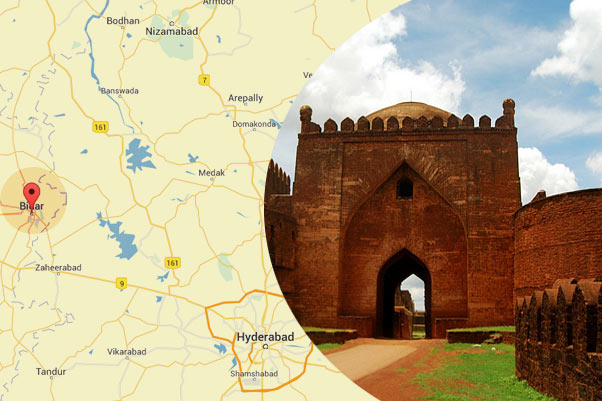
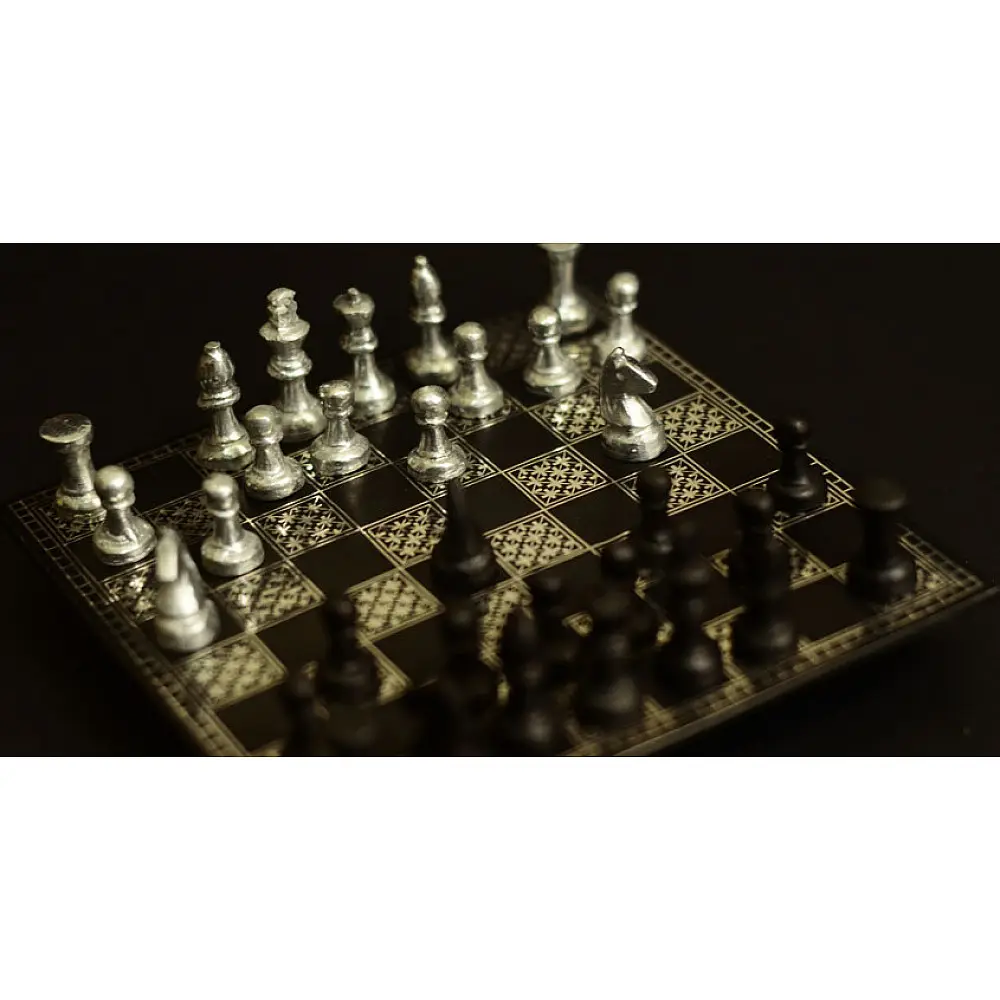
Bidar is a hill-top city situated in the deccan plateau, in the north-eastern part of Karnataka state of India. The city is well known for its many places of architectural, historical and religious importance. It is said that the soil of Bidar is very special. No one knows exactly what is special about it. Some artisans feel that the soil is away from the sunlight and rain for years and therefore it has great oxidizing properties.
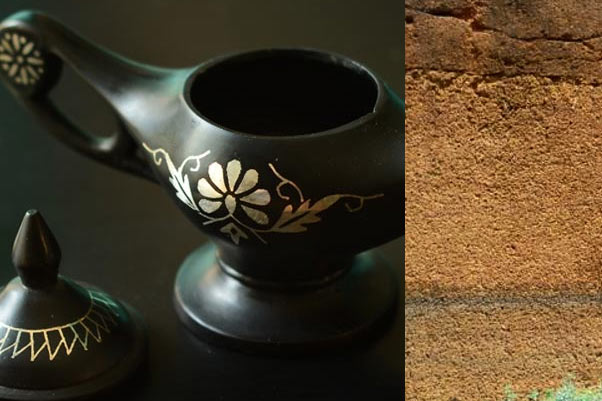
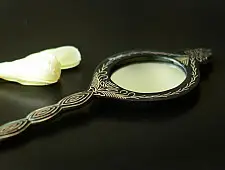
Throughout history, the diverse and rich cultural heritage of India has found its expression in various forms of art and craft. They have become an integral part of the social fabric. 'Bidriware' is one such metal art that has not only been embedded in the Indian context but has also traversed boundaries to cater to the global tastes. The art originated in ancient Persia (in 14th-15th century, considered as a mix of Turkey, Persia and Arabic countries) and was brought to India during the Bahamani rule in Bidar. It blended with the local styles, giving birth to a unique art form known as 'Bidriware'.
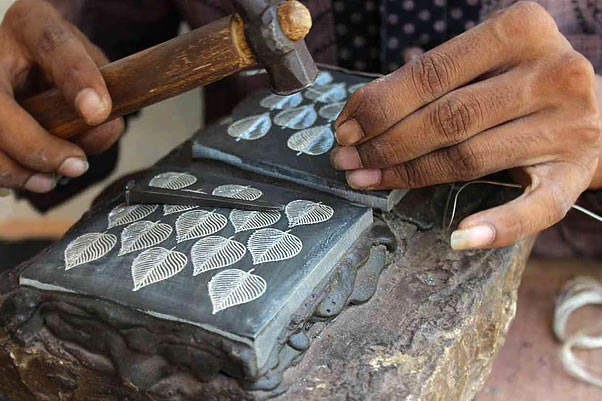
Bidri creations have traditional names according to the styles of creation. Inlaying method or Tarkashi is done using silver wires. Flower and petal motifs created with silver sheets is called Taihnishan. Mehatabi kaam is the name given to reversal of surfaces, where the design is cut out in sheet metal and is inlaid. Embossed designs are called as Munnavat kari. Verses from the Quran in Arabic script are also include in the themes.
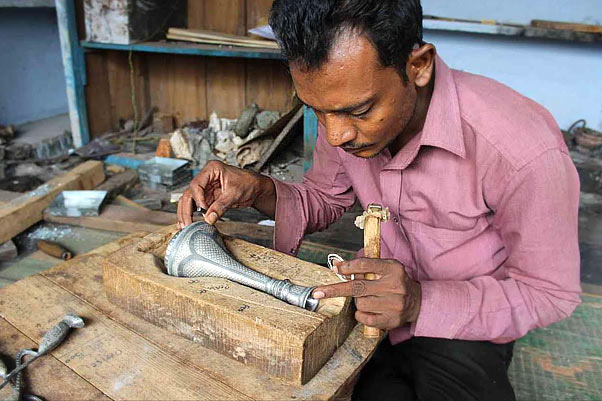
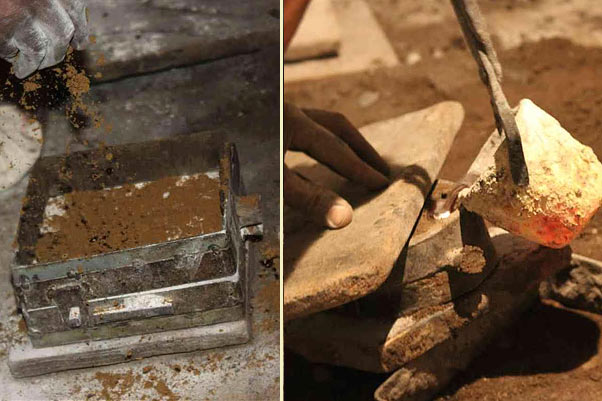
Process of Bidri can be divide into two parts - casting and inalying. A mix of soil, castor oil and resin is used to prepare a mould. In this, molten metal alloy of zinc and copper (in the ratio of 16:1) is poured. Depending on the product design, different metal casted pieces may need to be welded together to form one single product.
Inlaying work is done by silver sheet or wire. Traditionally, various flowers (known as Asharfi-ki-booti), leaves (vine creepers), geometric designs, human figures, stylized poppy plants with flowers etc. were commonly done on the items. New designs like Persian roses and passages from the Holy Quran in Arabic script are also in great demand in the West. Many of Bidri themes are inspired by Mughal motifs presented in geometrical and flower patterns.
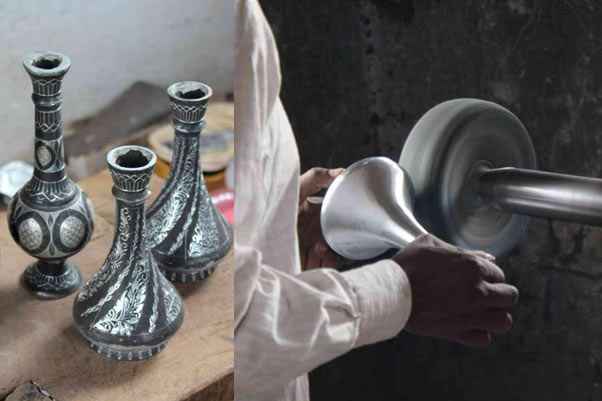
The bidriware is now ready for the final blackening process. Here, a special variety of soil which is available only in the unlit portions of the Bidar fort is used. It is mixed with ammonium chloride and water to produce a paste which is then rubbed onto a heated bidri surface. The paste selectively darkens the body while it has no effect on the silver inlay.

Related Products
-225x150w.webp "Bagru Bedsheet | Natural Color . Hand Block Printed - 90\" x 108\"")
-225x150w.webp "Vintage Payal | Handmade Traditional Payal - Two Options")
-225x150w.webp "Vintage Payal | Handmade Traditional Payal - Two Options")
-225x150w.webp "Summer Solstice | Dreamcatcher ✡ O")
/acc4-225x150h.webp "Applique Cushion ~ 4")
/acc4-1-225x150h.webp "Applique Cushion ~ 4")
-1-225x150w.webp "Soof | Hand Embroidered ~ Wall Hanging Key Holder (Two Options)")
-1-225x150w.webp "Soof | Hand Embroidered ~ Wall Hanging Key Holder (Two Options)")
-225x150w.webp "Vintage Payal | Traditional Simple Payal")
-225x150w.webp "Vintage Payal | Traditional Simple Payal")
-225x150w.webp "Kanupriya ꙰ Handmade Vintage Kada ( Solid Kada )")
-225x150w.webp "Kanupriya ꙰ Handmade Vintage Kada ( Solid Kada )")



-225x150w.webp "Ada . अदा | Ajrakh Bandhani Tussar Silk Stole - Black")
-225x150w.webp "Ada . अदा | Bandhani Tussar Silk Dupatta - Heart Design in Greenish Gray Colour")
-225x150w.webp "Ada . अदा | Bandhani Tussar Silk Stole - Grey")
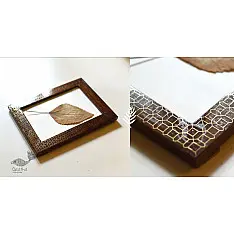
-234x234w.webp "Tarkashi | Wood Inlay with Brass Wire ~ Tarkashi Photo Frame")