



-1000x1000w.webp "Salt Deserts of Kutch ❅ Hand spun ❅ Raw woolen Shawl ❅ R")
-1000x1000w.webp "Salt Deserts of Kutch ❅ Hand spun ❅ Raw woolen Shawl ❅ R")
-1000x1000w.webp "Salt Deserts of Kutch ❅ Hand spun ❅ Raw woolen Shawl ❅ R")
-1000x1000w.webp "Salt Deserts of Kutch ❅ Hand spun ❅ Raw woolen Shawl ❅ R")
-1000x1000w.webp "Salt Deserts of Kutch ❅ Hand spun ❅ Raw woolen Shawl ❅ R")
Out Of Stock

-80x80w.webp "Salt Deserts of Kutch ❅ Hand spun ❅ Raw woolen Shawl ❅ R")
-80x80w.webp "Salt Deserts of Kutch ❅ Hand spun ❅ Raw woolen Shawl ❅ R")
-80x80w.webp "Salt Deserts of Kutch ❅ Hand spun ❅ Raw woolen Shawl ❅ R")
-80x80w.webp "Salt Deserts of Kutch ❅ Hand spun ❅ Raw woolen Shawl ❅ R")
-80x80w.webp "Salt Deserts of Kutch ❅ Hand spun ❅ Raw woolen Shawl ❅ R")
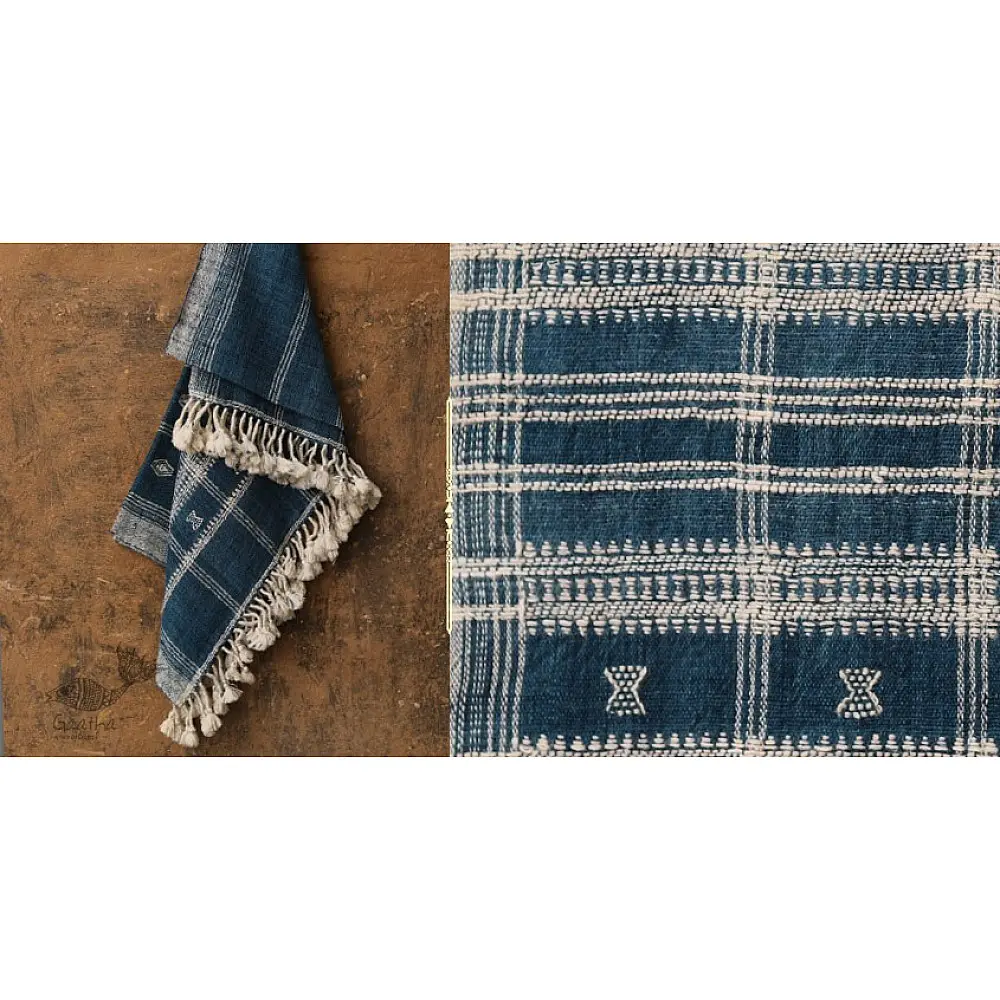
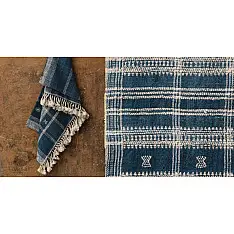
Salt Deserts of Kutch ❅ Hand spun ❅ Raw woolen Shawl ❅ R
- Availability: Out Of Stock
- Made & Mkt by: Vankar Babubhai Ladhubhai
- Product Code: 4016-N2020-WS-17
- Weight: 800.00g
- Package Dimensions: 212.00cm x 96.00cm x 0.00cm
Rs.5,450.00

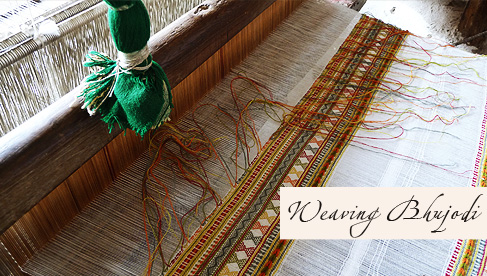
Ever been to a music concert? …. Well the one that plays in the houses of Bhujodi is a wee bit different, not just in what you hear but also in the instruments that play. The musicians of Bhujodi play on … from morning to dusk, meditatively. Their orchestra constitutes of spin wheels for strings, wooden loom for beats, and for vocals there are chirping birds, sojourning the mud ledges for grains and water, offsprings giggling and playing pee-ka-boo across the courtyard, Mooing cow in the corner and almost certainly, filling the background will be either the folk tunes or the old bollywood melodies.
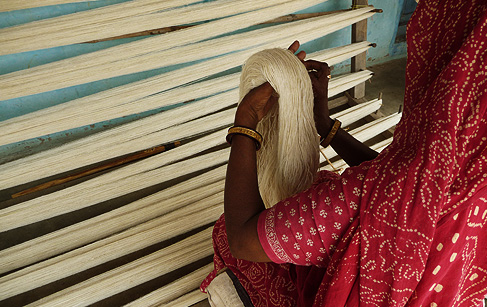
All of this manifesting into a concert, not just ears get accustomed to, but hands follow too. Meditatively weaving motifs out of a deeper conscience we call genetic inheritance. Each woven fabric carries with it, millions of such consciences, intertwined with the warp and the weft, closely put together to form the fabric of life.
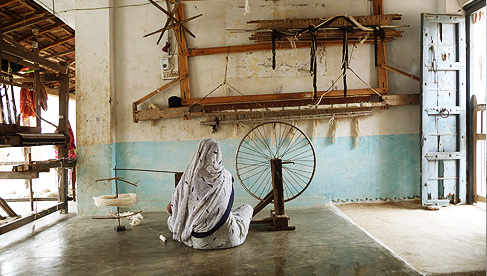
Bhujodi, a 500 years old village in kutch is the mother to this need-fully evolved craft, shouldered by 200 of its weavers today. The craft is said to have evolved as a need to cover against weather, at the time barter system was practiced as a method of exchange. ‘Rabaris’ being the original nomads and cattle rearers provided wool, milk products and grains to the village and ‘Vankars’ took up to weaving cloth. While rearing cattle pretty much remained the same, the Vankars with an indigenous technique in hand had breakthroughs one after the other.
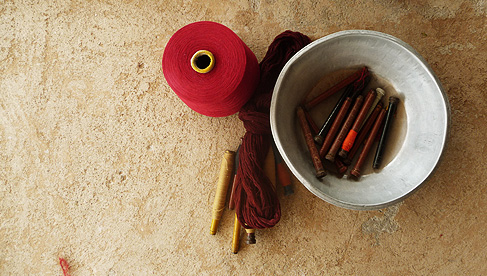
The basic structure of the loom remained the same, but it evolved to a more convenient model with time. The one in use today has the shuttle movement controlled by a foot-over pedal, as against the slow process of passing it through the warp manually. The fabric got finer with speed and variety of yarns available. The motifs however remained traditional and characteristic of communities. Like wheel, weaving is an invention that revolutionized the way we saw life there after, the basics holding valid till date.
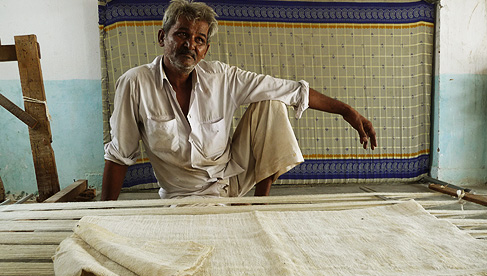
While some wool from locally grown sheep is still used, they also procure silk from Bangalore, acrylic from Ludhiana, wool from Badmere and cotton from various places, to cater to the increasing demands. The fine cotton has enabled them to create more intricate and colorful designs. Such pieces may have 70 threads per square inch instead of the usual 24. Weaving of a piece may take days to months, depending upon the intricacy and newness of the design.
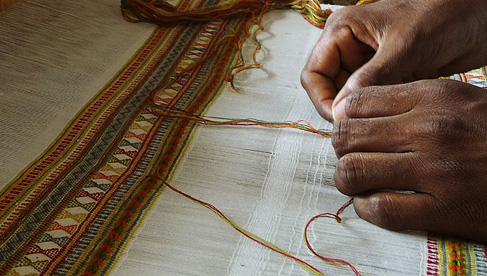
The yarn in its raw form is soft, breakable and capable of getting entangled easily. To get rid of these properties, a thin paste of wheat flour with water is boiled and the bunch of woolen strands is soaked in it. Soon after sun drying it in the fields, a layer of the paste covers the strands. These are then separated by combing them apart with a brush.
This bunch of strong strands is then taken inside the house, where several people are engaged in different stages of the weaving process. Some are busy cranking a machine that spins the thread onto a spindle, preparing the weft. A woman is working at high-speed to prepare the warp thread on a wooden frame called ‘chaukhta’. In the corner, a man is weaving on a shuttle loom. Vankaar Mosi Belji explained that, through the means of division of labor, it’s the men who sit on the loom as it needs a lot of stamina, while women take care of the auxiliary processes like making yarn on the charkha, laying it on the loom and adding value to the woven articles.
Inside his room, carpets, shawls, stoles and placemats were neatly piled. Some had bright colors others dark, and still others retained the natural color of the fibers. Many of them contained small round mirrors that were so naturally into the woven design.
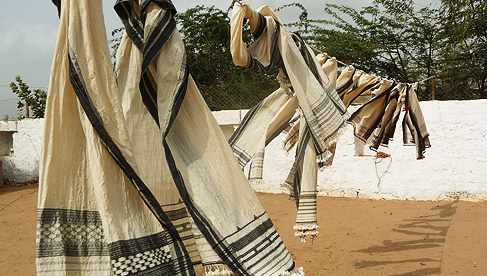
Apart from Bhujodi, Vannora, Kota, Jamthara, Sarli, Bhuj, Kadarthi are other villages in Kutch region where weaving happens. Weaving as a process goes around the year apart from the rainy season, when work hits a lean because of practical reasons.
Not relying too much on today’s education system, the vankars train their future weavers from a very tender age. Growing around the traditional looms in the household, the kids learn by seeing, even before they develop conscience.
-225x150w.webp "Rasika . रसिका ♡ Handwoven Patola Silk Cotton Black Dupatta")
-225x150w.webp "Rasika . रसिका ♡ Handwoven Patola Silk Cotton Black Dupatta")
New
One of a Kind
Man, an eternal traveler has traversed landscapes... on foot, on his rides, on flights in search of better lands, wealth and at times merely for wande..
Rs.5,440.00
-225x150w.webp "Rasika . रसिका ♡ Handwoven Patola Cotton Dupatta ~ Pistachio Green & Cream")
-225x150w.webp "Rasika . रसिका ♡ Handwoven Patola Cotton Dupatta ~ Pistachio Green & Cream")
New
One of a Kind
Man, an eternal traveler has traversed landscapes... on foot, on his rides, on flights in search of better lands, wealth and at times merely for wande..
Rs.4,075.00
-225x150w.webp "Rasika . रसिका ♡ Handwoven Patola Cotton Dupatta ~ Violate With Tassels")
-225x150w.webp "Rasika . रसिका ♡ Handwoven Patola Cotton Dupatta ~ Violate With Tassels")
New
One of a Kind
Man, an eternal traveler has traversed landscapes... on foot, on his rides, on flights in search of better lands, wealth and at times merely for wande..
Rs.4,075.00
-225x150w.webp "Rasika . रसिका ♡ Handwoven Patola Cotton Dupatta ~ Hathi Motif")
-225x150w.webp "Rasika . रसिका ♡ Handwoven Patola Cotton Dupatta ~ Hathi Motif")
New
One of a Kind
Man, an eternal traveler has traversed landscapes... on foot, on his rides, on flights in search of better lands, wealth and at times merely for wande..
Rs.4,075.00
-225x150w.webp "Rasika . रसिका ♡ Handwoven Patola Cotton Dupatta ~ Black Zig Zag")
-225x150w.webp "Rasika . रसिका ♡ Handwoven Patola Cotton Dupatta ~ Black Zig Zag")
New
One of a Kind
Man, an eternal traveler has traversed landscapes... on foot, on his rides, on flights in search of better lands, wealth and at times merely for wande..
Rs.4,075.00
-225x150w.webp "Rasika . रसिका ♡ Handwoven Patola Cotton Dupatta ~ Teal")
-225x150w.webp "Rasika . रसिका ♡ Handwoven Patola Cotton Dupatta ~ Teal")
New
One of a Kind
Man, an eternal traveler has traversed landscapes... on foot, on his rides, on flights in search of better lands, wealth and at times merely for wande..
Rs.5,725.00
-225x150w.webp "Rasika . रसिका ♡ Handwoven Patola Cotton Dupatta ~ Brick Red")
-225x150w.webp "Rasika . रसिका ♡ Handwoven Patola Cotton Dupatta ~ Brick Red")
New
One of a Kind
Man, an eternal traveler has traversed landscapes... on foot, on his rides, on flights in search of better lands, wealth and at times merely for wande..
Rs.5,725.00
-225x150w.webp "Vintage Payal | Traditional Simple Payal")
-225x150w.webp "Vintage Payal | Traditional Simple Payal")
Out Of Stock
Spring tickles my feet as love soaks this air,Is it a new reason to live, or just this excuse of the fair.I can wait to look my best, as I embrace the..
Rs.650.00
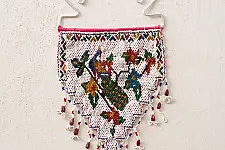
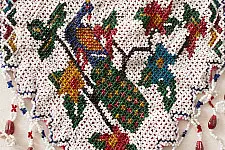
One of a Kind
Gujarat is synonymous with colourful embroideries with rich textures, saturated hues and interspersed sparkles. But it is not just Kutch, which is fam..
Rs.1,500.00
Out Of Stock
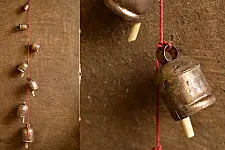
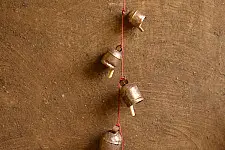
“Godhuli”… long shadows of dusk, a cloud of dust covering the orange horizon and the sounds of tinkering bells, announcing ..
Rs.1,500.00
One of a Kind
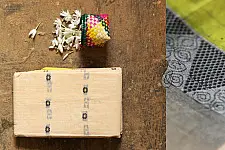
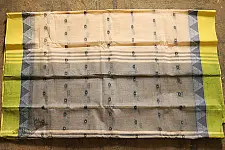
The Nadia district of West Bengal is a famous center of Vaishnavism. It is best known to devotees as the residence of Sri Advaita Acharya. After Lord ..
Rs.2,630.00
-225x150w.webp "Prachin . प्राचीन ❦ Handmade Antique Bead Work ~ Wall Hanging Circle")
-225x150w.webp "Prachin . प्राचीन ❦ Handmade Antique Bead Work ~ Wall Hanging Circle")
One of a Kind
Gujarat is synonymous with colourful embroideries with rich textures, saturated hues and interspersed sparkles. But it is not just Kutch, which is fam..
Rs.1,500.00
-225x150w.webp "Joyance | Patola Coaster - Parrot ( Set of Three )")
-225x150w.webp "Joyance | Patola Coaster - Parrot ( Set of Three )")
Out Of Stock
Man, an eternal traveler has traversed landscapes... on foot, on his rides, on flights in search of better lands, wealth and at times merely for wande..
Rs.1,440.00
-225x150w.webp "Treasure Trove ~ Embroidered Kutchi Old Wall Piece")
-225x150w.webp "Treasure Trove ~ Embroidered Kutchi Old Wall Piece")
One of a Kind
Think of Gujarat and vibrant images flash across the mind… the exhilarating Garba, decorated camels in the great Rann and everyone clothed in col..
Rs.3,320.00

-50 %
Out Of Stock
Gathering commences in the middle of deserted pavilions where velvet carpets adorn the Dessert lands & Manganiyars play folk music as a bugle for ..
Rs.512.00 Rs.1,025.00

-50 %
Out Of Stock
Gathering commences in the middle of deserted pavilions where velvet carpets adorn the Dessert lands & Manganiyars play folk music as a bugle for ..
Rs.512.00 Rs.1,025.00

-50 %
Out Of Stock
Gathering commences in the middle of deserted pavilions where velvet carpets adorn the Dessert lands & Manganiyars play folk music as a bugle for ..
Rs.512.00 Rs.1,025.00
-50 %
Out Of Stock
Gathering commences in the middle of deserted pavilions where velvet carpets adorn the Dessert lands & Manganiyars play folk music as a bugle for ..
Rs.512.00 Rs.1,025.00
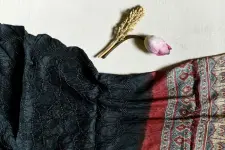
-225x150w.webp "Ada . अदा | Ajrakh Bandhani Tussar Silk Stole - Black")
-10 %
Out Of Stock
A familiar chatter swells in the air as feet chase the trail of a carelessly flying odhani in the by-lanes of Bhuj, spilling colors all over. While&nb..
Rs.3,070.00 Rs.3,412.00
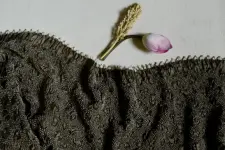
-225x150w.webp "Ada . अदा | Bandhani Tussar Silk Dupatta - Heart Design in Greenish Gray Colour")
One of a Kind
-10 %
A familiar chatter swells in the air as feet chase the trail of a carelessly flying odhani in the by-lanes of Bhuj, spilling colors all over. While&nb..
Rs.9,310.00 Rs.10,345.00
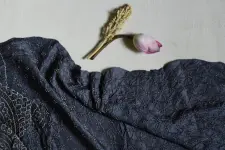
-225x150w.webp "Ada . अदा | Bandhani Tussar Silk Stole - Grey")
One of a Kind
-10 %
A familiar chatter swells in the air as feet chase the trail of a carelessly flying odhani in the by-lanes of Bhuj, spilling colors all over. While&nb..
Rs.3,460.00 Rs.3,845.00
-234x234w.webp "Salt Deserts of Kutch ❅ Hand spun ❅ Raw woolen Shawl ❅ R")
-234x234h.webp "Raas | Angarkha Style Handloom Cotton Kediyu - Light Orang Brown")