

- Availability: Out Of Stock
- Made & Mkt by: Sailesh Singhania
- Product Code: 1909-SPS-01
- Weight: 500.00g
- Package Dimensions: 630.00cm x 112.00cm x 0.00cm

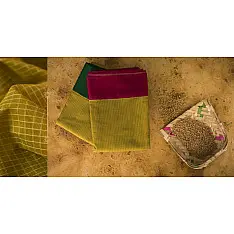
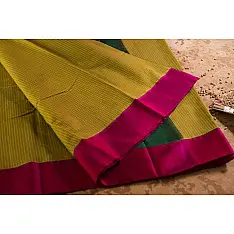
The magnificent Gadawal sarees are inspired from temple and nature, the motifs have always been in the shape of temples, and the architecture of religious places.Mythology tells us that the Gadwal silk weavers are the direct descendants of Jiveshwar Maharaj – the first weaver of Hindu gods and goddesses.
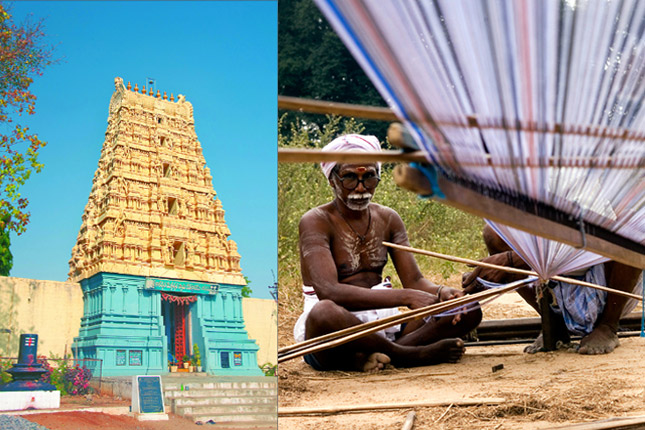
The sarees were originally popular as festive and religious wear, worn during pujas and other functions. The weavers of the saree were sent to Benares (now Varanasi) so that they could perfect the art of weaving. However, despite being perfected in Benares, the art takes zero influence from the state of Uttar Pradesh and relies instead on South Indian aesthetics.The town of Gadwal, situated between the rivers Tungabhadra and Krishna, is not just famous for its peaceful co-existence between Andhra Pradesh and Karnataka, but also for its handloom weaving industry.
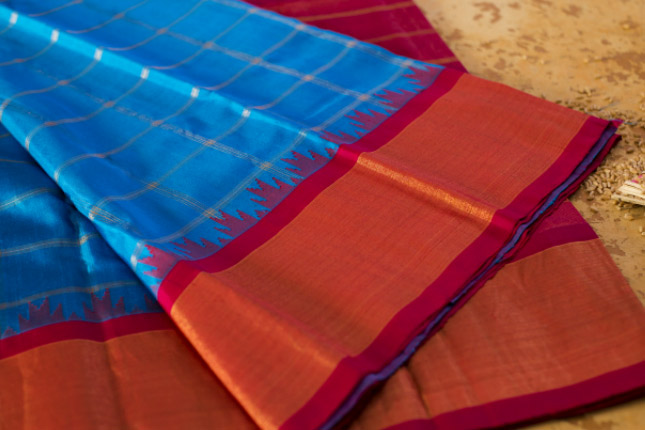
The famous silk Gadwal sarees are known for their beautiful zari work, well-crafted Kuttu borders and lightweight and easy to maintain fabric, while the cotton-based sarees present a perfect option to the wearer – a rich look and ease of wear. Commercial sale of the Gadwal sarees saw a peak in the 1930s when spinning looms and other manual machines came in existence and aided the weavers. History also points to the efforts of late Ratan Babu Rao, a veteran in the trade of handloom sarees who opened a Gadwal centre in Hyderabad in 1946 where the sarees fast climbed the popularity charts and became famous across the country.
.jpg)
The gadwal weavers vouch that their six meters of Gadawal cotton saree can be folded down to the size of a small match box! Gadwal Sarees have been very popular since the 19th century. Gadwal handlooms are well known for the durability of the colours used in the yarn. Usually Gadwal handlooms are made in cotton and silk.
.jpg)
The count used in weaving gives the softness and hardness of the fabric. Count means the number of threads used in the length and breadth for weaving known as warp and weft respectively. Each and every thread of the Gadwal saree is hand woven. Each weaver works from home with all his / her family helping in the different steps of the process. It requires approximately 4-8 days (depending on the variety of saree) of continuous efforts of two persons for weaving a saree.
.jpg)
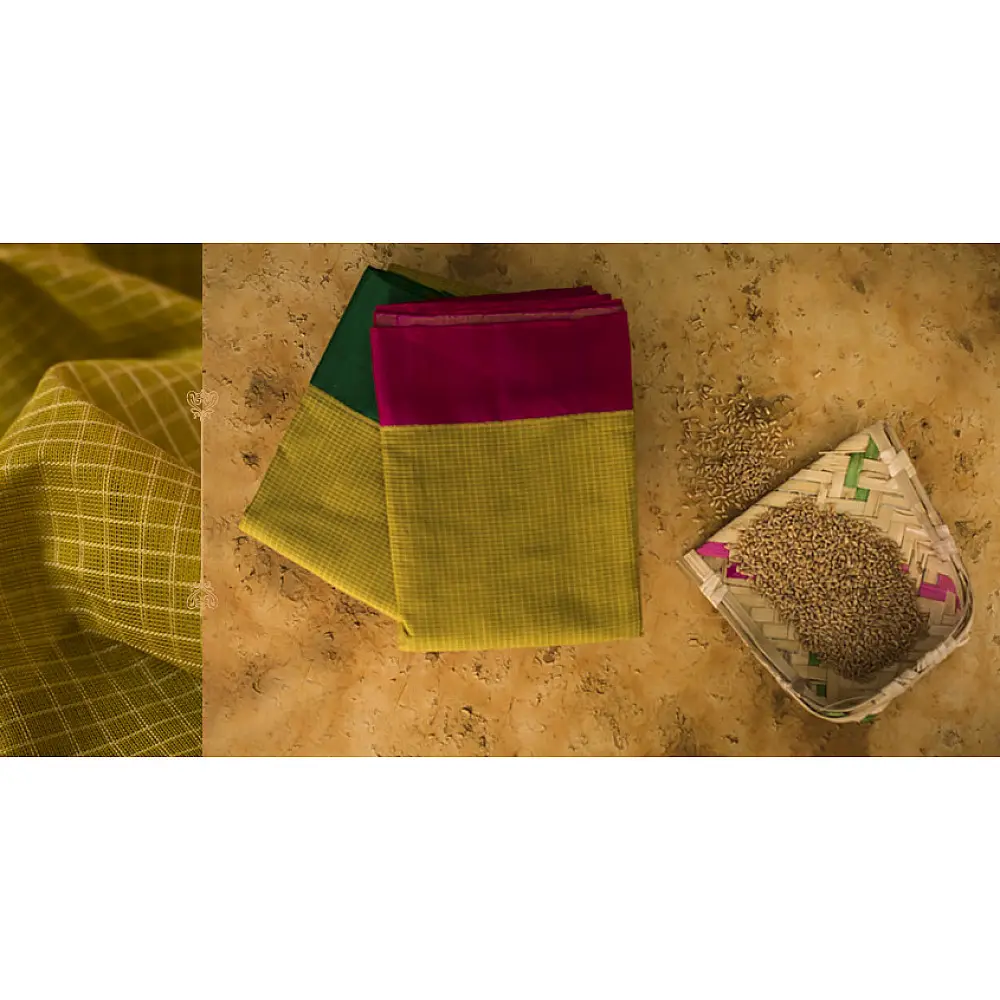
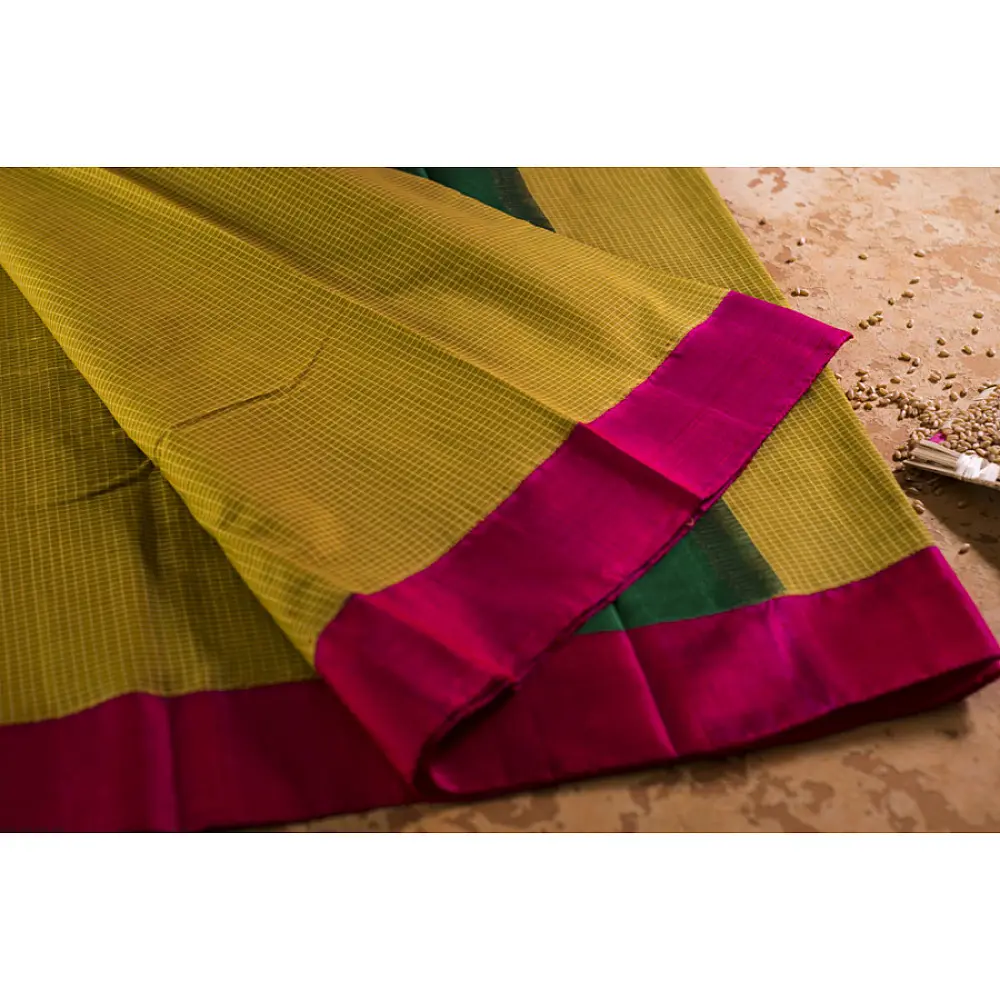
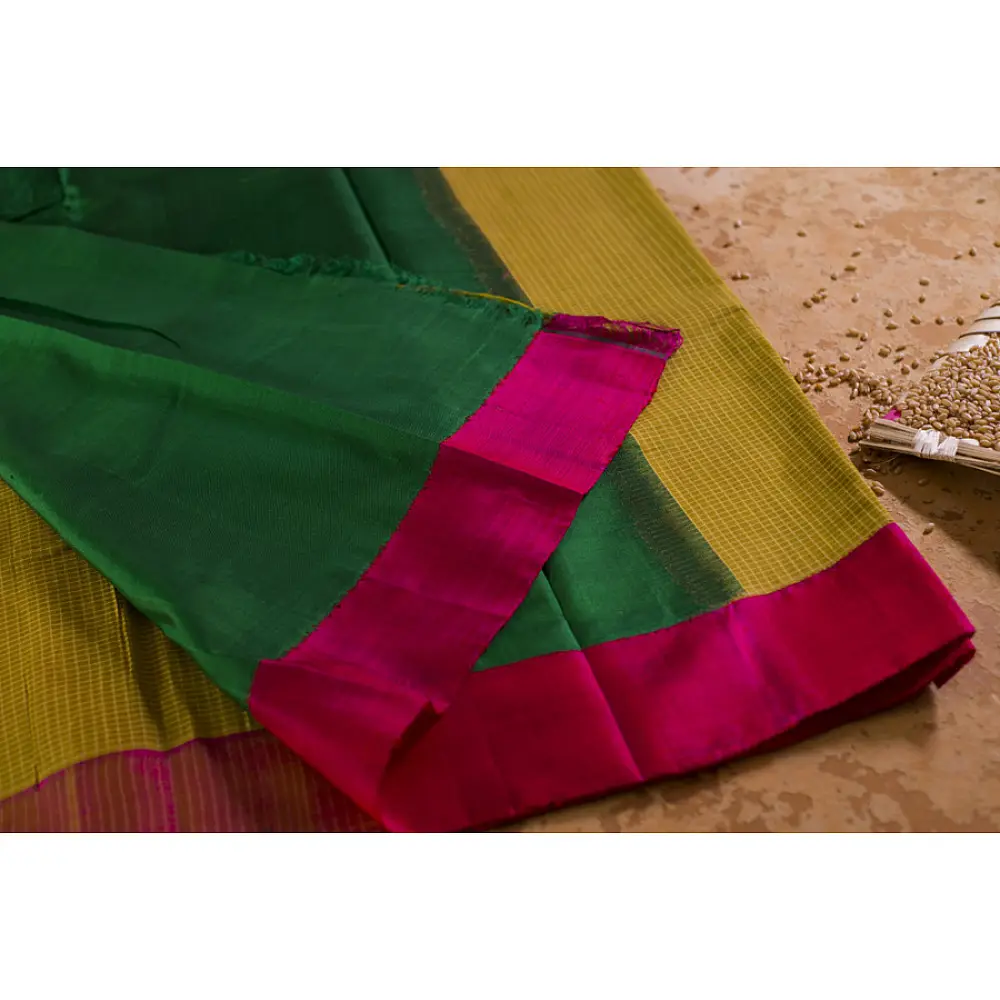
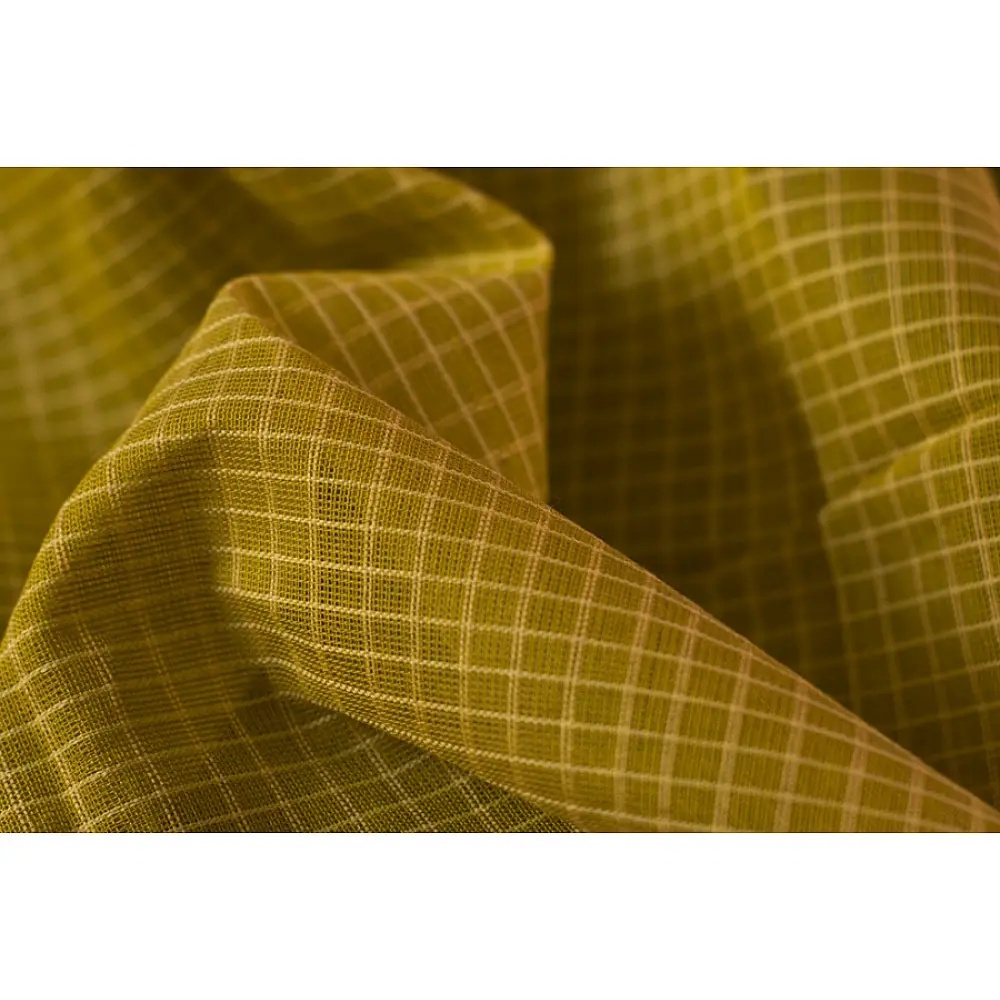
The core materials used for manufacturing the saree are Silk / Cotton and Zari. The silk border is either Tussar or mulberry and the body is often of unbleached cotton. It may also have coloured cotton or silk checks. Pure silk versions of the Gadwal sarees are also very popular.The town of Gadwal has witnessed a long flourishing industry of gadwal weaving. Gadwal sarees were traditionally woven in the interlocked-weft technique (called Kupadam or tippadamu in local language), often with kumbam (also called kotakomma) in the borders, and were hence, also known as kupadam or kumbam sarees.
.jpg)
However, with the globalisation of the sarees, you can also see geometric shapes and checks on the nine-yard wonder. The most noteworthy feature remains the zari work, in gold and silver, on the border of the saree, which is always made of silk.
-225x150w.webp "Bagru Bedsheet | Natural Color . Hand Block Printed - 90\" x 108\"")
-225x150w.webp "Vintage Payal | Handmade Traditional Payal - Two Options")
-225x150w.webp "Vintage Payal | Handmade Traditional Payal - Two Options")
-225x150w.webp "Summer Solstice | Dreamcatcher ✡ O")
/acc4-225x150h.webp "Applique Cushion ~ 4")
/acc4-1-225x150h.webp "Applique Cushion ~ 4")
-1-225x150w.webp "Soof | Hand Embroidered ~ Wall Hanging Key Holder (Two Options)")
-1-225x150w.webp "Soof | Hand Embroidered ~ Wall Hanging Key Holder (Two Options)")
-225x150w.webp "Vintage Payal | Traditional Simple Payal")
-225x150w.webp "Vintage Payal | Traditional Simple Payal")
-225x150w.webp "Kanupriya ꙰ Handmade Vintage Kada ( Solid Kada )")
-225x150w.webp "Kanupriya ꙰ Handmade Vintage Kada ( Solid Kada )")



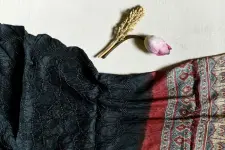
-225x150w.webp "Ada . अदा | Ajrakh Bandhani Tussar Silk Stole - Black")
-225x150w.webp "Ada . अदा | Bandhani Tussar Silk Dupatta - Heart Design in Greenish Gray Colour")
-225x150w.webp "Ada . अदा | Bandhani Tussar Silk Stole - Grey")