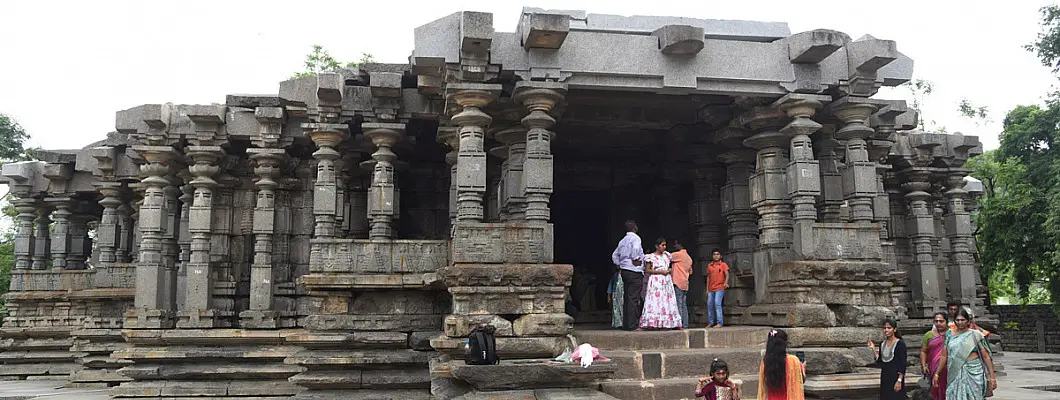
Telangana has long been recognised for its vibrant cultural traditions and distinctive artistic expressions. The region’s arts and crafts are deeply connected to its history, landscape, and social life, evolving over centuries through the contributions of diverse communities. Rather than existing as separate artistic practices, these crafts developed as part of everyday life, rituals, and local economies, shaping a strong cultural identity for the region.
In Telangana, materials drawn from the surrounding environment have played an important role in shaping artistic traditions. Artisans have worked with cotton, silk, metal, lacquer, and natural dyes, transforming them into objects of beauty and utility. Famous craft traditions such as Pochampally Ikat weaving, Nirmal painting and toys, Pembarthi brass work, and Cheriyal scroll painting reflect the region’s rich visual language and storytelling heritage. These forms combine skilled craftsmanship with narrative, symbolism, and regional aesthetics.
Historically, Telangana’s artistic traditions were influenced by royal patronage and the cultural exchanges that took place under various dynasties, including the Kakatiyas and later the Deccan Sultanates. These interactions enriched local craftsmanship, introducing new techniques and decorative styles while preserving indigenous knowledge systems.here explore the 10 Famous Art and Crafts from Telangana.
1. Pochampally Ikkat
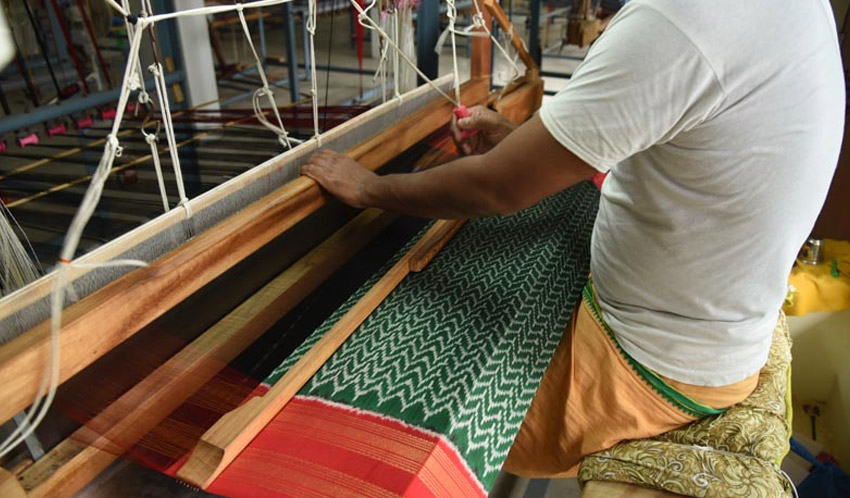
Pochampally sari or Pochampalli ikat is a saree made in Bhoodan Pochampally, Yadadri Bhuvanagiri district, Telangana State, India. They have traditional geometric patterns in "Paagadu Bandhu" (Ikat) style of dyeing. The intricate geometric designs find their way into sarees and dress materials. The weaving survives in a few villages like Pochampally, Koyalgudam, Choutuppala, Siripuram, Bhuvanagiri, Puttapaka and Gattuppala and few villages around them mostly in Nalgonda district. Pochampally Ikat uniqueness lies in the transfer of intricate design and colouring onto warp and weft threads first and then weave them together globally known as double ikat textiles. The fabric is cotton, silk and sico which is a mix of silk and cotton. Increasingly, the colours themselves are from natural sources and their blends. The Indian government's official airline, Air India, has its cabin crew wear specially designed Pochampally silk sarees. Pochampally saree received Intellectual Property Rights Protection or Geographical Indication (GI) status in 2005.
2. Gadwal Saree
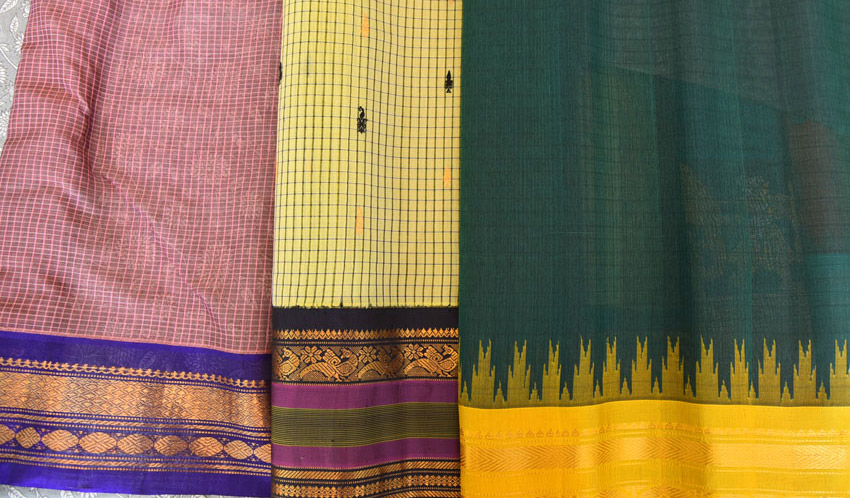
The weaving tradition developed under the patronage of the Gadwal Samsthanam (feudal estate) during the 18th–19th centuries. Historical records and local archives indicate that Gadwal sarees were presented as ceremonial offerings and were associated with temple rituals and courtly attire. The saree is handwoven on pit looms and a defining feature of this saree is the interlocking of a cotton body with silk borders and pallu. The components are woven separately on the loom and joined through a labor-intensive interlocking technique known locally as kuttu (also referred to as kupadam). The join is structural, not stitched. This creates a durable seam capable of withstanding wear. Despite silk borders and zari-rich pallus, the cotton body makes the saree comparatively lightweight. Historically valued for being foldable to a compact size while retaining a rich appearance. Gadwal Sarees were granted GI registration in 2010 under the Geographical Indications of Goods (Registration and Protection) Act, 1999 (India).
3. Narayanpet Saree
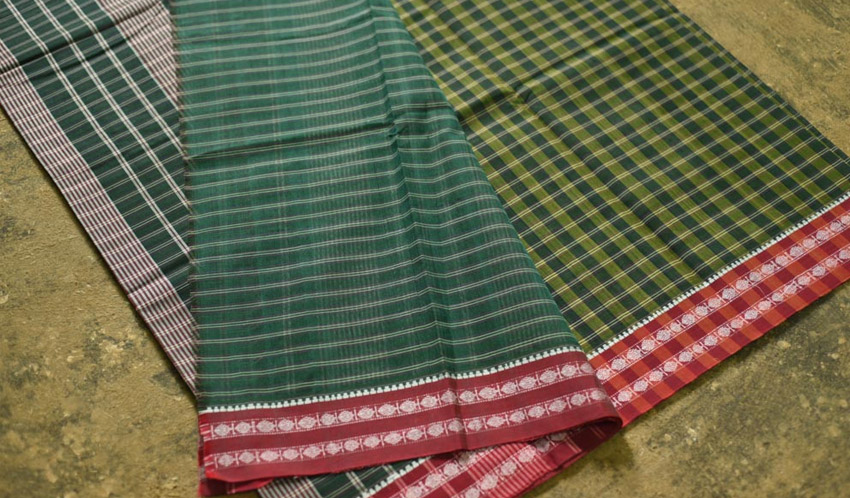
Narayanpet saree are traditional handwoven saree originating from the town of Narayanpet in the Indian state of Telangana. They are known for their distinctive check-patterned bodies, temple-inspired borders, and contrasting pallus, typically woven in cotton, silk, or silk–cotton blends. The weaving tradition in Narayanpet is believed to have developed during the period of Maratha influence in the Deccan, according to regional oral history, when Shivaji halted in the region during military campaigns, he encouraged local weaving communities, which led to stylistic influences from Maharashtra entering the textile vocabulary. Narayanpet sarees received a GI tag in 2015 for their unique regional weaving practices and cultural significance. Buy sarees here - Gaatha shop
4. Telia Rumal
Telia Rumal literally means ‘Oily Handkerchief’. The craft has its origin in Andhra Pradesh and dates back to early 19th Century. Though it started in Chirala, it’s mostly practised by a few weavers in Puttapaka village of Nalgonda district. The rectangular telia cloths were used as a veil/scarves by women and a multipurpose cloth by men. They were also exported to Asia, Africa and other Gulf countries. Telia Rumal is a very intricate and laborious double ikat weave.As the name suggests the yarn is treated with oil. The products used for the treatment of the yarn are sheep dung, castor pod ashes and oil. The treated yarn which is used for the warp and weft is tied and dyed in accordance with a predetermined geometrical design. The geometric motifs reflect Deccan design vocabulary adapted for export markets. Traditional colour schemes were limited, primarily red, black, and white, using natural dyes such as madder and iron-based black. Telia Rumal received Geographical Indication (GI) registration in 2020.
5. Nirmal Painting
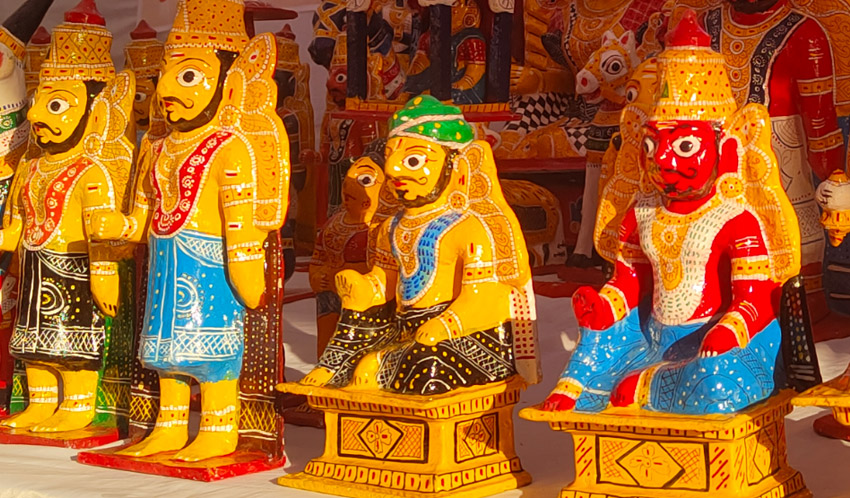
Nirmal Paintings are a popular form of paintings done in Nirmal in Nirmal District, Telangana, India. The craft was developed under the patronage of the Deccan sultanates and later the Asaf Jahi Nizams of Hyderabad (18th–19th centuries). Nirmal was then known as a center for decorative painted panels and wooden objects intended for courtly and elite domestic interiors. The craftsmen today have formed a community and stay at Nirmal and practice their art in the form of a small-scale business. The process begins with the first step which is to lacquer the wood surface and then paint the precise design on it. Other designs can be traced and then drawn with the help of chalk. Then the paintings are brought to life with bright colours and finally varnished. Mythological scenes from the Ramayana, Mahabharata, and Puranic traditions are often depicted in the paintings. Nirmal Paintings were granted GI status in 2008.
6. Cheriyal
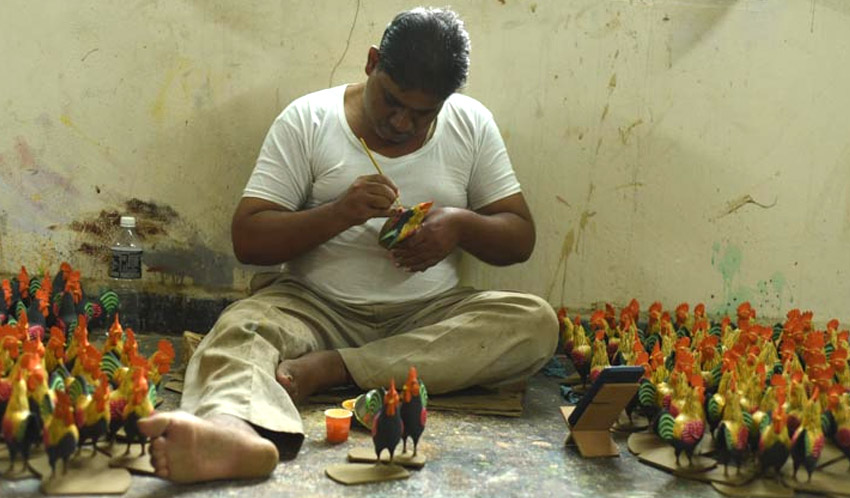
Cheriyal paintings, originating in Telangana, are a unique narrative art form influenced by Kalamkari and Deccani scroll art. Dating back to the 5th century, they depict epics like the Ramayana and Mahabharata in vibrant primary colors on a red background. Traditionally, folk singers used them as visual aids for storytelling. Still thriving in Hyderabad, these scrolls preserve cultural heritage, conveying moral lessons and serving as an important storytelling medium. Cheriyal scroll painting starts with preparing a khadi cloth canvas coated with a paste of rice starch, tamarind seed paste, tree gum, and matti. This mixture is applied in three layers, allowing drying in between each. Artists use labhi paste (tamrind seed paste and adhesive) with natural pigments like red (ingilikam), yellow (arddulam), indigo and black. The background is painted red, and outlines are drawn in graphite. Cheriyal scroll painting received Intellectual Property Rights Protection or Geographical Indication (GI) status in 2008.
7. Pembarthi Metal Crafts
Pembarthi Metal Craft is a popular metal handicraft made in Pembarthi of Warangal district, Telangana. The metal craft gained popularity during the Kakatiya rule. It declined after Kakatiya period and regained glory in Asaf Jahi period. Pembarthi Craft involves making of sheet metal from bronze, brass and copper. The process of Sheet metal workmanship became popular as it adorned the vigrahas (statues) as well as vahanas (chariots) of several Hindu temples. Pembarti craftsmen subsequently evolved their art style and decorated individual items such as betel nut cases or paandaans, perfume containers or Ittar pots, hanging metal Chandeliers or Jhummars, vases, special plaques and mementos. The craft form received theprestigious Geographical Indication in 2010.
8. Warangal Dhurries
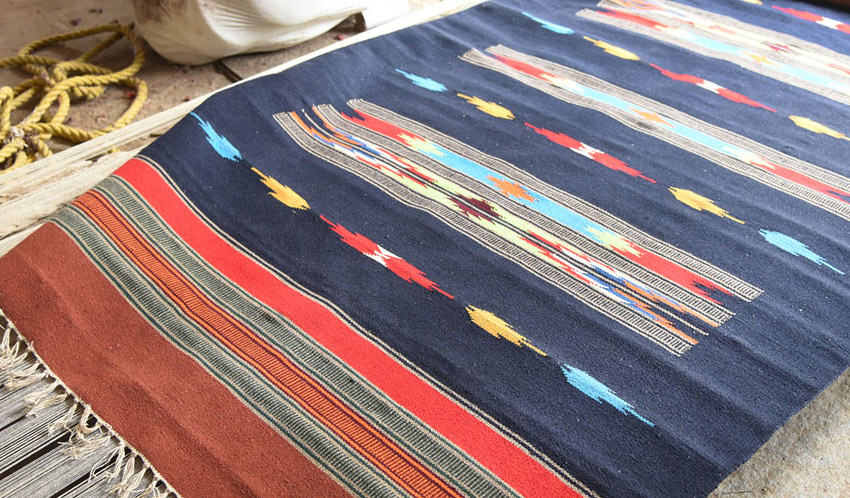
Warangal Dhurries originated in the Warangal district, Telangana, India. Warangal handloom dhurries can be traced back to when the Mughal army entered the Deccan region of Southern India. It is inspired by the jainamaaz, or the flat-weave prayer rug used by people in the late 1600s. Historically, the designs consisted of Geometric patterns (stripes, diamonds, stepped motifs) and bold colour contrasts. Traditionally the artisans used natural dyes but over time synthetic dyes were made common. The dhurries are mostly made using of cotton yarns, with wool or jute making occasional appearances. Sometimes, artisans may add linen, viscose, and/or polyester to give the dhurries a more contemporary look. Today, Warangal dhurrie weavers primarily belong to the Padmasali community and the craft is practised by people individually or as part of co-operatives. The traditional handloom dhurries are woven on pit looms and frame looms. Warangal Dhurries received Geographical Indication (GI) registration in 2018. Buy and support here - shop gaatha
9. Siddipet Gollabhama Saree
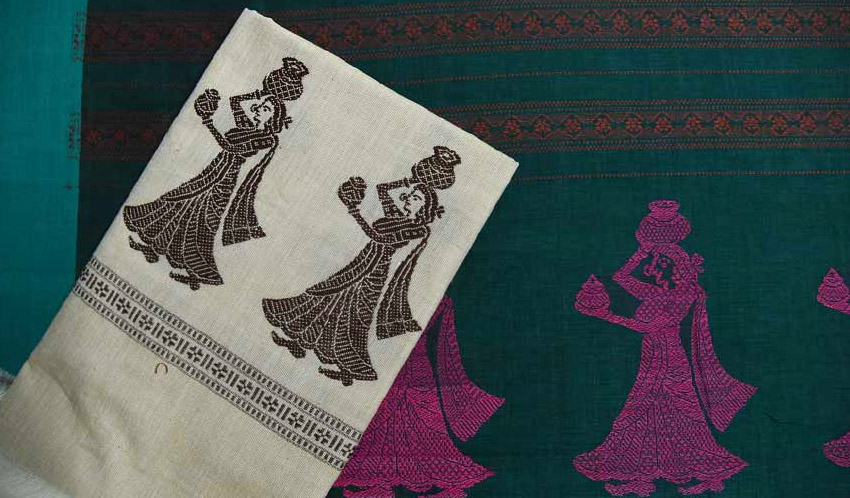
The origin of the Siddipet Gollabhama Saree is said to be Siddipet town in the Siddipet district of Telangana, India. Gollabhama literally translates to “milkmaid woman”. The saree is mainly distinguished by woven figurative motifs depicting stylized female forms carrying pots or engaged in pastoral activity. It developed as a regionally distinctive cotton saree known for narrative motifs integrated into the weave. The weaving tradition is part of the Deccan handloom heritage and has been practiced for several generations in Siddipet. These sarees are traditionally woven on both pit looms and frame looms, using the extra weft technique to create intricate patterns. Particularly these sarees have three different types of designs woven on the fabric namely Kolatam, Bathukamma and Gollabhama with Gollabhama being the most commonly used. The sarees received a Geographical Indication (GI) tag in 2012.
10. Karimnagar Silver Filigree
Filigree is also called as filigrann or filigrene. The English word filigree is shortened from the earlier use of filigreen which derives from Latin “filum” meaning thread and “granum” grain, in the sense of small bead. This is a very unique craft form representing delicate jewelry metalwork that involves the conversion of metals into fine threads and soldering them together. This craft originated 200 years ago at Elagandal region in Karimnagar, this age-old, yet contemporary craft involves the silversmith crimping thin strips of fine silver into zig-zag patterns and loops using it to be soldered together to the surface of the ground of designs formed by thicker silver strips and arranged in artistic motifs. Vishwakarma Goldsmiths community are the craftsmen who are practicing this craft since ages. Filigree works particularly are unique examples of artistic excellence rarely to be seen in Karimnagar and surrounding villages of Telangana. Karimnagar Silver Filigree received GI registration in 2007 under the Geographical Indications of Goods (Registration and Protection) Act, 1999.
Leave a Comment