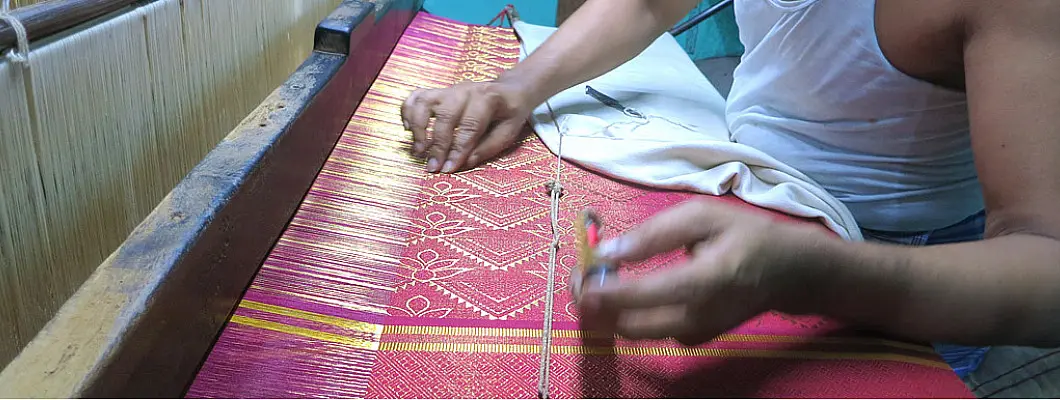
Indian handloom sarees have always been a favorite among women, admired for their timeless charm and elegance. For generations, skilled artisans have preserved their quality while continuously introducing innovation. In earlier times, the availability of local raw materials and natural dyes led artisans to create designs rooted in regional aesthetics and cultural needs. Over time, these designs evolved, opening up a wider spectrum of creativity and innovation. Yet, even today, a distinct local touch remains visible in the layout, motifs, and overall design language.
Interestingly, the same motif can appear in different forms across regions, reflecting unique interpretations shaped by local traditions. Here are some of the most famous motifs used in Indian handloom sarees, explored and reimagined by artisans across diverse saree-wearing regions.
1. Lotus (Padma) Motif
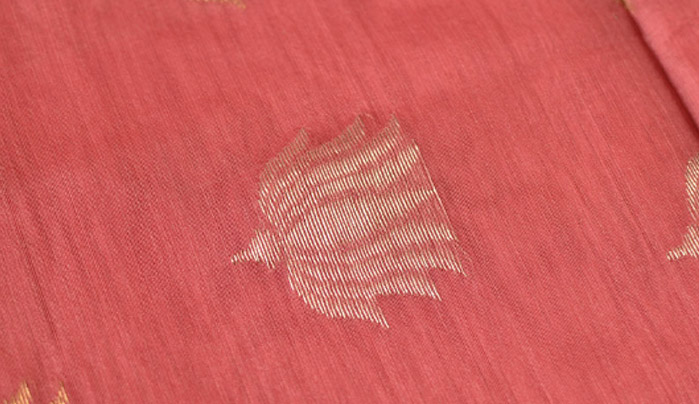
Lotus petals, often stylized and symmetrical, form a common motif on sarees. The motif shows a lotus blossom emerging from water, with multiple layers of petals (as on Chanderi or Paithani sarees). It symbolizes purity, divinity and rebirth, the lotus is sacred to Hindu gods (Brahma, Lakshmi, Saraswati all sit on lotus flowers) and to Buddhism and Jainism. Lotus designs often denote auspiciousness and are popular for bridal weaves, bringing blessings for marital happiness. This motif appears widely in handloom silk sarees of Chanderi (Madhya Pradesh), Kanchipuram (Tamil Nadu) and Paithani (Maharashtra) traditions, reflecting its all India appeal in classical art.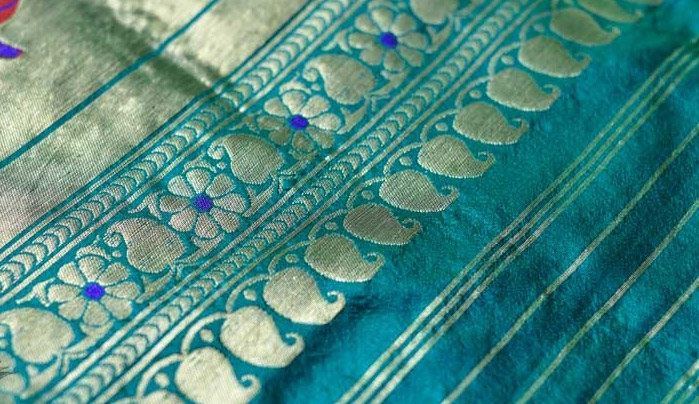
2. Paisley (Mango) Motif
The paisley or ambi (mango) motif is a curved teardrop or mango-shape ‘buta’ woven repeatedly across the cloth. In Indian sarees it often appears as large droplet-shaped motifs (sometimes with floral or peacock-feather details) embroidered or brocaded into the silk or cotton. Historically originating in Kashmir shawl art, the paisley symbolizes life, fertility and abundance; it is thought to derive from ancient Zoroastrian symbols. In South India it is often called ‘ambi’ motif and appears in Kanchipuram and Mysore silks. The motif’s pan-Indian heritage is clear: it was known to medieval weavers as buta or ambi and is ‘the most celebrated motif known to Indian weavers’ , appearing in Kashmiri shawls and later in sarees from Banaras and Tamil Nadu.
3. Conch (Shankha) Motif
The shankha motif depicts a spiral conch shell, often shown in outline or filled brocade on borders or pallus. In Hindu tradition the shankha is sacred to Vishnu and used in temple rituals; it signifies purity, divinity and auspicious beginnings. Woven shankha motifs on sarees thus invoke these beliefs. For example, Bengali temple-theme saris feature large shankhas on red-white borders as a mark of ritual significance. Textiles sources note that “the shell represents purity and divinity” and is “a must for an auspicious occasion”. Shankha motifs may appear alone or paired with water/lotus motifs. Sarees where the shankha motif is traditionally seen include Baluchari and Bengal Jamdani sarees from West Bengal, Bomkai and Sambalpuri sarees from Odisha and Kanchipuram silk sarees from Tamil Nadu.
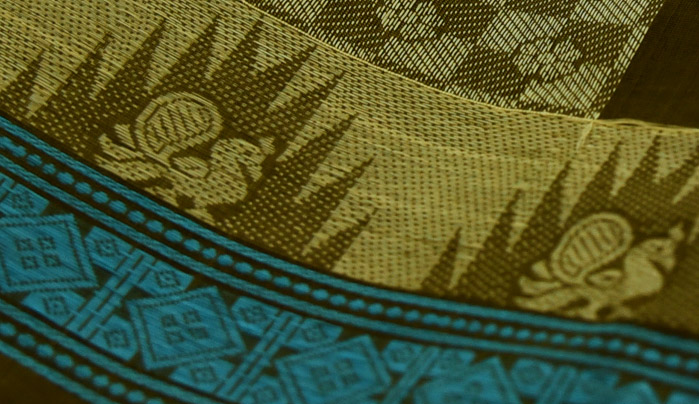
4. Peacock (Mayura) Motif
The peacock, India’s national bird, is portrayed as a graceful bird with spread feathers or in profile. Peacock motifs in sarees are richly patterned, often showing the fan-shaped tail or the head-and-neck silhouette of the bird. Culturally it stands for beauty, grace and royalty (e.g. as the mount of Kartikeya and a symbol of Krishna’s divine charm). In South India the ‘mayura-chakram’ in Kanchipuram combines a peacock with a circular symbol for life and rebirth . Paithani sarees of Maharashtra famously weave the bangdi-mor motif (peacocks inside concentric rings). Even Banarasi brocades favor the peacock for its “magnificent plumage” and auspicious beauty. Across regions it is always an emblem of elegance and is woven on pallus and borders as a hallmark motif.
5. Fish (Matsya) Motif
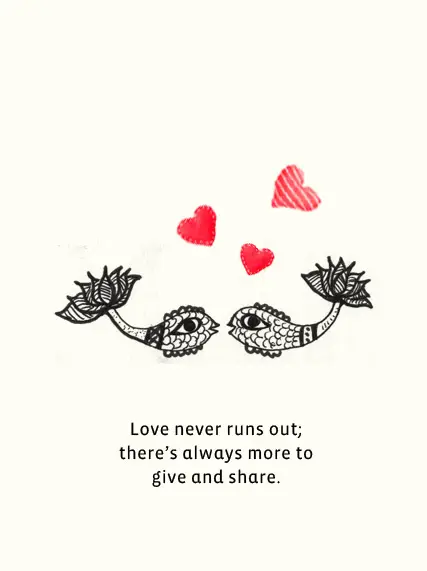
Fish are woven as stylized swimming fishes or lotus-fish combined patterns on sarees, usually in mirror-image pairs or rows. The fish motif represents fertility, abundance and life-giving water. In eastern India, the fish is especially sacred: as one writer notes, “The fish motif holds a special significance…Matsya symbolizes prosperity, fertility and good fortune.” Weavers in Odisha’s handloom clusters (e.g. Sambalpuri, Habaspuri) famously incorporate fish motifs on the body and border of sarees. Historically, the fish was linked to creation myths (Vishnu’s Matsya avatar) and local prosperity (fish in rivers), making it an auspicious motif for bridal and festival saris. Fish motifs appear in pallu panels and border narratives of Baluchari sarees. In Jamdani sarees of Bengal, stylized fish buttas are woven using the jamdani extra weft technique. In Maharashtra the motif is known as ‘meen’, and is seen on Paithani sarees in certain border and pallu designs. The motif also apprears on Patola sarees in geometric stylized fish forms within complex ikat layouts. The motif is also seen on Bomkai and Sambalpuri sarees of Odisha.
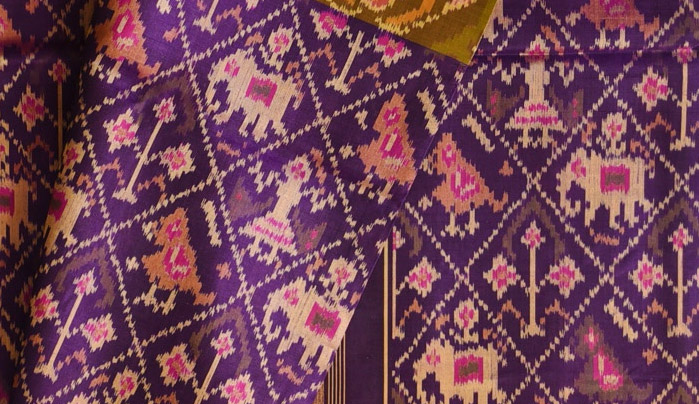
6. Elephant (Gaja) Motif
Elephants are depicted in profile or full-body poses, often walking or facing inward on saree borders. Traditionally seen as royal and auspicious, the elephant motif denotes strength, wealth and good fortune. It figures in mythology (Indra’s white elephant Airavata bringing rain, Buddha’s birth dream) and was a royal symbol as back in the days only kings owned elephants. This respect made it a favored motif in Mughal-inspired weaves. Banarasi brocades use gold-thread elephants to evoke imperial processions. In Patola double-ikat of Gujarat, the elephant motif is one of the oldest motifs, symbolizing fertility and linked to Indra’s rain bearing elephant (Airavata). Elephant motif is also widely seen on the Gadwal and Pochampally Sarees of Telangana as well as on the Kanchipuram Silk and Sundari Silk Sarees of Tamil Nadu. The motif is also prominently featured in Lucknow’s famous Chikankari embroidery.
7. Parrot (Kili) Motif
Parrots appear as small figural motifs (kili buta) or perched on branches. The design typically shows a stylized parrot head, sometimes in profile, or a leafy shape known locally as a kili. In Tamil culture the parrot symbolizes love and wisdom (the parrot is associated with Meenakshi temple lore and as Lord Subramanya’s companion). As a Theosophical innovation at Kalakshetra (Chennai), the kili motif was popularized by Rukmini Devi Arundale in the 1930s. Textile scholars note that the parrot is “a motif of love and therefore…an important pattern in bridal trousseau saris”. It endures as a delicately woven decorative motif in Kanchipuram and mangalgiri weaves (and modern variants) due to its cultural auspiciousness. Paithani saree from Maharashtra, Mysore Silk saree from Karnataka and Dharmavaram Saree from Andhra Pradesh occasionally feature small parrot or ‘kili’ buttas on the body or pallu.
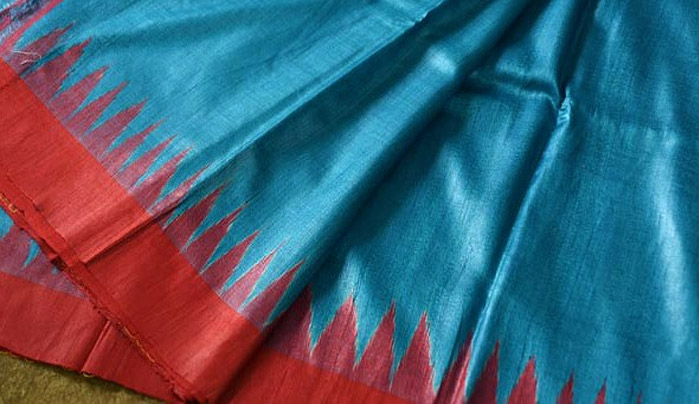
8. Temple (Gopuram) Border Motif
Temple motifs (often triangular tower shapes or gopuram outlines) form the iconic ‘temple border’ on many South Indian sarees. The design recalls temple architecture- stepped, pyramidal towers with niches and is woven along the saree’s edge. This motif signifies sanctity and protection; it is believed to bring divine blessings . In Kanchipuram and other Tamil sarees, temple motifs (yaali, gopuram silhouettes, lotus-towers) are extremely common. Weavers literally took inspiration from nearby shrines: Kanchipuram’s craft is inspired by temple architecture and sculpture, and temple borders became synonymous with auspicious wedding sarees. Temple borders can also be prominently seen in the Dharmavaram Silk Sarees from Andhra Pradesh, The Berhampuri ‘Phoda Kumbha’ silk saree of Odisha is nicknamed the ‘temple weave’. Its hallmark is a kumbha (temple-spire) motif running along the border. Korial sarees from Bengal also feature this border.
9. Ashrafi (Coin) Motif
Ashrafi are round, coin-like motifs woven in gold or metallic thread. The word ‘ashrafi’ means gold coin, and the design mimics medieval gold sovereigns. Typically, an ashrafi is a rosette or circular floral design arranged in a regular grid (called ashrafi butties) on the saree body or border. Symbolically it represents wealth and prosperity (like coins). This motif is particularly essential to Chanderi Brocades, such as those found in lightweight Chanderi silk-cotton, tiny gold ashrafis glint across the fabric and in Banaras brocade on which bold zari-embroidered coins cover the pallu in formal sarees. Historically Ashrafis reflect Persian influence on Indian textiles, but have been naturalized into sarees as an imperial, lavish motif. The motif is also found on Kanchipuram Sarees, Maheshwari Sarees, Paithani Sarees and on Uppada Jamdani Sarees.
10. Rudraksha Motif
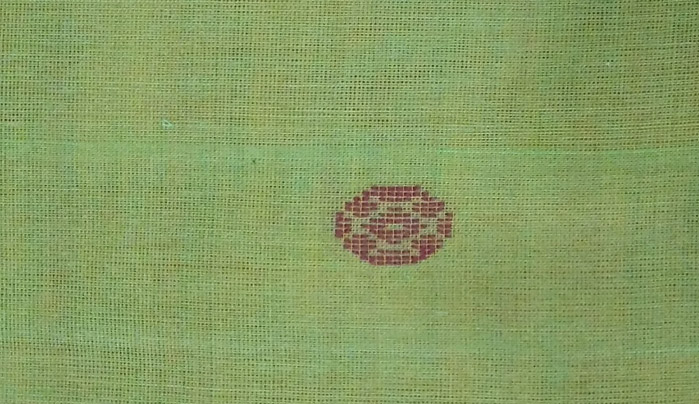
Rudraksha motifs are round or segmented bead shapes, modeled on the seeds of the sacred rudraksha tree. They appear as small medallions or rosary-like chains woven into borders. In Shiva-worshiping regions, the rudraksha is auspicious, so weavers mimic this ‘sacred bead’ as a pattern. The Kanchipuram tradition explicitly notes motifs that ‘imitate the pattern of the rudraksha or sacred beads’ on silk. Thus a row of small circular or paired dots on a sari border may represent rudrakshas. Symbolically, they are thought to confer spiritual protection and well-being. In modern handlooms, rudraksha-inspired motifs keep this ancient tantric symbol alive in wedding and temple sarees. The Motif can be spotted on Arani Silks, Gadwal Silks, Pochampally Double-Ikkat Sarees, Narayan Peth weaves, Banarasi Brocade and on Bomkai saree, etc.
~
Shop original handloom saree - shop.gaatha.com
For more details explore Gaatha Research & Archive - Gaatha.org
~
Know more - Difference between Handloom and Power loom Saree?
Leave a Comment